




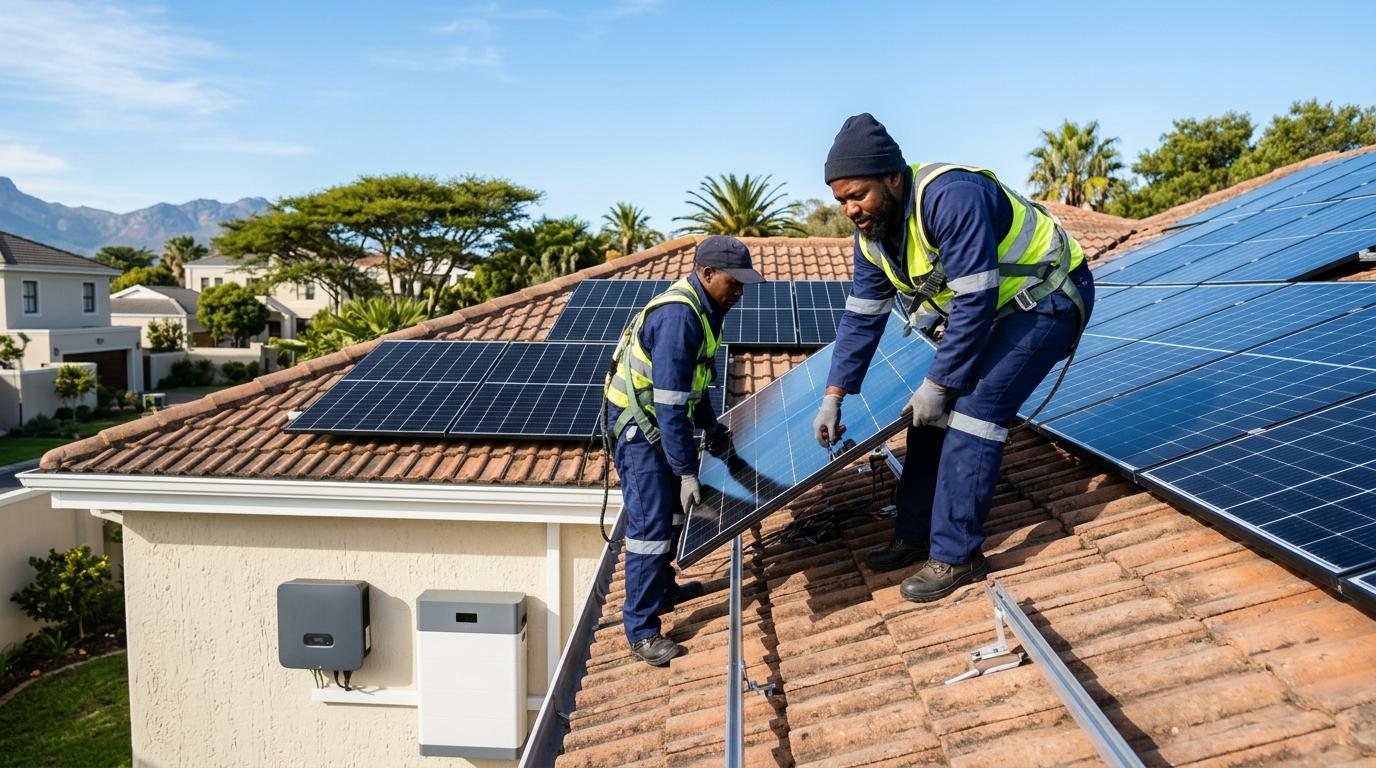
“Solar Infrastructure Inspections & Maintenance (SIIM) has developed an online platform designed to help South African homeowners verify rooftop solar installations remotely and simplify the documentation involved in compliance and registration. The proposal comes amid an estimated 40,000–80,000 unregistered residential solar and battery installations, alongside an ongoing debate over registration requirements, grid safety, administrative costs and consumer rights.”
South Africa’s Proposed Online Solar Compliance System Could Ease Rooftop Registration Challenges
South Africa’s rapidly expanding rooftop solar market is entering a new phase in which installation safety, regulatory compliance, insurance protection and the relationship between homeowners and electricity distributors are becoming increasingly important. A new online compliance verification platform developed by Solar Infrastructure Inspections & Maintenance (SIIM) could help address some of the administrative obstacles facing households with solar photovoltaic systems and battery backup installations.
The development, reported by MyBroadband on 26 October 2026, comes as the country continues to encourage greater participation in electricity generation beyond traditional power stations. Although rooftop solar offers households and businesses an opportunity to generate electricity independently, connecting these installations to the national electricity network introduces technical and regulatory considerations that cannot be ignored.
An online approach to solar compliance
SIIM has developed a remote desktop compliance verification platform intended to make it easier for homeowners and other stakeholders to demonstrate that solar installations meet applicable technical requirements. Rather than relying exclusively on an engineer visiting a property, the platform evaluates submitted installation documentation against relevant South African National Standards and Eskom requirements.
According to the company, installations that successfully pass the verification process receive a Compliance Verification Certificate. This document can then be shared with the homeowner, insurance broker and engineering, procurement and construction contractor involved in the installation.
The platform is designed to reduce administrative burdens and potentially lower the costs associated with physical inspections. SIIM intends to operate a subscription-based model, with set fees for compliance certificates for members and non-members.
The approach could be particularly relevant for households that already have rooftop solar systems but have struggled to navigate the paperwork associated with compliance. However, remote verification should not be confused with an automatic approval from every electricity distributor. Whether a certificate satisfies a particular utility’s registration process will depend on the applicable requirements and the arrangements established between the platform and the relevant authority.
The scale of South Africa’s registration challenge
One of the central issues behind the initiative is the estimated number of residential solar and battery installations that remain unregistered.
MyBroadband reported that approximately 40,000 to 80,000 South African households with embedded rooftop solar and/or battery backup systems may not be registered with their electricity distributor. The reported estimate illustrates the difficulty of bringing a rapidly growing distributed-energy market into a consistent administrative framework.
The precise scale of the challenge matters because electricity networks were historically designed around relatively centralised generation. As more customers install their own generation equipment, distributors need to understand where systems are connected, their capacity and how they may affect local network conditions.
Nevertheless, registration can be a complicated process for homeowners. Requirements may differ between Eskom and municipal electricity distributors, while technical documentation, professional sign-offs and application procedures can create additional costs or delays.
A simpler digital process could help reduce friction if it makes requirements clearer, enables documentation to be submitted efficiently and gives applicants a reliable way to establish the status of their applications.
Why utilities want registration
Eskom and the National Energy Regulator of South Africa (NERSA) maintain that qualifying grid-connected embedded-generation installations must be registered. Their stated rationale includes safe network operation, technical planning, protection coordination and the management of electricity quality.
Registration is particularly relevant where electricity can flow in both directions between a customer’s property and the distribution network. Solar installations can reduce the electricity a household purchases from its distributor, while some configurations may also export surplus electricity, subject to the applicable technical and commercial arrangements.
Without reliable information about connected generation, utilities may find it more difficult to assess local voltage conditions, plan infrastructure upgrades and coordinate protection equipment. Accurate installation records can also help workers understand the electricity sources present when they maintain or repair network infrastructure.
However, registration and electrical safety certification are not interchangeable. Eskom has explained that a Certificate of Compliance addresses applicable electrical safety requirements, whereas registration supplies information about generation installations connected to the network.
That distinction is important for consumers. Holding an electrical safety certificate does not necessarily mean every separate registration requirement has been satisfied. Conversely, completing a registration process should not be treated as a substitute for ensuring that an installation is professionally designed and safely installed.
Disagreement over the registration process
Despite the stated safety and planning objectives, solar registration has become contentious.
The MyBroadband report describes objections from the Organisation Undoing Tax Abuse (OUTA), which has questioned whether the registration approach is legally necessary in the circumstances being debated. Energy adviser Chris Yelland has also challenged the usefulness of an incomplete registration database for assessing the overall scale of rooftop solar and battery capacity.
These objections highlight a wider policy question: how can South Africa ensure safe and reliable electricity networks without imposing unnecessary administrative burdens on households that invest in their own energy systems?
The disagreement should not be reduced to a simple choice between regulation and deregulation. Homeowners have legitimate interests in affordable electricity, predictable rules and reasonable administrative procedures. Electricity distributors, meanwhile, must protect network equipment and ensure that generation connected to their infrastructure complies with applicable technical requirements.
Resolving the dispute requires transparent explanations of the legal basis for registration, clear technical standards, consistent procedures and proportionate enforcement. A convenient online platform may improve administration, but it cannot independently settle disagreements about the interpretation of legislation.
Homeowners should therefore consult the requirements of their own licensed electricity distributor and seek appropriate professional advice where necessary.
Implications for insurance and financing
The proposed platform also addresses risks facing insurers, financial institutions, solar contractors and homeowners.
SIIM was established in 2022 following a request from an international insurance brokerage seeking independent verification of solar installations. The company subsequently developed technical assessment capabilities spanning structural, electrical, fire and civil engineering. Its work includes installation reviews, performance investigations and assessments following incidents involving insured systems.
These services reflect a practical concern: a solar installation is a long-term investment involving electrical equipment, mounting structures, batteries and other components that must be properly selected and installed.
Poor installation practices can create fire, electrical and structural hazards. Inadequate documentation may also complicate investigations when equipment fails or damage occurs.
For insurers, reliable technical records can help establish what equipment was installed, whether the installation was assessed and whether relevant safety requirements were addressed. For lenders and brokers, independent verification may provide additional information when evaluating risks associated with financed solar projects.
However, homeowners should not assume that every unregistered installation automatically invalidates insurance coverage. Policy wording, disclosure obligations, the circumstances of a claim and applicable legal requirements all matter. Consumers should ask their insurers directly which documents and approvals are required for their particular systems.
Connecting the platform with municipalities
SIIM has indicated that it plans to integrate its platform with municipal systems to streamline the small-scale embedded generation registration process. Such integration could be important because municipal electricity customers may face procedures that differ from those applicable to customers supplied directly by Eskom.
A more connected digital process could allow applicants to submit documentation once, track progress and receive clearer information about outstanding requirements. Standardised documentation could also help reduce repeated submissions and unnecessary administrative delays.
Nevertheless, the benefits will depend on implementation. Municipalities would need to recognise the relevant verification documents, establish appropriate data-sharing arrangements and maintain clear responsibility for official approvals.
The platform’s effectiveness will also depend on accessibility. Homeowners with limited technical knowledge should be able to understand what documents are required, what the verification fee covers and what additional steps remain before their installations are fully compliant.
Data security and privacy will be important as well. Solar registration records may contain property details, technical specifications and customer information. Any system handling these records should provide appropriate safeguards and explain how information is used and shared.
What the development means for the renewable-energy transition
South Africa’s energy transition increasingly involves a combination of large power stations, utility-scale renewable projects, battery storage and smaller installations at homes and businesses.
Eskom’s recent operational update illustrates that the wider electricity sector is also changing. On 23 October, the utility reported a financial-year-to-date Energy Availability Factor of 68.1%, lower diesel expenditure and progress in reducing the number of customers affected by load reduction. Those developments concern the broader power system, but they provide context for the growing importance of reliable electricity supply and diversified energy resources.
Rooftop solar can complement these developments by enabling consumers to generate electricity close to where it is used. Batteries can store energy for later consumption, although their effectiveness depends on system design, available solar generation, battery capacity and household demand.
For the country to realise the benefits of distributed generation, technical standards and administrative procedures must keep pace with adoption. An effective registration system can contribute to that objective, provided it is practical, proportionate and supported by clear rules.
The proposed SIIM platform could be one component of that effort. Its ultimate contribution will depend on whether it reduces costs and delays, improves the quality of documentation and receives meaningful acceptance from the relevant stakeholders.
The next steps for homeowners and policymakers
For homeowners considering rooftop solar, the immediate priority is to understand the requirements that apply to their property before installation or when reviewing an existing system. They should obtain documentation from qualified installers, confirm electrical safety certification requirements, and contact Eskom or their municipal distributor about any applicable registration process.
They should also ask their insurers whether installation documents, technical inspections or additional declarations are required under their policies.
For regulators and electricity distributors, the priority should be to make the rules accessible and consistent wherever possible. Published guidance should explain who must register, which authority handles the application, what documents are needed, how long the process is expected to take and what fees apply.
For SIIM, the critical test will be whether its online verification platform can deliver measurable improvements in convenience and affordability while maintaining appropriate technical standards. Integration with municipal registration systems could strengthen its usefulness, but the company’s proposed service should not be assumed to replace official approvals unless the relevant authority confirms that arrangement.
South Africa’s rooftop solar market needs a framework that protects consumers and the electricity network without discouraging responsible investment. Better digital tools could help bridge the gap between those objectives.
Ultimately, the proposed online system represents a practical response to one part of the country’s wider energy challenge. Its success will depend not simply on the technology itself, but on regulatory clarity, stakeholder cooperation, transparent costs and the confidence of homeowners who want to participate in South Africa’s changing electricity market.



