




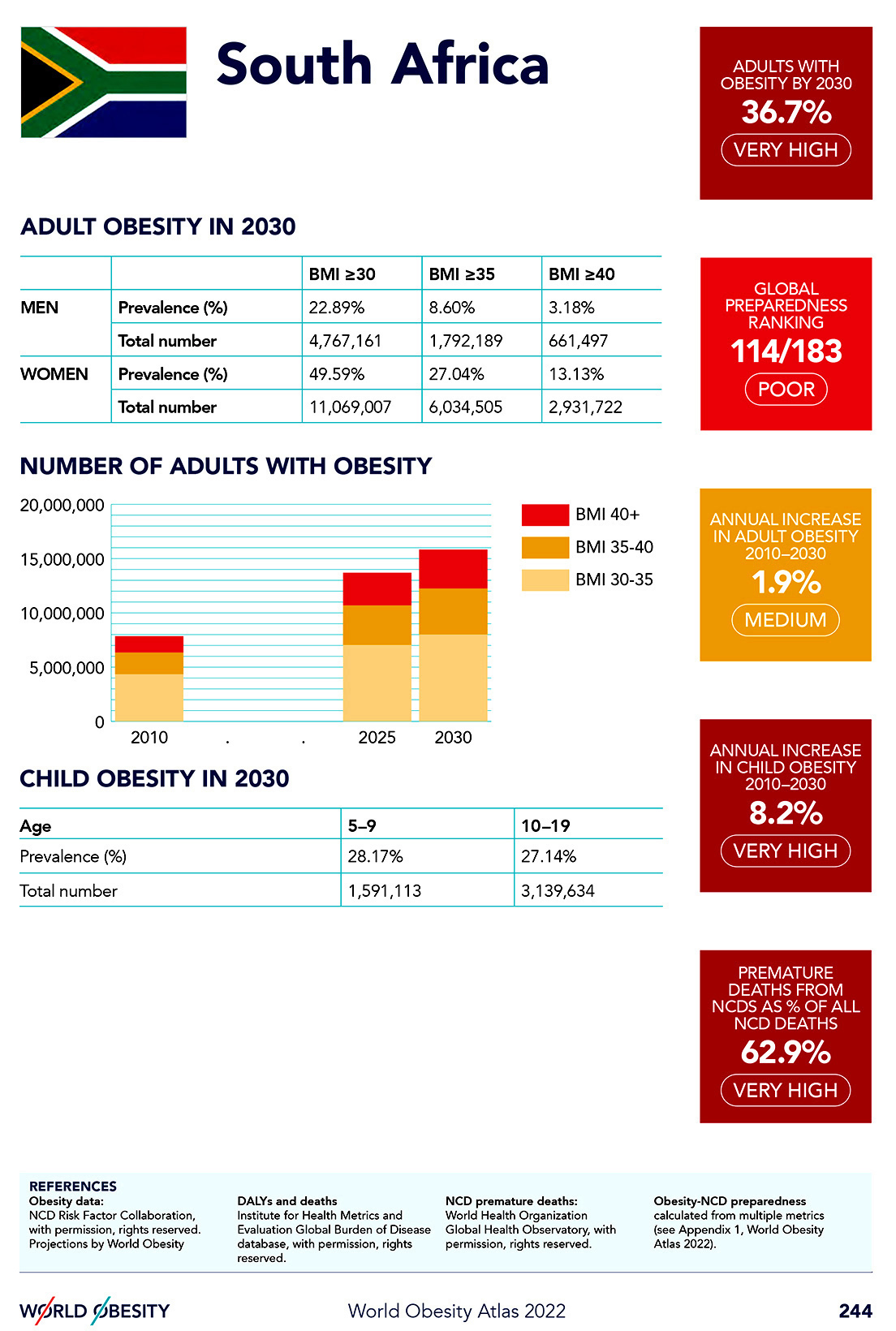
“The government has unveiled an updated anti-obesity plan, warning that adult obesity rates could exceed 13 million cases by 2030.”
South Africa is facing a growing obesity epidemic, with projections indicating over 13 million adults could be obese by 2030. The government’s updated anti-obesity strategy seeks to reverse this trend through a combination of policy, education, and community action. Key measures include stricter regulations on sugary drinks, improved food labeling, and public awareness campaigns. The strategy also emphasizes physical activity, with initiatives to expand access to safe recreational spaces. Importantly, the plan recognizes the socioeconomic dimensions of obesity, as low-income households often rely on cheap, calorie-dense foods. Addressing obesity therefore requires tackling inequality and improving access to affordable, nutritious options. Health experts warn that obesity is not just a lifestyle issue—it is a public health crisis linked to diabetes, cardiovascular disease, and reduced life expectancy. The updated plan calls for collaboration between government, schools, and the private sector. For example, schools are urged to ban junk food sales and integrate nutrition education into curricula. The private sector is encouraged to reformulate products to reduce sugar and fat content. While ambitious, the plan faces challenges in enforcement and public buy-in. Critics argue that without addressing poverty, obesity interventions will remain limited. Nonetheless, the strategy represents a significant step forward. By acknowledging the complexity of obesity, it sets the stage for a more holistic response. The success of this plan will depend on sustained political will and community engagement.



