




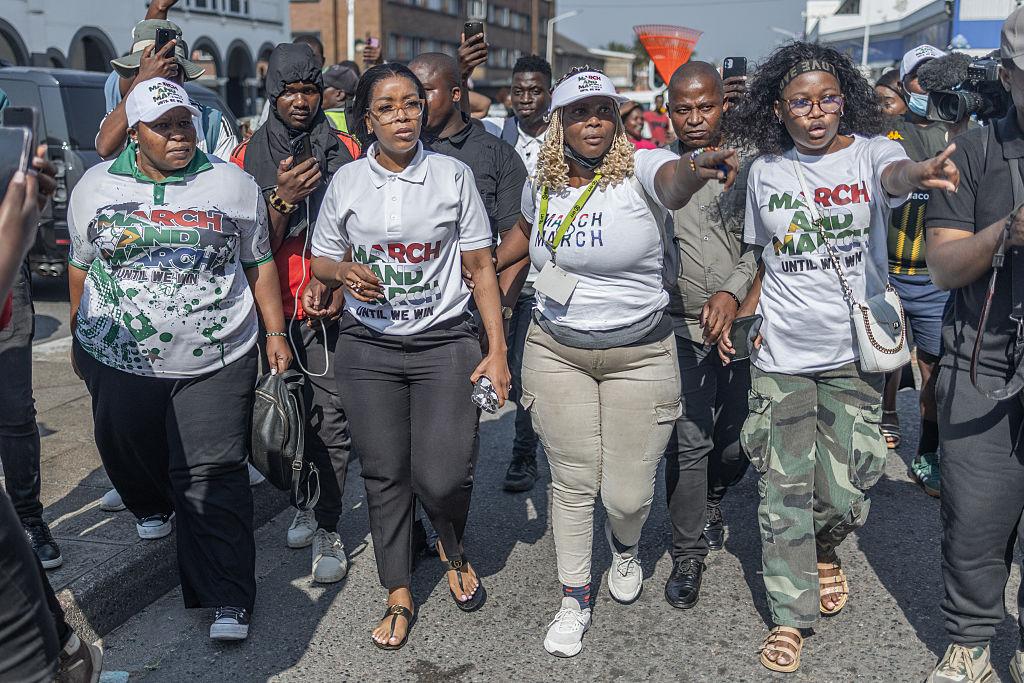
“South Africa’s March and March movement has become a major focus of political debate following demonstrations against undocumented immigration, violent incidents, and legal restrictions imposed by the Durban High Court. The dispute highlights the tension between constitutional freedom of assembly, public safety, immigration enforcement, and the protection of vulnerable communities.”
South Africa’s March and March Movement Faces Legal Restrictions as Immigration Protests Intensify
Activism, immigration and constitutional rights collide
South Africa’s political landscape is experiencing renewed tension as the March and March movement continues to mobilise against undocumented immigration, drawing increasing scrutiny from government officials, law enforcement agencies, civil society organisations and the courts. The movement’s demonstrations have become a significant national debate about immigration enforcement, freedom of assembly, public safety and the responsibilities of political activism.
The developments are particularly important following South Africa’s 4 November 2026 local government elections, which took place against a backdrop of political contestation, community dissatisfaction and heightened security concerns. Immigration-related protests have increasingly become part of the broader political conversation, with activists using public demonstrations to demand government action while critics warn against xenophobia, intimidation and violence.
Court restrictions reshape the protest landscape
One of the most significant developments has been the Durban High Court’s intervention in demonstrations associated with March and March. Acting Police Minister Firoz Cachalia and KwaZulu-Natal police commissioner Lieutenant-General Nhlanhla Mkhwanazi sought legal restrictions after escalating tensions surrounding protests in Durban, particularly around the Department of Home Affairs Refugee Reception Centre in Berea.
The police raised concerns about the potential for violence and alleged threats against refugee facilities. Authorities also cited incidents involving damage to property, attacks on people and disruptions to public order.
The resulting legal restrictions sought to regulate demonstrations rather than eliminate the constitutional right to peaceful protest altogether. According to reporting by IOL, the court imposed conditions governing protest activities, including restrictions on weapons, face coverings, intimidation and violence.
The movement’s supporters have criticised restrictions on demonstrations, arguing that government institutions should address public concerns about immigration rather than suppress protest activity.
However, authorities maintain that lawful activism must remain within constitutional and legal boundaries, particularly when demonstrations create risks for residents, businesses or vulnerable communities.
Immigration concerns become a major political mobilisation issue
March and March has gained visibility through demonstrations demanding stronger action against undocumented immigration. Its supporters frequently connect immigration concerns to unemployment, crime, pressure on public services and competition for economic opportunities.
These grievances resonate with some communities experiencing poverty, limited employment opportunities and inadequate municipal services.
Nevertheless, immigration remains a complex policy issue involving legal status, refugee protection, labour markets, border management and constitutional obligations.
Daily Maverick’s analysis of political conversations ahead of the local elections identified the anti-foreigner movement as an increasingly influential presence in South African political discourse. Its messaging frequently framed the movement’s confrontation with government as a struggle over whether authorities were responding adequately to citizens’ concerns.
The political implications extend beyond demonstrations. Immigration debates have become part of electoral campaigning, with different political parties and movements proposing varying approaches to border control, deportation, refugee administration and enforcement.
Violence raises questions about the limits of activism
Although peaceful demonstrations are protected under South African constitutional principles, violence associated with some anti-immigrant protests has generated significant concern.
GroundUp reported incidents in Pretoria and Durban involving threats against immigrant-owned businesses, harassment of shopkeepers and confrontations around refugee reception facilities. Its reporting documented threats against women and children, forced shop closures and intimidation directed at people perceived to be foreign nationals.
In Durban, reports of burning vehicles, vandalised businesses and attacks on individuals contributed to growing concern about the consequences of escalating mobilisation.
These incidents have prompted questions about the distinction between legitimate political activism and unlawful conduct.
Activism can play an important role in highlighting government failures, demanding accountability and mobilising citizens around public policy. However, targeting individuals because of nationality, perceived immigration status or ethnic background raises serious human rights concerns.
The distinction is particularly important because undocumented status cannot automatically be established through appearance, language or nationality. Refugees, asylum seekers, permanent residents, temporary permit holders and undocumented migrants have different legal circumstances.
Civil society organisations challenge the movement’s approach
Civil society organisations have challenged the manner in which some anti-immigrant demonstrations have been conducted.
GroundUp reported criticism from activists who accused March and March of exploiting legitimate concerns about gender-based violence and femicide to advance anti-immigrant messaging.
Activists argued that the protection of women and children should not be used to justify intimidation against migrant communities, particularly where migrant women themselves may experience violence and discrimination.
These criticisms have contributed to a wider discussion about the political use of social grievances.
South Africa faces genuine challenges involving gender-based violence, unemployment, crime and service delivery. Yet campaigners argue that these problems require evidence-based policy responses rather than the identification of entire national or ethnic communities as responsible.
Civil society groups have also emphasised the importance of protecting asylum seekers’ access to legal processes and essential services.
Government faces pressure to balance enforcement and rights
The government faces competing demands.
On one side, citizens expect stronger immigration enforcement, effective border management and action against criminal activity. On the other, constitutional protections and international obligations require authorities to respect human dignity, prevent discrimination and maintain access to asylum procedures.
The Department of Home Affairs has faced operational challenges associated with refugee reception and asylum processing. These difficulties have contributed to public frustration and political mobilisation.
The Constitutional Court has also played a role in disputes concerning access to asylum procedures. Legal developments surrounding the reopening of asylum applications have intensified debates about administrative capacity and implementation.
The government must therefore address immigration concerns through effective institutions rather than relying exclusively on policing demonstrations.
The constitutional importance of peaceful protest
South Africa’s constitutional framework protects freedom of expression, association and peaceful assembly.
These rights enable communities, labour unions, civil society organisations and political movements to organise demonstrations and communicate grievances.
However, constitutional protections do not provide immunity for violence, intimidation, destruction of property or threats against individuals.
The courts’ interventions in Durban demonstrate the difficult task of balancing competing rights.
Authorities must protect public safety while ensuring that restrictions on demonstrations remain lawful, proportionate and consistent with constitutional principles.
Similarly, protest organisers have responsibilities to ensure that demonstrations remain peaceful and that participants do not engage in unlawful conduct.
The legal dispute surrounding March and March is therefore significant beyond immigration politics. It illustrates how South Africa’s democratic institutions respond when activism intersects with public order and the protection of vulnerable communities.
Election politics adds another dimension
The timing of the protests has increased their political significance.
South Africa’s November 2026 local government elections have brought municipal governance, public services, unemployment and political accountability into national debate.
Immigration-related activism has intersected with these concerns, providing movements with opportunities to mobilise supporters and challenge established political parties.
Daily Maverick’s analysis highlighted the movement’s increased visibility in online political discussions during the period leading up to the elections. It also identified competing narratives about government authority, immigration and national identity.
The political consequences remain uncertain.
Local government responsibilities include municipal service delivery, infrastructure, community safety coordination and local economic development. Immigration administration, however, is primarily a national government responsibility.
This distinction matters because municipal election campaigns can generate expectations that local authorities may not have the legal authority or institutional capacity to fulfil.
Consequently, political leaders face pressure to clarify responsibilities and provide realistic policy responses.
Protecting communities while preventing discrimination
The consequences of escalating anti-immigrant activism extend beyond political institutions.
Immigrant-owned businesses, refugee communities and individuals seeking asylum may face intimidation or disruption. At the same time, South African residents experiencing unemployment and deteriorating public services may feel their concerns are not receiving adequate attention.
A sustainable response requires recognising both realities.
Government institutions must strengthen immigration enforcement, improve asylum administration, investigate criminal activity and communicate clearly about immigration policies.
Community organisations must also promote peaceful engagement, challenge misinformation and discourage collective blame.
The protection of foreign nationals does not require ignoring unlawful immigration. Likewise, addressing unlawful immigration does not justify violence against people based on nationality or perceived status.
The road ahead for activism and public accountability
The next phase of the March and March dispute will likely depend on compliance with court restrictions, government engagement and the ability of political institutions to address the grievances driving mobilisation.
The Durban High Court’s restrictions have placed greater emphasis on the responsibilities of protest organisers and the role of law enforcement in maintaining public safety.
The government must demonstrate that immigration policies can be implemented effectively and fairly. This includes improving border management, strengthening administrative capacity, ensuring that asylum applications are processed lawfully and addressing criminal conduct without discrimination.
Political movements, meanwhile, face a challenge in demonstrating that their activism can influence public policy without undermining constitutional protections.
The debate also presents an opportunity for civil society organisations to strengthen public education about immigration law, refugee rights and democratic participation.
Conclusion
South Africa’s March and March movement has emerged as an important focus of political activism, particularly through its demonstrations against undocumented immigration and its confrontation with government institutions.
The legal restrictions imposed in Durban underscore the importance of balancing freedom of assembly with public safety and the protection of vulnerable communities.
As South Africa moves beyond its November 2026 local government elections, immigration, activism and constitutional rights are likely to remain prominent issues.
The central challenge for the country is not simply whether demonstrations should be permitted or restricted. It is whether democratic institutions can respond effectively to citizens’ grievances while protecting human dignity, preventing violence and upholding the rule of law.
The outcome will have implications for political mobilisation, public trust and the future of peaceful activism in South Africa.



