




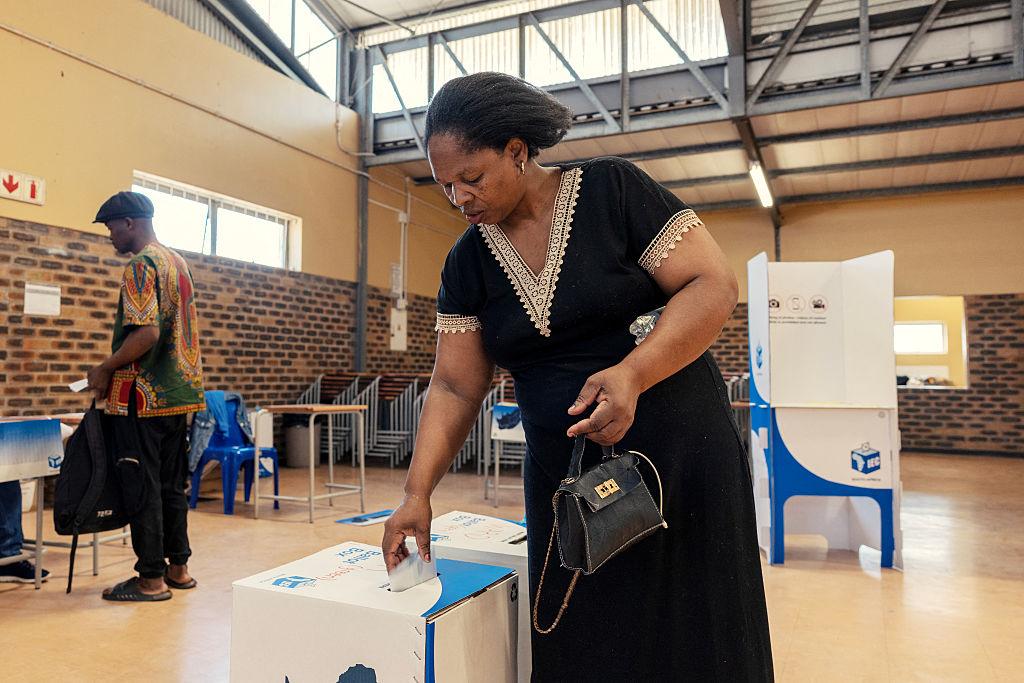
“Early results from South Africa’s November 2024?
Correction: November 2026 municipal elections show the African National Congress facing a substantial decline in support as voters express dissatisfaction with corruption, unemployment, crime and unreliable essential services. Meanwhile, opinion polling points to low confidence in municipal government, increasing political alienation and greater acceptance of coalition government as voters demand accountability and measurable improvements in their communities.”
South Africa’s Public Mood Signals Growing Political Discontent as Municipal Election Results Unfold
Introduction: A changing political landscape
South Africa is experiencing a significant shift in public opinion following the 4 November 2026 Local Government Elections, with emerging results highlighting growing dissatisfaction with established political leadership and increasing demands for accountable governance. The election has become an important indicator of how citizens perceive political parties, municipal institutions and the country’s democratic system.
Early results released on Thursday, 5 November, indicate that the African National Congress (ANC) is experiencing another substantial electoral setback. With approximately 36% of votes counted, the ANC had around 32% support, narrowly ahead of the Democratic Alliance (DA) at 27%. Although counting remains incomplete, these figures illustrate the continuing transformation of South Africa’s political environment.
Beyond party competition, the election highlights a deeper public concern: whether political institutions can effectively respond to the everyday challenges facing ordinary South Africans.
Public dissatisfaction emerges as a central political force
Public opinion in South Africa has increasingly been shaped by concerns about unemployment, crime, corruption, water shortages, electricity disruptions and deteriorating infrastructure.
For many citizens, municipal government represents the most immediate connection between political leadership and everyday life. Consequently, failures involving water supply, sanitation, road maintenance, waste collection and electricity infrastructure have become important measures through which voters evaluate political performance.
Reuters reported ahead of the elections that water, employment, crime and affordable housing were among the principal issues influencing voters in Johannesburg, Cape Town, Tshwane and eThekwini. These concerns have increasingly become political issues because residents expect municipalities to provide reliable services and improve living conditions.
The election results suggest that dissatisfaction is translating into electoral consequences. Rather than automatically supporting historically dominant political organisations, voters increasingly appear willing to reconsider their political choices.
This development represents an important change in South Africa’s democratic environment, where electoral competition is becoming more responsive to public dissatisfaction.
Opinion polling reveals declining trust in local government
One of the strongest indicators of the changing public mood comes from the Ipsos Khayabus Pulse of the People study published on 2 November 2026.
The research found that only approximately one-quarter of South Africans aged 18 and older expressed trust in their current local governments. Among registered voters, 55% reported distrust in municipal authorities.
These findings illustrate the extent of the confidence challenge confronting local administrations.
Trust in government is closely connected to the quality of public services. When residents experience repeated water interruptions, poor sanitation, damaged roads and ineffective infrastructure maintenance, they may increasingly question whether municipal institutions are capable of fulfilling their responsibilities.
The Ipsos study also found that 68% of registered voters believed poor sanitation caused by water interruptions represented a serious health risk in their communities.
Furthermore, 66% believed local governments did not adequately understand the importance of maintaining infrastructure necessary for reliable service delivery.
These findings indicate that public dissatisfaction is not simply about political personalities or party competition. It is increasingly connected to citizens’ practical experiences with municipal institutions.
Political parties face a credibility challenge
The election has also exposed a broader challenge concerning political representation.
According to Ipsos’ October 2026 polling, 53% of eligible voters said no political party represented their views. Among registered voters, approximately half expressed similar sentiments.
Additionally, 68% of registered voters agreed that politicians could not be trusted, while only 15% disagreed.
These figures point towards substantial political alienation.
Political alienation occurs when citizens feel disconnected from political organisations, leaders or decision-making institutions. It can influence electoral participation, encourage protest movements and increase support for alternative political formations.
The results suggest that many South Africans are not necessarily rejecting democracy itself. Instead, they may be questioning whether existing political parties adequately represent their interests or respond to their concerns.
This distinction is important because democratic dissatisfaction can create opportunities for political renewal, provided institutions respond constructively.
The ANC’s declining support reflects changing voter expectations
The ANC’s performance remains one of the most significant developments emerging from the election.
The party received approximately 47.5% of the vote during the 2021 local government elections. Ipsos’ latest pre-election survey estimated its support at approximately 30% among registered voters selecting a party on a simulated ballot.
Early election results now suggest further electoral pressure, although the final outcome remains uncertain.
The decline reflects multiple factors, including dissatisfaction with municipal administration, economic challenges, corruption allegations and concerns about the quality of public services.
The ANC’s historical position as South Africa’s dominant political organisation has increasingly been challenged by changing voter expectations.
Citizens are demanding stronger accountability, improved infrastructure, economic opportunities and greater transparency in public administration.
The election therefore represents more than a contest between political parties. It also reflects public assessment of the governing party’s record and its ability to address longstanding national challenges.
Coalition government gains public acceptance
Another important development concerns changing attitudes towards coalition politics.
Ipsos reported that 65% of South Africans believed political parties should cooperate at municipal level.
This finding suggests that many citizens increasingly accept political cooperation as a practical alternative to single-party dominance.
The changing political landscape means that coalition governments are likely to remain important in several municipalities.
Coalitions can create opportunities for broader representation and shared decision-making. However, they also introduce challenges involving political disagreements, competing priorities and administrative stability.
Public confidence in coalition arrangements will depend on whether these governments deliver tangible improvements.
Voters are likely to judge coalitions not simply by their composition but by their ability to provide reliable services, manage public finances and maintain effective administration.
The election therefore places renewed pressure on political parties to demonstrate that cooperation can produce better governance.
Voter participation and political disengagement
Public opinion also reveals an important tension between citizens who remain politically engaged and those who increasingly feel disconnected from electoral processes.
Ipsos found that 62% of South Africans agreed that they were looking forward to voting in the 2026 local elections. However, approximately 35% of eligible adults were not registered to vote.
The relationship between dissatisfaction and participation remains complicated.
Some citizens may respond to frustration by voting against incumbent parties, while others may withdraw from electoral participation because they believe elections cannot produce meaningful change.
Election analysis published by EWN on 5 November highlighted differences in turnout between historically white voting districts, predominantly coloured communities and predominantly black communities.
The analysis suggested that middle-class voters were more likely to participate, while some poorer communities appeared increasingly disillusioned with the electoral process. Political analyst Tessa Dooms argued that persistent service delivery failures could contribute to the perception that voting does not necessarily bring tangible improvements.
These differences highlight the importance of understanding political participation beyond aggregate turnout figures.
Service delivery remains central to public confidence
The relationship between service delivery and political legitimacy is becoming increasingly important.
Municipal governments are expected to provide functioning infrastructure, maintain public facilities, support economic development and ensure communities receive essential services.
However, persistent problems involving water supply, sanitation, electricity, waste management and roads have weakened confidence in municipal administration.
Ipsos reported that 69% of registered voters believed newly elected local governments should prioritise appointing skilled and experienced artisans and technicians.
This finding suggests that voters increasingly associate effective governance with professional competence and technical capacity.
Political appointments and campaign promises may attract public attention, but residents ultimately expect practical results.
Consequently, the incoming municipal administrations will face pressure to strengthen institutional capacity, improve infrastructure maintenance and demonstrate measurable progress.
Public protest remains an important expression of dissatisfaction
South Africa’s political environment also continues to reflect a strong relationship between public opinion and community protest.
Ipsos found that 58% of registered voters considered protests, strikes and marches acceptable responses when residents were dissatisfied with service delivery.
This finding illustrates the continuing importance of collective action in South African democracy.
Public demonstrations can provide communities with an opportunity to express frustration, demand accountability and draw attention to neglected local concerns.
However, persistent dissatisfaction can also create tensions between residents and municipal authorities.
The challenge for elected leaders is therefore to strengthen communication with communities, establish effective complaint mechanisms and ensure that public concerns receive meaningful responses.
Implications for South Africa’s democratic future
The emerging election results and recent opinion surveys point towards a more competitive and fragmented political environment.
No political party currently commands overwhelming national support, while voter dissatisfaction and declining trust have become increasingly important features of public debate.
This transformation could strengthen democratic accountability by encouraging political parties to compete more effectively for public confidence.
Nevertheless, electoral competition alone cannot resolve South Africa’s underlying governance challenges.
Public trust will depend on whether political institutions demonstrate competence, transparency and responsiveness.
The coming coalition negotiations will provide an important test of whether political parties can translate electoral competition into effective administration.
For municipalities facing infrastructure challenges, unemployment and financial pressures, the priorities are particularly urgent.
Conclusion: A public demanding accountability and change
South Africa’s 2026 Local Government Elections reveal a public increasingly concerned about the performance of political institutions and the quality of municipal governance.
Early results indicate that voters are prepared to challenge established political dominance, while opinion polling demonstrates substantial distrust in local government and growing dissatisfaction with political representation.
The findings also suggest that public expectations are changing. Citizens increasingly demand competent administration, reliable infrastructure, accountability and meaningful cooperation between political parties.
The election represents an important moment for South Africa’s democratic development.
Ultimately, the strength of the country’s political institutions will depend not simply on electoral victories but on their ability to respond to public expectations and improve everyday living conditions.
As counting continues and coalition negotiations approach, South Africans will be watching closely to determine whether the new political environment delivers the meaningful changes that voters have increasingly demanded.



