




“South Africa’s increasingly strained relationship with the United States is drawing renewed attention after Western Cape exporters warned that deteriorating bilateral relations are putting established trade links at risk, with provincial exports to the US falling by about R2.8 billion between 2024 and 2025. The warning comes as diplomatic disagreements between Pretoria and Washington continue, raising questions about how South Africa can protect its economic interests while maintaining its foreign-policy positions.”
South Africa’s relationship with the United States is facing renewed scrutiny as concerns over diplomatic tensions increasingly intersect with trade, investment and business interests. The latest warning has come from Exporters Western Cape, which says the deterioration in bilateral relations is creating uncertainty for companies that have spent years developing access to the American market. The organisation is urging both governments to engage directly to protect commercial relationships.
The issue has become particularly significant because the Western Cape recorded a substantial decline in exports to the United States during 2025. According to figures cited by Exporters Western Cape, exports from the province fell from approximately R17.31 billion in 2024 to R14.51 billion in 2025, representing a decline of around 16.2%, or R2.8 billion. The United States also moved from being the province’s second-largest export market to its fourth-largest during that period.
The figures provide an economic dimension to what has increasingly become a diplomatic dispute. South Africa and the United States remain important partners in trade, investment and international affairs, but disagreements over domestic policy, foreign policy and diplomatic conduct have created a more difficult environment for bilateral engagement.
Exporters Western Cape chairman Terry Gale has called for urgent intervention at the highest level. His organisation has argued that exporters need stability and predictable access to international markets, particularly because developing new customers and distribution networks can take years.
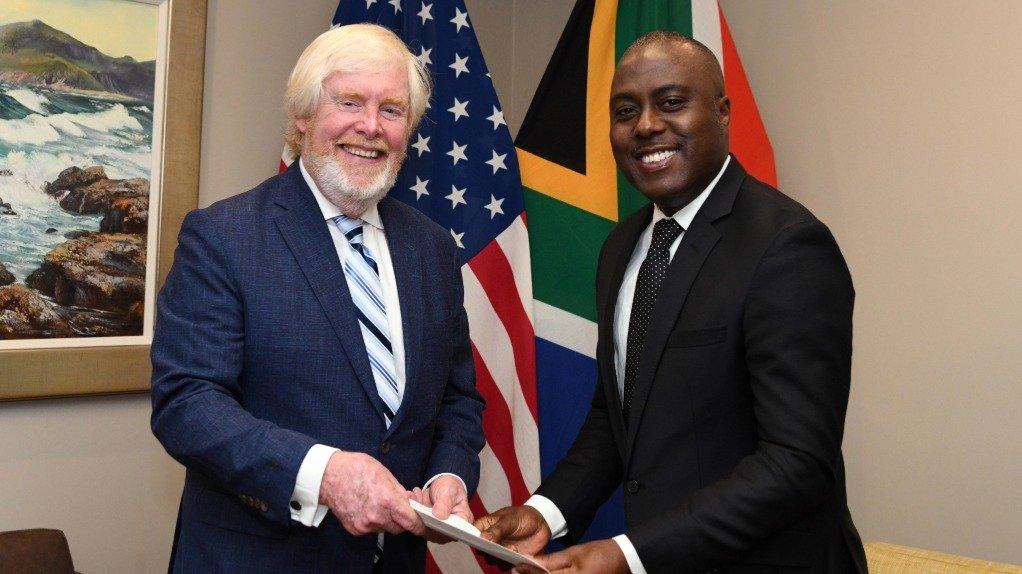
The concerns come against the background of increasingly public disagreements between International Relations and Cooperation Minister Ronald Lamola and US Ambassador Leo Brent Bozell III. South Africa has issued a third diplomatic protest, or démarche, involving the ambassador since he began his posting. Parliament’s Portfolio Committee on International Relations and Cooperation said it was concerned about what DIRCO described as undiplomatic conduct and said it would seek a fuller briefing from the department.
A démarche is a formal diplomatic communication used by one government to raise concerns with another government. In this case, South African officials have objected to what they regard as interference in domestic matters and commentary that does not respect South African sovereignty. The United States, meanwhile, has continued to raise concerns about South African policies and Pretoria’s international positions.
The diplomatic dispute therefore extends beyond personalities. At its core are differences over how the two countries understand issues including land reform, economic transformation, race-based redress, foreign policy and South Africa’s approach to international conflicts.
Washington has criticised aspects of South African domestic policy, while Pretoria has rejected the characterisation of its policies by the US administration. Targeted US visa restrictions announced in September added another layer to the dispute. Exporters Western Cape has warned that continued uncertainty could have consequences beyond diplomatic statements, particularly if companies begin to lose American customers or face greater uncertainty about market access.
For businesses, diplomatic relationships matter because they influence the broader environment in which trade takes place. Tariffs, customs requirements, market-access arrangements, investment decisions, visa rules and regulatory cooperation can all affect commercial activity. Even when formal trade restrictions are not immediately imposed, uncertainty can influence companies’ decisions about where to source products, establish distribution networks or make long-term investments.
The Western Cape’s experience illustrates this risk. The province has strong agricultural, food, manufacturing and other export industries that depend on international customers. Citrus, wine, fruit and other products form part of the province’s international trading profile, making predictable access to foreign markets particularly important.
The fall in exports to the United States should not automatically be attributed entirely to the diplomatic dispute. Export performance is influenced by many factors, including exchange rates, prices, demand, tariffs, logistics, competition and individual product conditions. Nevertheless, business organisations argue that worsening diplomatic relations can add another layer of uncertainty at a time when exporters are already operating in a competitive international environment.
The broader South African government position also involves maintaining diversified international relationships. South Africa has increasingly emphasised cooperation with African countries, BRICS partners, the European Union, countries in Asia and the Middle East, and other members of the Global South. Government material on international relations describes expanding trade and investment relationships across these regions while also maintaining economic connections with established industrialised economies.
Diversification can provide South Africa with additional markets, but it does not necessarily provide an immediate replacement for an existing major trading relationship. Exporters may spend years establishing brand recognition, meeting regulatory requirements, developing relationships with distributors and understanding consumer demand in a foreign country.
That is why Exporters Western Cape has argued that market diversification should happen alongside efforts to preserve established trade rather than instead of them. The organisation has called for negotiations that can separate legitimate policy disagreements from the practical need to maintain commercial relationships.
The issue is also important for employment. Export industries support jobs not only inside exporting companies but across logistics, agriculture, manufacturing, warehousing, transport, packaging and professional services. A sustained decline in export demand can therefore have effects across an extended supply chain.
At the diplomatic level, Pretoria faces the challenge of balancing several objectives simultaneously. South Africa wants to defend its sovereignty and maintain the foreign-policy positions established by its government, while businesses want stable international relationships that allow them to trade and invest. These objectives do not necessarily have to conflict, but tensions between governments can make that balance more difficult.
The United States is also an important global economic and political actor. Consequently, developments in the bilateral relationship can affect South African companies beyond direct exports to America. Investor perceptions, currency movements, multinational business decisions and South Africa’s international economic reputation can all be influenced by perceptions of diplomatic stability.
Recent developments demonstrate how quickly political disagreements can enter economic discussions. A report published on 8 October noted that Western Cape exporters were calling for government intervention to address the deterioration in relations, citing the R2.8 billion fall in exports. This places the issue firmly within South Africa’s wider international-relations debate.
At the same time, South Africa continues to maintain diplomatic engagement with other major partners. DIRCO announced that it would participate in an inaugural South Africa–European Union Peace, Security and Defence Dialogue on 8 October, covering regional and global security, defence cooperation, organised crime, counterterrorism, cybersecurity, maritime security and other issues.
This broader diplomatic activity illustrates that South Africa’s international relations are not defined by one bilateral relationship. Pretoria is simultaneously managing relationships across multiple regions and international institutions. Nevertheless, the United States remains significant because of the depth of existing commercial, political and people-to-people links.
The immediate question is therefore whether Pretoria and Washington can manage their disagreements without allowing them to cause further disruption to economic relationships. Exporters Western Cape has argued that direct engagement is necessary and that both governments can disagree on policy while still recognising the importance of bilateral commerce.
For South African exporters, the issue is practical rather than theoretical. International markets require long-term planning, and companies need confidence that relationships with customers and partners will remain viable. For government, the challenge is to protect national interests while ensuring that diplomatic disagreements do not unnecessarily reduce opportunities for South African businesses.
The R2.8 billion decline in Western Cape exports does not by itself establish that diplomatic tensions caused the entire reduction. However, it provides a measurable indication of the economic scale of the trading relationship and explains why business organisations are closely watching developments between Pretoria and Washington.
As South Africa continues to diversify its international partnerships, the United States relationship will remain an important part of the country’s foreign-policy and economic landscape. The coming period will show whether renewed diplomatic engagement can reduce uncertainty, restore confidence among exporters and create space for disagreements to be managed through formal channels rather than increasingly public confrontation.
For now, the message from exporters is clear: international relations have direct consequences for businesses operating far beyond government offices and diplomatic missions. The performance of South African exports, the stability of commercial partnerships and the protection of jobs can all be affected by how governments manage their differences. The challenge facing Pretoria and Washington is therefore not simply diplomatic. It is also economic, commercial and strategic.



