




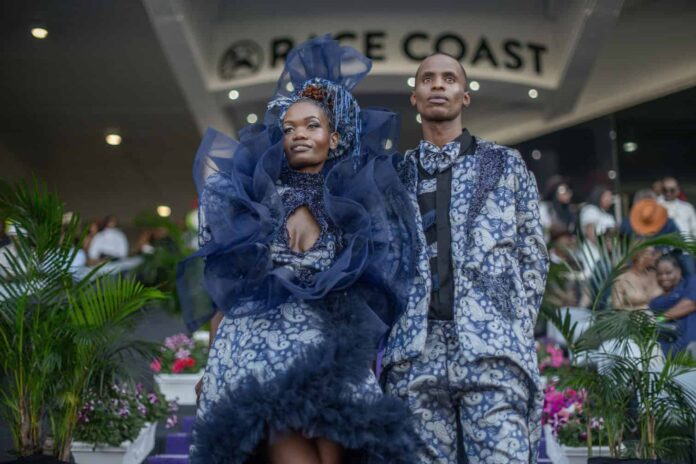
“Proudly South African partnered with the Hollywoodbets Durban July to promote local fashion through its annual “Local Fashion Police” activation, rewarding racegoers who showcased South African creativity. The initiative highlighted localization, sustainability, and economic empowerment, positioning Durban July as both a lifestyle spectacle and a platform for fashion advocacy.”
The Hollywoodbets Durban July, South Africa’s premier horseracing and lifestyle event, once again proved to be more than just a sporting occasion. On July 13, 2026, Proudly South African leveraged the glamour and visibility of the event to spotlight local fashion designers, reinforcing its mission to champion localization and economic growth through creative industries. With over 45,000 attendees, the Durban July provided the perfect stage for the organizations annual Local Fashion Police activation, which asked racegoers a simple but powerful question: “Are You Wearing Local?”
The Theme: Country Allure
This year’s theme, “Country Allure”, challenged attendees to blend rugged rural heritage with equestrian elegance. The creative brief encouraged designers and guests to reinterpret traditional Western costumes with South African flair, resulting in a vibrant mix of textures, silhouettes, and cultural references. The theme resonated strongly with Proudly South African’s localisation agenda, as it celebrated heritage while promoting contemporary design.
Proudly South African’s Activation
At the heart of the activation was the Local Fashion Police campaign, which invited attendees to showcase their locally designed outfits. Participants were encouraged to pledge support for South African fashion, reinforcing consumer awareness of the importance of buying local. The campaign was not only interactive but also rewarding:
- Best-dressed female wearing local fashion won R10,000 worth of fashion from Imprint by Mzukisi Mbane.
- The runner-up received R5,000 worth of fashion from Imprint, further incentivising engagement with local brands.
Strategic Partnerships
Proudly South African’s activation was supported by Ford South Africa, which provided transport for the team. This collaboration underscored the broader message of localisation across industries, from automotive manufacturing to fashion. By aligning with Durban July, Proudly South African demonstrated how cross-sector partnerships can amplify the localisation agenda.
Economic and Cultural Impact
The activation was more than a fashion showcase; it was a statement about economic empowerment. Proudly South African’s CEO, Eustace Mashimbye, emphasised that localisation is central to strengthening South Africa’s economy. By encouraging consumers to choose homegrown products, the initiative supports job creation, sustains local businesses, and fosters national pride.
The Durban July itself has evolved into a cultural phenomenon, blending sport, fashion, and entertainment. Its growing popularity provides a powerful platform for advocacy campaigns like Proudly South African’s, ensuring that messages about sustainability and localisation reach a wide audience.
Designer Spotlight: Imprint by Mzukisi Mbane
Imprint’s involvement added significant value to the activation. Known for bold prints and innovative reinterpretations of African heritage, Mbane’s designs embody the fusion of tradition and modernity. By rewarding racegoers with Imprint fashion, Proudly South African highlighted the calibre of local talent and reinforced the idea that South African designers can compete globally.
Broader Strategy
This activation forms part of Proudly South African’s broader strategy to champion localisation. By leveraging high-profile events like Durban July, the organisation seeks to influence consumer behaviour, encouraging both public and private sectors to increase uptake of locally made products. The campaign aligns with national economic goals, particularly in sectors like clothing, textiles, and manufacturing.
Audience Engagement
The interactive nature of the campaign ensured strong audience participation. Attendees were not passive spectators but active contributors to the localisation narrative. By pledging support and showcasing local fashion, racegoers became ambassadors for the cause, extending the impact beyond the event itself.
Conclusion
The Proudly South African activation at Durban July 2026 exemplifies how fashion events can serve as platforms for economic advocacy. By combining glamour with grassroots messaging, the initiative successfully elevated local designers, engaged audiences, and reinforced the importance of supporting homegrown industries. As Durban July continues to grow, its role as a cultural and economic catalyst will only strengthen, ensuring that South African fashion remains at the forefront of global conversations.



