




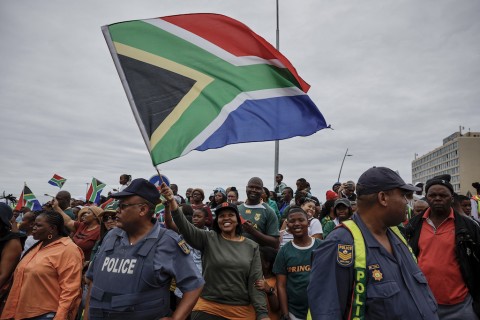
“South Africans are voicing strong opposition to the Treasury’s suspension of municipal funding, citing fears of worsening service delivery and corruption. Public opinion polls and civil society groups highlight a growing demand for transparency and accountability in government decision-making.”
On July 8, 2026, South Africa’s political landscape was shaken by a wave of public discontent following the Treasury’s announcement that municipal funding would be withheld from several struggling municipalities. This decision, framed as a corrective measure to address mismanagement and corruption, has instead ignited widespread anger among citizens who view it as a direct assault on their right to basic services. Public opinion has become the central force driving the national debate, with surveys, protests, and media coverage amplifying the voices of ordinary South Africans demanding accountability.
Background
Municipal funding is the lifeblood of local governance, enabling communities to access water, sanitation, electricity, and housing. The Treasury’s move to suspend funds was justified on the grounds of financial mismanagement, but critics argue that punishing municipalities ultimately punishes residents. Civil society organizations, including unions and advocacy groups, have condemned the decision, warning of a looming humanitarian crisis if services collapse.
Public Opinion Trends
Recent polling data indicates a sharp decline in trust toward national institutions. Citizens overwhelmingly believe that corruption and poor governance are eroding democracy. Afrobarometer’s latest survey underscores this sentiment, showing that over 60% of South Africans feel their voices are ignored by political leaders.
Key findings include:
- Declining trust in government institutions: Citizens perceive Parliament and the Presidency as increasingly disconnected from grassroots realities.
- Demand for accountability: Public opinion strongly favors independent oversight of municipal finances.
- Civil society activism: Protests and petitions are gaining traction, reflecting a renewed push for participatory democracy.
Political Reactions
Opposition parties have seized on the issue, framing the funding cuts as evidence of the ruling party’s failure to govern responsibly. The Democratic Alliance (DA) has called for an immediate parliamentary inquiry, while the Economic Freedom Fighters (EFF) argue that the decision disproportionately harms poor communities. President Cyril Ramaphosa, meanwhile, has defended the Treasury’s stance, insisting that fiscal discipline is necessary to restore credibility.
Civil Society Mobilization
Unions such as the South African Municipal Workers Union (Samwu) have staged demonstrations, accusing the government of scapegoating workers and residents. Advocacy groups are mobilizing campaigns to demand transparency, with slogans like “Funds for Services, Not Corruption” resonating across social media. This groundswell of activism reflects a broader trend in South African politics: citizens are increasingly unwilling to remain passive in the face of governance failures.
Implications for Democracy
The controversy highlights a critical tension in South Africa’s democracy: balancing fiscal responsibility with citizen welfare. Public opinion is emerging as a decisive factor in shaping political outcomes. Analysts warn that ignoring citizen voices could deepen disillusionment and fuel populist movements. Conversely, engaging with public concerns could strengthen democratic legitimacy and rebuild trust.
International Perspective
South Africa’s funding crisis has drawn attention from international observers, who see it as a test case for governance in emerging democracies. The World Bank and African Union have emphasized the importance of citizen engagement, noting that sustainable development requires both fiscal discipline and responsive governance.
Conclusion
The suspension of municipal funding has become more than a financial dispute—it is a referendum on the state of South African democracy. Public opinion is clear: citizens demand accountability, transparency, and respect for their voices. Whether the government responds constructively will determine not only the future of municipal services but also the trajectory of democratic governance in South Africa.



