




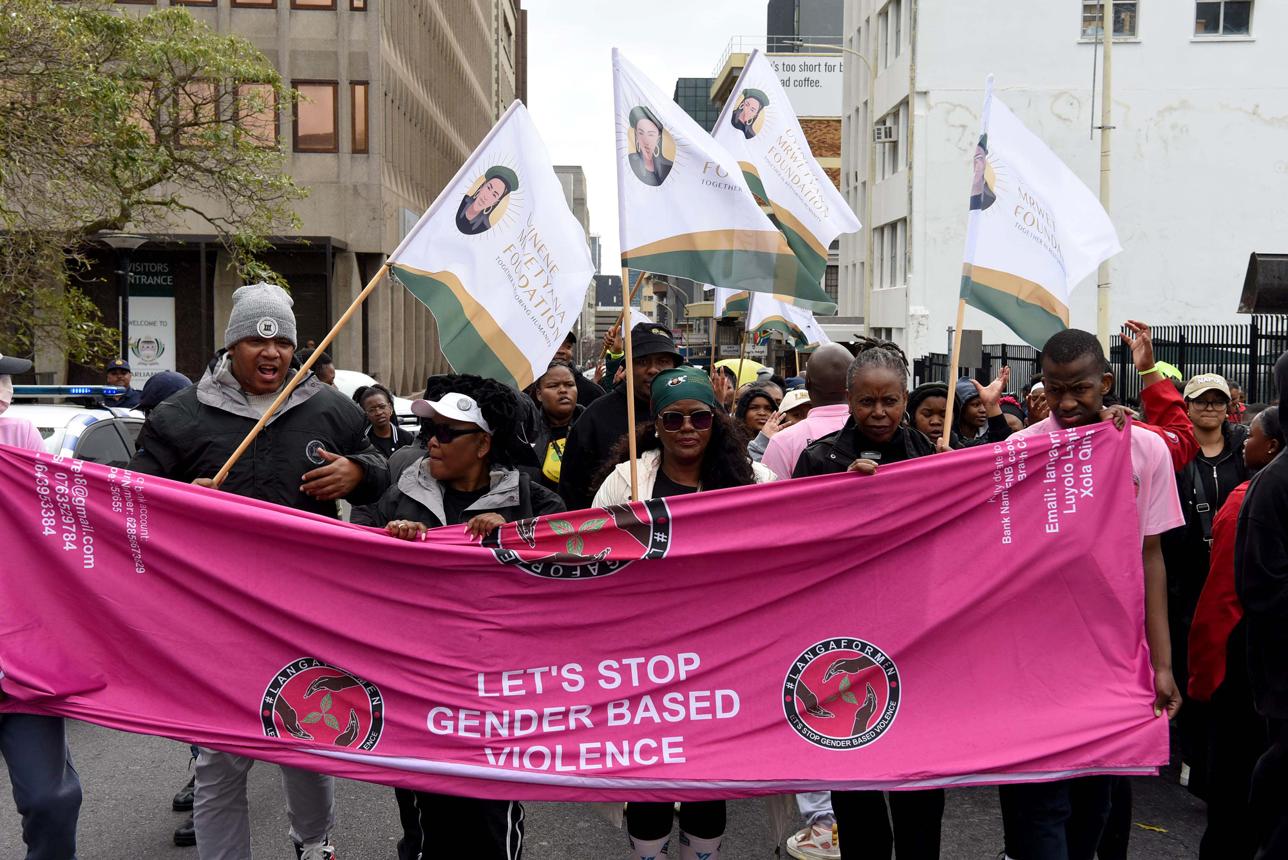
“More than 2,500 people were reported by the Cape Argus to have taken part in the Princess Vlei march, wearing mainly black and purple and calling for an end to femicide and gender-based violence. The mobilization came amid investigations into the deaths of nine women in Ekurhuleni and renewed debate over whether government measures, policing, funding and community prevention efforts are producing meaningful change.”
Cape Town — Activism against gender-based violence and femicide remained a major public issue in South Africa this week as thousands of people joined a Heritage Day solidarity march at Princess Vlei in Cape Town. The demonstration, organised by One Billion Rising South Africa and led by activist Lucinda Evans, brought women, men, children, survivors and community organisations together to call for stronger action against violence. The latest reports published on September 25 place the mobilisation among the most significant recent activism stories in the country, although searches did not identify a qualifying major South African activism report dated September 26 itself.
A public demonstration shaped by recent killings
The Princess Vlei march took place against a deeply charged national backdrop. Police have been investigating the deaths of nine women whose bodies were discovered in Ekurhuleni over roughly two months, with some victims showing signs of sexual assault. Reuters reported that the killings reignited anger and fear among South Africans and prompted memorial runs, vigils and other forms of activism. One memorial event honoured Elizabeth Moselakgomo, who disappeared after going for a run and was later found dead.
Those developments have given new urgency to existing campaigns against gender-based violence. Reuters reported that the Uyinene Mrwetyana Foundation called for women to be able to live, walk, run and exist without fear. Women for Change also criticised approaches that place responsibility on women to avoid violence, arguing that wider systems of policing and prevention must be addressed.
At Princess Vlei, participants translated those concerns into a visible public demonstration. The Cape Argus reported that more than 2,500 women, men and children joined the solidarity march around the area along the M5. Participants largely wore black and purple, while survivors, families and activists used the gathering to mourn victims and demand action.
Activism and the political response
Although the march was organised as a civil-society mobilisation rather than a party-political event, its demands intersect directly with government responsibilities. Public safety, policing, victim support, criminal justice, shelters, prevention programmes and funding all involve state institutions, making GBV activism an important part of South Africa’s broader political debate.
The Gauteng Community Safety Department separately supported a men-led march in KwaThema on September 25. SABC News reported that the initiative aimed to shift more of the responsibility for preventing gender-based violence away from survivors and towards perpetrators and bystanders. Department representative Jeff Xaba said men would continue engaging until there was change in communities.
That approach reflects an important strand of current activism: involving men not simply as supporters of campaigns, but as participants in prevention. At Princess Vlei, Evans also thanked men who attended and called for spaces in which men could contribute to solutions. Other participants argued that men who witness abuse should not remain silent.
The focus on men is significant because activism around GBV increasingly addresses behaviour, social norms and community responsibility alongside formal law enforcement. Campaigners have also continued to press for institutional accountability, arguing that declarations and strategies must be accompanied by implementation.
A crisis measured in statistics and lived experience
The scale of South Africa’s gender-based violence problem provides the background to these demonstrations. The Cape Argus reported that Parliament has previously highlighted a femicide rate of about nine women per 100,000, approximately five times the global average, while citing police figures showing that 957 women were murdered between July and September 2024. The same report cited South African Medical Research Council research indicating that about three women are killed every day by an intimate partner.
These figures describe a national problem, but activists emphasise that statistics do not fully capture lived experiences of fear and loss. The recent Ekurhuleni killings have therefore become a catalyst for renewed public mobilisation, with activists using vigils, marches, running events and social-media campaigns to keep attention on the issue.
Reuters reported that some women criticised police advice encouraging additional precautions when exercising or walking alone. Women for Change argued that safety measures should not become a substitute for addressing perpetrators, policing failures and wider conditions that allow violence to continue.
Government commitments and questions over implementation
The protests also place renewed attention on government commitments. Reuters reported that President Cyril Ramaphosa said South Africa could not become accustomed to violence against women and promised that investigations into the recent killings would receive attention. The Cape Argus reported that gender-based violence and femicide had been classified as a national disaster earlier in the year and that parliamentary committees had called for greater clarity around funding and implementation.
For activists, however, the central question is how policy commitments translate into everyday safety. A national declaration can establish political priority, but its practical effect depends on budgets, institutions, trained personnel, effective investigations, survivor support and coordination between national, provincial and local authorities.
The debate therefore extends beyond the wording of speeches. Civil-society groups are asking how quickly police respond to reports, how investigations are resourced, whether survivors can access support, whether communities have functioning prevention programmes and whether perpetrators are held accountable through the justice system.
A wider movement of public participation
The Princess Vlei mobilisation is part of a broader pattern of activism. In September, memorial runs, community marches, vigils and awareness events have taken place in response to the Ekurhuleni deaths. EWN reported that a 24-hour awareness run at Rondebosch Common was planned from September 25 to September 26, giving runners and supporters an opportunity to highlight women’s concerns about being able to exercise safely at any time of day.
The variety of actions illustrates how activism can operate through different channels. A march creates a public gathering and visual statement. A memorial run connects the issue to an individual victim. A community discussion can focus on prevention. Social media can spread messages beyond the physical location of an event. These activities keep the issue visible and create opportunities for citizens to question institutions.
Activism does not automatically resolve the underlying problem. Demonstrations can increase visibility and pressure, but lasting change depends on decisions by institutions, communities and individuals. Measuring progress requires evidence such as crime statistics, investigation outcomes, access to survivor services, budget allocations and implementation reports.
What the latest mobilisation means
The Princess Vlei march demonstrates that GBV remains a significant issue for organised civil society and community activists in South Africa. Its timing, shortly after the discovery of multiple bodies in Ekurhuleni, gave the event particular urgency, while the participation of men, children, survivors and community groups broadened the public character of the mobilisation.
The events also show how activism and formal politics interact without being identical. Activists can demand action, challenge official responses and draw attention to gaps between policy and experience. Government departments and political leaders, meanwhile, control many of the resources and institutions through which public responses are implemented.
As South Africa continues investigating the Ekurhuleni deaths, attention is likely to remain focused on whether official commitments produce measurable changes in safety and justice. For civil-society organisations, the continuing marches and awareness events provide a mechanism for maintaining public pressure. For authorities, the demonstrations highlight the level of concern in communities and the expectation that policy announcements should be followed by visible implementation.
The latest activism therefore centres on a straightforward public question: how can South Africa turn widespread concern about gender-based violence into sustained prevention, effective investigations, meaningful survivor support and accountability? The answer will depend on interaction between citizens, civil society, police, courts, government departments and communities.



