




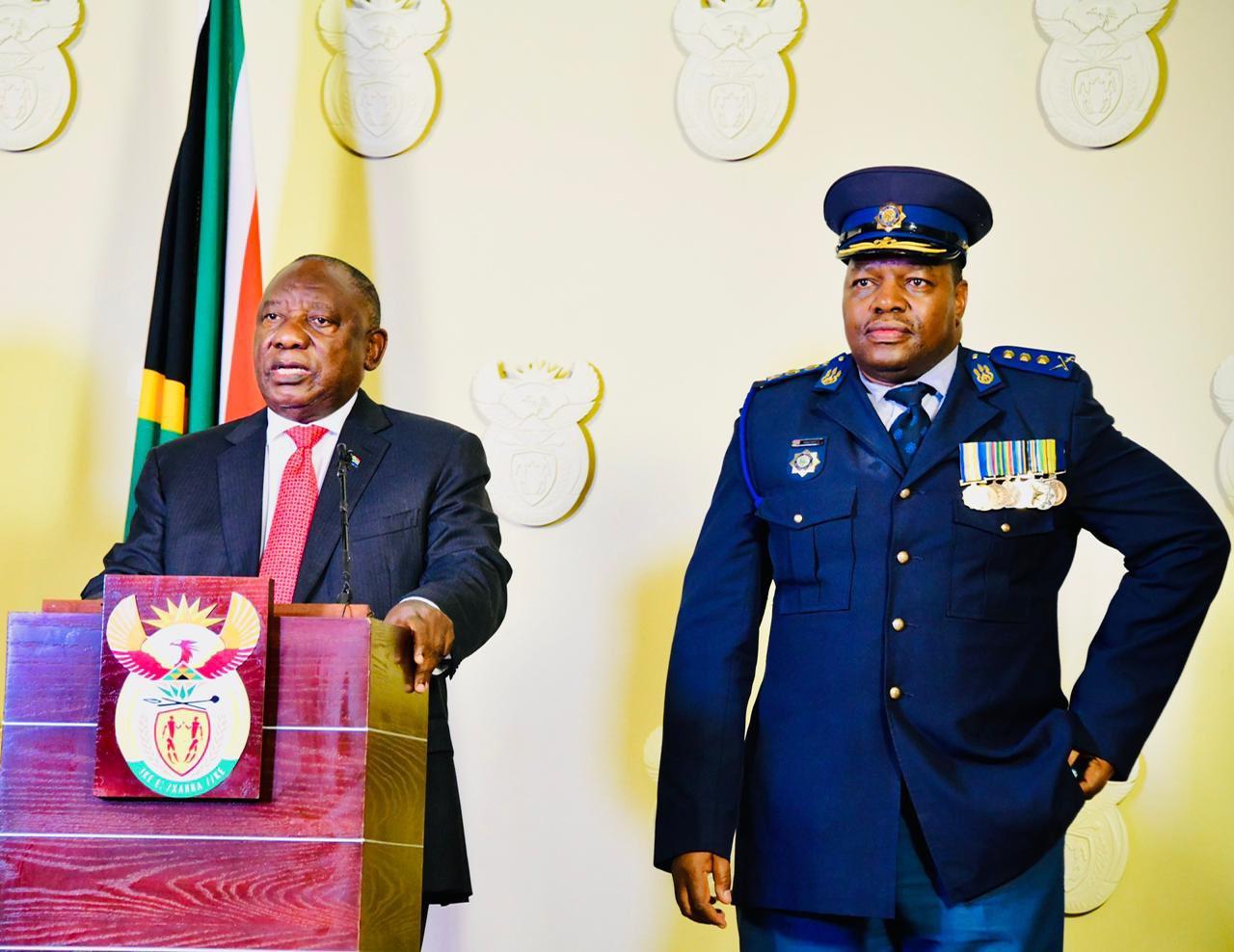
“President Cyril Ramaphosa has lifted the suspension of National Police Commissioner Fannie Masemola, who is expected to resume his duties after charges linked to a controversial police services contract were dropped by the National Prosecuting Authority in September 2026. His return comes amid wider scrutiny of alleged police corruption, following revelations before the Madlanga Commission of Inquiry and the departure of former deputy police chief Shadrack Sibiya.”
Ramaphosa Reinstates Fannie Masemola as South Africa’s Police Accountability Debate Intensifies
JOHANNESBURG, 17 October 2026 — South Africa’s public-sector governance has come under renewed scrutiny following President Cyril Ramaphosa’s decision to lift the suspension of National Police Commissioner Fannie Masemola. The development, announced on Friday, 16 October, comes at a sensitive moment for the country’s criminal justice system, as allegations of corruption and misconduct within law enforcement continue to attract public attention.
Masemola is expected to resume his duties on Monday, 19 October, after spending approximately six months away from his position. His suspension followed charges relating to alleged breaches of public finance legislation in connection with a police contract worth approximately $21 million. The National Prosecuting Authority (NPA) subsequently dropped the charges against him and other senior officers in September 2026.
The decision has brought renewed attention to the relationship between executive authority, criminal investigations and accountability in public institutions. Although the withdrawal of charges is a significant development, questions remain about the wider circumstances surrounding the contract and the governance systems intended to protect public resources.
The decision to restore police leadership
President Ramaphosa’s decision represents an important administrative development for the South African Police Service (SAPS), an institution responsible for maintaining public order, investigating crime and protecting communities.
According to the Presidency’s announcement, the president welcomed Masemola’s return to his full duties and expressed appreciation for Lieutenant-General Puleng Dimpane, who served as acting national police commissioner during his absence.
The appointment of a permanent commissioner is important because national police leadership influences operational priorities, management decisions and relationships with other institutions within the criminal justice system.
Nevertheless, restoring a senior official to office involves more than filling a vacant leadership position. It also requires attention to public confidence, internal discipline and the credibility of oversight mechanisms.
The decision follows the withdrawal of charges rather than a reported criminal conviction being overturned. That distinction matters because the legal status of an individual and the broader administrative questions surrounding a public contract are separate issues.
The available reporting does not establish that Masemola was found guilty of wrongdoing. Accordingly, the allegations connected to the contract should not be presented as proven misconduct on his part.
The controversial police contract
The case concerns a contract valued at approximately $21 million intended to provide health and well-being services to police officers. Investigators suspected irregularities in the awarding of the contract, while allegations included possible fraud, corruption and money laundering involving certain officials.
Public procurement is a central governance issue because government departments and public institutions spend money collected from taxpayers to obtain services, infrastructure and equipment.
When procurement systems operate transparently, contracts can deliver value for money, encourage competition and ensure that suppliers are selected according to established requirements.
However, allegations of irregular tendering can undermine confidence in the entire process. They can also raise concerns about whether suppliers were treated fairly, whether officials followed applicable procedures and whether public institutions received the services for which they paid.
In this case, the withdrawal of charges against Masemola does not automatically answer every question about the contract itself. Any outstanding administrative or investigative questions would need to be addressed through the appropriate lawful procedures.
Effective governance requires authorities to distinguish between allegations against individuals and the institutional performance of the organisations in which they serve.
It also requires accurate public communication. Officials should explain what has been established, what remains unresolved and what corrective measures, if any, are necessary without prejudicing legal rights.
The Madlanga Commission and institutional accountability
Masemola’s reinstatement comes while the Madlanga Commission of Inquiry continues examining allegations of corruption within the police and related institutions.
The commission, chaired by retired Judge Mbuyiseli Madlanga, has become an important focal point for scrutiny of South Africa’s criminal justice system. Its proceedings have included allegations concerning relationships between police officials and criminal networks.
Commissions of inquiry can help establish facts, examine institutional weaknesses and identify reforms that ordinary administrative processes may fail to deliver.
However, their effectiveness depends on the quality of evidence presented, the independence of their work and the implementation of any recommendations that follow.
Public hearings can expose weaknesses in institutional controls, but disclosure alone does not guarantee reform. Authorities must consider credible findings carefully, refer suspected criminal conduct to the appropriate bodies and strengthen systems that prevent similar problems.
The distinction between an allegation made before a commission and a proven finding is equally important. Testimony must be assessed fairly, and individuals implicated in wrongdoing must have appropriate opportunities to respond.
For South Africa, the central governance challenge is ensuring that investigations produce meaningful institutional improvements rather than temporary public attention.
The departure of Shadrack Sibiya
The wider controversy has also been intensified by the departure of former deputy police chief Shadrack Sibiya, who resigned from the police service amid serious allegations and criminal proceedings.
Associated reporting states that Sibiya faces allegations involving sexual offences and alleged connections to criminal networks. He denies the allegations, and his bail proceedings have been postponed.
These matters are distinct from the charges previously brought against Masemola and should not be treated as evidence that the two officials share responsibility for the same alleged conduct.
Nevertheless, developments involving senior police leadership can influence public perceptions of the institution as a whole.
The police service relies on public cooperation to investigate offences, obtain information and protect vulnerable communities. When senior officials become subjects of serious allegations, citizens may question whether internal safeguards are sufficiently robust.
The appropriate institutional response is not to assume guilt before legal proceedings conclude. Rather, it is to ensure that credible allegations receive independent and timely examination, while safeguarding due process and the rights of everyone involved.
Leadership transitions must also preserve operational continuity so that investigations, crime prevention and essential public services are not disrupted.
What the case reveals about public-sector governance
South Africa’s governance framework depends on several interconnected principles: legality, transparency, accountability, professional administration and the responsible use of public money.
The police contract controversy illustrates why these principles must function together.
First, procurement decisions should be supported by clear documentation, objective evaluation criteria and appropriate authorisation. Transparent processes make it easier to identify weaknesses and establish responsibility when concerns emerge.
Second, oversight bodies must have sufficient independence and capacity to investigate suspected misconduct. Their work should not be influenced by political considerations or pressure to reach predetermined conclusions.
Third, disciplinary and criminal processes must remain distinct where the applicable law requires different standards of proof or separate procedures.
Finally, government institutions should communicate decisions clearly. When a senior official returns to duty after charges are withdrawn, explaining the legal and administrative context helps citizens understand what the decision means and what it does not establish.
These measures are important not only for law enforcement but also for departments responsible for infrastructure, healthcare, education and municipal services.
A governance failure in one institution can weaken confidence in the broader public administration system, particularly when citizens already experience difficulties accessing reliable public services.
Political leadership and public confidence
As head of the executive, President Ramaphosa has responsibility for important decisions concerning senior national administration. His decision concerning Masemola therefore carries political as well as administrative significance.
However, the reinstatement should be evaluated through the available evidence and applicable rules rather than assumptions about political motives.
Good governance requires leaders to respect the independence of prosecutors and investigators while ensuring that public institutions remain accountable for their decisions.
The withdrawal of charges by the NPA is a material part of the reported circumstances. At the same time, public confidence depends on whether institutions can demonstrate that their procedures are fair, consistent and capable of addressing genuine concerns.
The Presidency’s acknowledgment of Dimpane’s service also highlights the importance of recognising acting officials who maintain institutional continuity during leadership changes. Stable administration requires both clear leadership arrangements and effective internal management.
Ultimately, confidence will depend on the police service’s conduct, the integrity of future procurement decisions and the ability of oversight institutions to perform their responsibilities without improper interference.
Implications for policing and communities
Governance debates can sometimes appear distant from the everyday experiences of ordinary citizens. Yet the quality of police administration directly affects public safety and access to justice.
Communities depend on police officers to respond to emergencies, investigate crimes, protect victims and treat people fairly. These responsibilities require adequate resources, professional supervision and public trust.
The contract at the centre of the controversy was intended to support police officers’ health and well-being. Ensuring that such services are procured fairly and delivered effectively is therefore important for employees as well as taxpayers.
If procurement weaknesses are identified through appropriate processes, authorities should consider whether financial controls, supplier verification, contract monitoring or reporting arrangements require improvement.
Similarly, police leadership should ensure that internal accountability mechanisms are accessible to personnel who wish to report misconduct.
These steps would help translate governance scrutiny into practical improvements for the institution and the public it serves.
What happens next?
Masemola’s expected return on 19 October will provide an opportunity for the police service to restore permanent national leadership while continuing its operational responsibilities.
Important issues will include maintaining professional standards, supporting lawful investigations and ensuring that allegations of misconduct are handled through appropriate procedures.
The outcome of the wider inquiry and any subsequent institutional responses will also matter. Recommendations will have limited value unless responsible authorities assess them, establish implementation priorities and report transparently on progress.
Parliamentary oversight, independent investigations and public reporting can each contribute to accountability, provided they operate within their respective legal mandates.
It would be premature to conclude that the reinstatement resolves every governance concern connected to the police contract. Equally, it would be unfair to interpret the earlier charges as proof of guilt after their withdrawal.
The appropriate approach is to assess each matter according to the evidence, the applicable law and the findings of the institutions authorised to examine it.
Conclusion: Accountability must extend beyond individual appointments
The reinstatement of Fannie Masemola is a significant development in South Africa’s ongoing debate about police leadership, procurement integrity and public-sector accountability.
The withdrawal of charges against him provides essential context for the president’s decision. However, the wider questions surrounding institutional safeguards, transparent contracting and public confidence remain important governance considerations.
South Africa’s ability to strengthen public administration will depend on more than appointments and announcements. It will require credible oversight, professional leadership, effective investigations and demonstrable improvements in how public resources are managed.
For citizens, the ultimate measure of success is whether institutions serve the public fairly, investigate wrongdoing impartially and deliver reliable services.
Masemola’s return therefore represents both a leadership transition and a test of institutional credibility. The coming weeks and months will show how effectively the police service balances operational continuity with transparency and accountability.
Source verification: This article integrates reporting published by the Associated Press and Reuters on 16 October 2026. The article’s analysis and conclusions are editorial synthesis, not attributed findings of the Madlanga Commission.



