




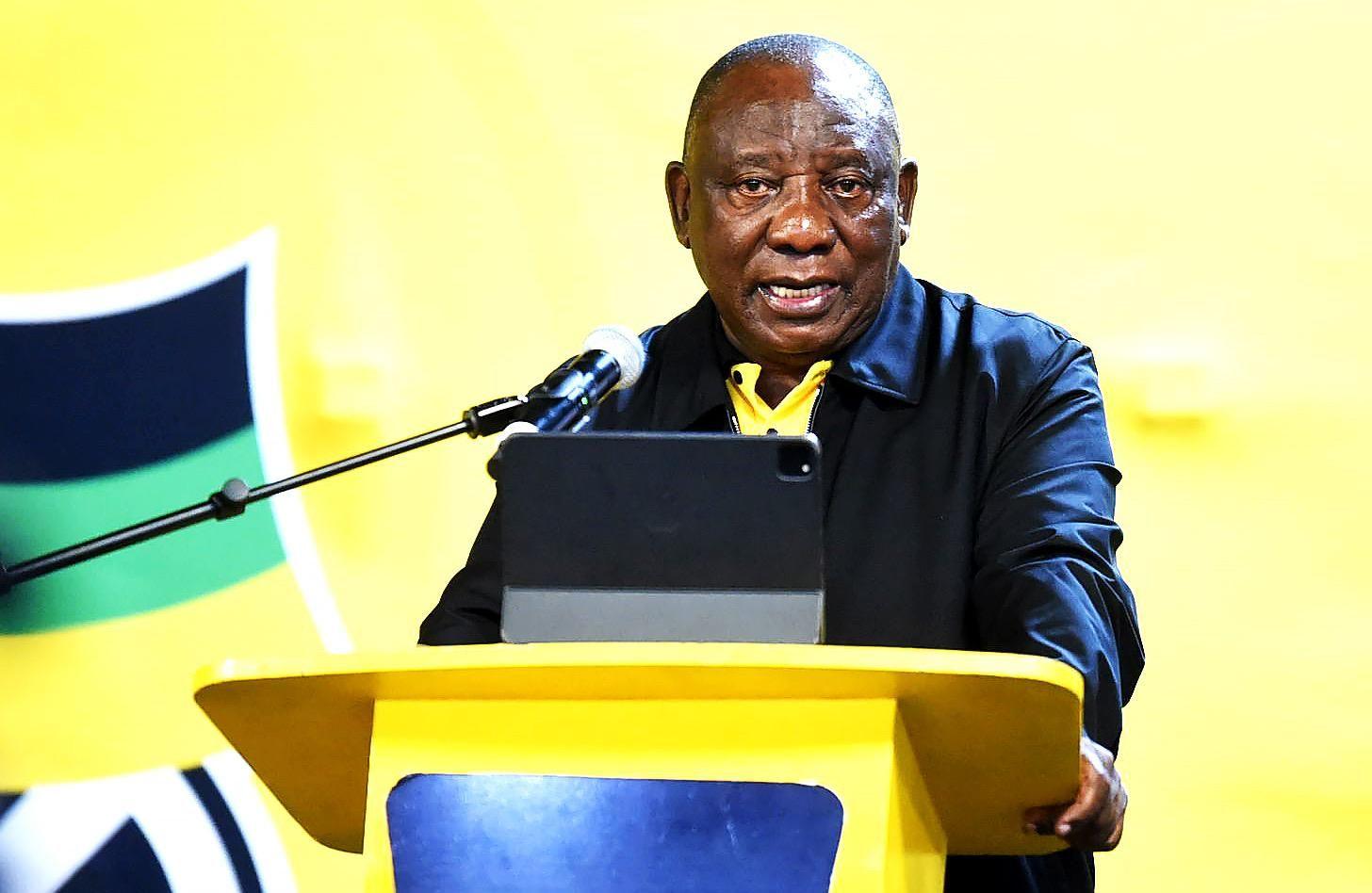
“President Cyril Ramaphosa has urged voters in Ekurhuleni to strengthen the ANC in the 4 November 2026 local government elections, arguing that fragmented councils and unstable coalitions can constrain municipal service delivery. His appeal comes as opposition parties, including the Democratic Alliance (DA), Economic Freedom Fighters (EFF), uMkhonto weSizwe Party (MK Party) and ActionSA, compete for support amid concerns about water shortages, electricity, infrastructure, unemployment and municipal accountability.”
South Africa’s political parties enter a decisive election campaign
South Africa’s political landscape is entering a consequential period as political parties intensify their campaigns ahead of the local government elections scheduled for 4 November 2026. At the centre of the debate is the future of municipal governance, with the governing African National Congress seeking to regain support while opposition parties campaign on service delivery, accountability and administrative reform.
President Cyril Ramaphosa’s recent campaign in Daveyton, Ekurhuleni, brought these tensions into sharp focus. Addressing residents during door-to-door campaigning, the ANC president criticised smaller political parties and argued that voters should give the governing party sufficient support to manage municipalities effectively. He also blamed coalition arrangements for some of the difficulties experienced by local governments.
The comments reflect the ANC’s challenge as it seeks to convince voters that it remains capable of addressing longstanding municipal problems. They also demonstrate how the growing influence of opposition parties has changed the political calculations surrounding local government.
Ramaphosa’s appeal to strengthen the ANC
During his campaign engagements in Daveyton, Ramaphosa highlighted residents’ concerns about unemployment, inadequate services, water shortages and deteriorating infrastructure. He called on voters to support the ANC, presenting a stronger electoral mandate as an opportunity to improve municipal administration.
His criticism of smaller parties was particularly significant because it addressed the increasingly fragmented nature of South African politics. Whereas the ANC previously enjoyed a dominant position in many municipalities, declining electoral support has created opportunities for rival parties to contest political control and participate in coalition governments.
Ramaphosa argued that the ANC’s reduced support in Ekurhuleni following the 2021 local elections had contributed to the formation of a coalition administration. According to his argument, competing political interests can complicate decision-making and limit the ability of municipal leaders to implement programmes.
However, the president’s appeal also raises an important question: whether voters should prioritise a single party’s majority or retain a competitive political system that requires parties to cooperate.
For the ANC, the campaign is an opportunity to reconnect with communities that have become dissatisfied with municipal performance. For opposition parties, it provides an opportunity to argue that voters should demand measurable improvements rather than automatically support the governing party.
Ekurhuleni illustrates the coalition challenge
Ekurhuleni has become an important battleground because its political history illustrates the difficulties of governing without a clear majority.
In the 2021 municipal elections, the ANC received 38.19% of the vote in the metro, losing the majority it had previously enjoyed. The resulting political contest produced changes in mayoral leadership and repeated coalition instability.
The subsequent period included changes in executive leadership as political alliances shifted. These developments made Ekurhuleni an example of how negotiations between parties can influence the direction of local government.
Coalition governments are not inherently ineffective. They can encourage cooperation, broaden representation and require political leaders to negotiate policies that reflect different communities. Nevertheless, they can become difficult to manage when coalition partners disagree over appointments, budgets, executive positions or policy priorities.
Such disagreements may delay decisions, complicate planning and weaken public confidence. The extent of these problems varies between municipalities and depends on the quality of leadership, administrative capacity and the stability of political agreements.
Consequently, the Ekurhuleni contest is about more than which party wins the largest share of votes. It is also about whether the next council can maintain a stable administration, approve budgets, supervise officials and deliver essential services.
The Democratic Alliance seeks to expand its influence
The Democratic Alliance remains one of the ANC’s principal competitors in the local elections. The party has positioned itself around municipal management, financial discipline, infrastructure maintenance and service delivery.
In Ekurhuleni, the DA is seeking to attract voters concerned about governance performance and the stability of municipal institutions. Its broader electoral challenge is to demonstrate that its approach can win support beyond its established strongholds.
The party must also persuade voters that it can cooperate effectively with other political organisations when election results do not produce an outright majority. Even where the DA gains seats, governing a diverse municipality may require negotiations with parties whose political priorities differ significantly.
This creates a strategic dilemma. The DA must distinguish itself from the ANC while demonstrating that it can work constructively with other parties when necessary.
Its electoral prospects will therefore depend not only on campaign messaging but also on voters’ perceptions of its candidates, policies and ability to implement practical improvements.
EFF and MK Party intensify the competition
The Economic Freedom Fighters and the MK Party add further complexity to the electoral contest. Both compete for voters seeking alternatives to established political leadership, although their political identities and policy priorities differ.
The EFF has traditionally emphasised economic transformation, redistribution and expanded access to public services. During the current campaign period, party leader Julius Malema has also discussed the possibility of the EFF joining the national Government of National Unity under particular political circumstances, while insisting that the party is primarily focused on winning elections.
The MK Party, meanwhile, has emerged as a significant competitor in parts of the country, particularly KwaZulu-Natal. Its presence complicates the ANC’s efforts to consolidate support and adds another potential negotiating partner in municipalities where no party wins a majority.
ActionSA and other smaller parties are also competing for voters who want alternatives to the traditional political establishment.
The result is a more competitive environment in which parties must distinguish themselves through credible candidates, practical proposals and clear explanations of how they intend to address local challenges.
Service delivery remains central to voters’ concerns
Despite their ideological differences, the major political parties face a common test: demonstrating that municipal government can improve everyday living conditions.
Residents in Daveyton raised concerns about water, electricity, employment and infrastructure during Ramaphosa’s campaign. These issues are politically important because they directly affect household expenses, public health, economic opportunities and community safety.
Water shortages can disrupt homes, schools and businesses. Electricity problems affect productivity and household budgets, while deteriorating roads increase transport costs and make daily travel more difficult. Poor waste management and sanitation can also create environmental and public-health risks.
These challenges cannot be solved through campaign promises alone. Municipalities require capable officials, reliable revenue collection, realistic budgets, effective procurement and consistent maintenance programmes.
Political parties should therefore explain how they would finance their commitments, identify responsible departments and measure progress. Voters also need transparent information about which responsibilities belong to municipalities, provincial governments and national departments.
This distinction matters because some infrastructure and service problems require cooperation across different levels of government.
Accountability and financial management under scrutiny
Another major issue is the relationship between political leadership and administrative performance. Even well-designed policies can fail when municipal funds are mismanaged, projects are delayed or officials are not held accountable.
Ekurhuleni’s financial and infrastructure difficulties have added urgency to the election debate. Recent reporting has highlighted concerns about the metro’s financial sustainability, maintenance spending and losses involving electricity and water.
These concerns strengthen the case for transparent budgets, credible financial reporting and independent oversight.
The incoming council will need to demonstrate that public money is being used for its intended purposes. Councillors must scrutinise expenditure, monitor contractors and respond to evidence of irregularities.
Accountability should apply regardless of which party controls the mayor’s office. A municipality governed by the ANC, DA or a coalition should be judged according to the same practical standards: whether services improve, finances remain sustainable and public institutions act in residents’ interests.
The wider significance for South African democracy
The contest in Ekurhuleni reflects a broader national transformation. The ANC’s loss of its parliamentary majority in the 2024 national elections demonstrated that South African voters were increasingly willing to distribute their support among different political parties.
Local elections provide another opportunity for voters to assess political leadership, although municipal voting decisions can differ from national preferences. Local candidates, neighbourhood concerns and the record of a particular council may influence electoral choices more directly than national political debates.
The growth of multiparty competition can strengthen democratic accountability by making it harder for any party to take voter support for granted. However, fragmented councils also require political leaders to develop workable agreements and prioritise the public interest over narrow party calculations.
The central issue is therefore not simply whether coalitions are good or bad. It is whether political parties can establish clear responsibilities, maintain stable working relationships and ensure that disagreements do not prevent essential services from reaching residents.
What voters should consider before election day
As the 4 November elections approach, voters will have to weigh competing claims about leadership, stability and service delivery.
The ANC is asking residents to strengthen its mandate, arguing that a decisive majority could make municipal administration more effective. Opposition parties are seeking to convince voters that alternatives can deliver better governance and stronger accountability.
Neither argument should be accepted without scrutiny. A majority does not automatically guarantee competent leadership, just as a coalition does not inevitably produce failure.
Voters can assess parties by examining their candidates’ records, the feasibility of their proposals, their approach to municipal finances and their willingness to publish measurable commitments. They can also consider whether candidates understand local problems and have credible plans for addressing them.
Ultimately, political promises must be evaluated against evidence of performance.
Conclusion: An important test for political leadership
Ramaphosa’s appeal to reject smaller parties underscores the pressure facing the ANC as it competes in an increasingly fragmented political environment. Ekurhuleni’s experience demonstrates how electoral changes can reshape municipal leadership, while continuing service-delivery challenges show why residents are demanding practical results.
The DA, EFF, MK Party, ActionSA and other political organisations have opportunities to gain support, but they must demonstrate that electoral gains can translate into effective administration.
For South Africa, the stakes extend beyond individual parties. The elections will test whether political leaders can respond to public frustration, manage municipal finances responsibly and build administrations capable of delivering reliable services.
The most meaningful measure of success will not be the strength of campaign rhetoric or the number of political promises made. It will be whether residents experience tangible improvements in water supply, electricity, roads, sanitation, employment opportunities and confidence in local government.



