




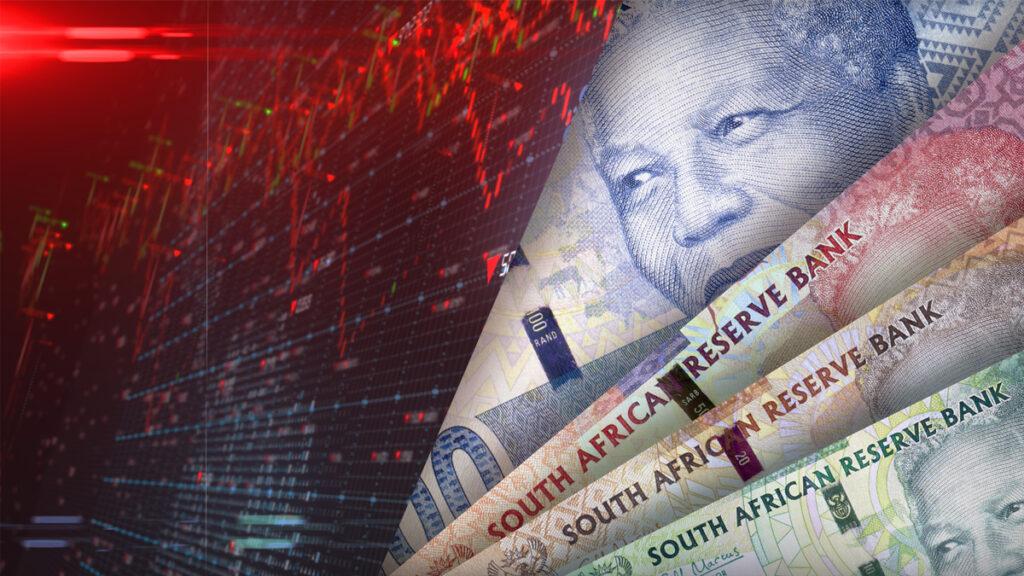
“South Africa’s rand was broadly steady in early trading on Monday as investors assessed the economic risks associated with the continuing Middle East conflict and awaited important United States inflation data later in the week. These international developments matter for South Africa because movements in the US dollar, global energy prices and expectations about American interest rates can influence the rand, domestic inflation, borrowing costs and the country’s wider economic outlook.”
International uncertainty puts the rand in focus
South Africa’s currency remained broadly steady in early trading on Monday, 12 October 2026, as financial markets weighed geopolitical uncertainty in the Middle East against the prospect of new inflation data from the United States. The developments have placed international economic conditions at the centre of attention for investors assessing the outlook for emerging markets, including South Africa.
According to Reuters, investors were cautious as the conflict in the Middle East continued and markets prepared for US inflation figures expected later in the week. The data could influence expectations about the Federal Reserve’s future interest-rate decisions, with possible consequences for the US dollar and currencies such as the rand.
The rand’s relative stability during the session offers some relief, but it does not remove the risks confronting the domestic economy. South Africa remains exposed to international financial conditions through its trade relationships, energy imports, foreign investment flows and dependence on commodity exports.
Consequently, developments thousands of kilometres away can affect domestic prices, business confidence, investment decisions and household spending.
Why US inflation matters to South Africa
Inflation in the United States is an important indicator for financial markets because it helps investors assess whether the Federal Reserve may keep interest rates elevated, reduce them or consider further increases.
When US inflation remains persistent, policymakers may be reluctant to lower borrowing costs. Higher US interest rates can make dollar-denominated investments more attractive, potentially encouraging international investors to move funds away from emerging markets.
For South Africa, this creates a potential source of pressure on the rand. If demand for the US dollar strengthens, the local currency may depreciate, although its actual performance also depends on domestic economic conditions, commodity prices and investor confidence.
A weaker rand can increase the local-currency cost of imported goods and services. This is particularly important for petroleum products, machinery, industrial equipment and other inputs that South African businesses need to operate.
However, the relationship is not automatic. A currency may remain resilient even when international interest rates are high, especially if investors see opportunities in local bonds, equities or commodities.
The US inflation figures therefore represent one important factor in a wider economic assessment rather than a guaranteed trigger for currency movements.
Middle East tensions add pressure to energy markets
Geopolitical instability can influence South Africa through international oil prices, shipping costs, supply chains and investor appetite for risk.
As an importer of crude oil and refined petroleum products, South Africa is vulnerable to sustained increases in global energy prices. More expensive energy can raise the cost of transporting goods, operating factories, producing food and delivering services.
These costs can spread through the economy. Transport companies may face higher operating expenses, retailers may pay more to move products to stores, and agricultural producers may experience increases in fuel and distribution costs.
Businesses facing these pressures must decide whether to absorb the additional expenses, reduce other costs or pass some of the increases on to customers.
For households, higher transport and food costs can reduce disposable income. Families may then cut spending on clothing, entertainment, household goods and other non-essential items.
This matters because household consumption is an important component of economic activity. If rising costs weaken consumer demand, businesses may experience slower sales and become more cautious about expanding operations or employing additional workers.
Nevertheless, the economic effect depends on the duration and severity of the international disruption. A short-lived increase in oil prices may have a limited effect, whereas a prolonged supply shock could create more persistent inflationary pressure.
Inflation presents a difficult policy challenge
South Africa’s domestic inflation outlook makes these international developments particularly important.
The South African Reserve Bank’s October Monetary Policy Review reported that headline inflation increased from 3.2% in the first quarter of 2026 to 4.5% in the second quarter. It projected inflation would remain above 5% until the second quarter of 2027 before easing towards the target from the fourth quarter of 2027.
The Bank also reported that the Monetary Policy Committee had raised the policy rate by a cumulative 50 basis points to 7.25% during the April-to-October review period. These developments indicate the difficulty of managing inflation risks while supporting an economy experiencing weak growth.
Interest-rate decisions affect the economy through several channels. Higher borrowing costs can help contain inflation by discouraging excessive credit growth and reducing demand. However, they can also increase debt-servicing expenses for households and companies.
Businesses may postpone investment when loans become more expensive. Consumers with variable-rate debt may have less money available for everyday purchases. These effects can weaken economic activity, particularly when confidence is already subdued.
At the same time, policymakers must consider the danger of inflation becoming entrenched. If households and businesses expect prices to rise persistently, wage negotiations and pricing decisions may reinforce inflationary pressures.
The challenge is therefore to prevent temporary increases in fuel or imported costs from developing into broader, sustained inflation without unnecessarily damaging economic growth.
Weak economic growth limits South Africa’s options
The currency story is unfolding against a difficult domestic economic background.
Statistics South Africa reported that real gross domestic product contracted by 0.2% in the second quarter of 2026, following growth of 0.4% in the first quarter. Mining, manufacturing and trade were among the industries contributing to the decline.
he figures highlight the vulnerability of an economy in which production, investment and consumer demand face structural and cyclical constraints.
Mining remains important to export earnings, employment and economic activity in several regions. Manufacturing supports industrial supply chains, while trade and related services connect producers with consumers.
When these industries struggle simultaneously, the effects can extend beyond the immediate sectors. Suppliers may receive fewer orders, workers may face reduced opportunities and government revenue may come under pressure if economic activity weakens.
The Reserve Bank’s October review forecast average economic growth of 1.2% for 2026, down from its April forecast of 1.4%. It anticipated a gradual improvement towards 2% by 2029 as structural reforms progress.
This outlook underlines why currency stability alone cannot resolve South Africa’s macroeconomic challenges. Sustainable improvements require stronger productivity, reliable infrastructure, investment and conditions that allow businesses to expand.
What a weaker rand could mean for households
Although the rand was steady during Monday’s early trading, any subsequent depreciation could affect consumers through imported inflation.
The effect would depend on the size and duration of the currency movement, changes in international prices and the extent to which importers pass higher costs on to customers.
Fuel is an important transmission channel. When international petroleum costs rise or the rand weakens, the domestic cost of imported fuel can increase. This may influence transport expenses, delivery charges and the prices of goods whose production depends on energy.
Food prices can also be affected through fuel, fertiliser, packaging and transportation costs. The final impact depends on domestic harvests, international commodity markets, exchange rates and other supply conditions.
For households already facing pressure from essential expenses, sustained price increases can reduce purchasing power. Lower-income families may be especially exposed because they generally devote a larger proportion of their budgets to necessities.
A stable currency can help moderate some imported cost pressures, but it cannot guarantee lower prices. Domestic supply constraints, administered prices and other production costs also influence inflation.
Implications for businesses and investors
For companies, the immediate concern is uncertainty around costs, demand and financing.
Import-dependent businesses may need to reassess procurement budgets and exchange-rate exposure. Exporters could benefit from a weaker rand if foreign-currency revenues translate into more local currency, although the advantage may be reduced by imported inputs, debt obligations or changing international demand.
Investors also need to distinguish between short-term market movements and longer-term economic fundamentals. Currency prices respond quickly to changing expectations, while productivity improvements, infrastructure investment and fiscal developments usually take longer to influence economic performance.
The rand’s daily direction therefore cannot, by itself, establish whether the economy is improving or deteriorating. A more complete assessment would consider inflation, interest rates, trade performance, employment, investment and growth.
For policymakers, the task is to maintain confidence while ensuring that financial conditions remain consistent with price stability and sustainable economic activity.
The importance of structural reform
South Africa’s longer-term economic prospects depend partly on its ability to reduce constraints on production and investment.
Reliable electricity, efficient ports, functioning rail networks and predictable regulation can improve the competitiveness of businesses. Better logistics can help exporters deliver goods more reliably, while improved infrastructure can reduce operating costs across the economy.
Greater investment in productive capacity could also support job creation and broaden the tax base over time.
These reforms cannot insulate South Africa entirely from international shocks. However, a more productive economy with stronger domestic investment and diversified exports would be better positioned to withstand periods of global uncertainty.
The Reserve Bank’s projection of gradual growth improvement as structural reforms progress highlights the importance of these longer-term changes.
What to watch next
The immediate focus is the US inflation release expected later this week, as identified in Monday’s Reuters report. Investors will assess whether the data change expectations for Federal Reserve policy and influence the dollar and emerging-market currencies.
South African economic observers will also need to monitor global energy prices, the rand, domestic inflation indicators and developments affecting mining, manufacturing and trade.
The next steps in monetary policy will depend on the information available to the Reserve Bank, including the persistence of inflation and the strength of economic activity. No single currency session or international data release determines the outcome.
For households, the practical concern is whether currency and energy-market pressures translate into sustained increases in essential living costs. For businesses, the question is whether uncertainty can be managed without further weakening investment and employment.
Conclusion
South Africa’s steady rand on 12 October provides a snapshot of a market balancing geopolitical risks against expectations for US monetary policy. Beneath that relative calm, however, the economy continues to face a difficult combination of inflation pressures and weak growth.
The central issue is not simply whether the rand strengthens or weakens on a particular day. It is whether South Africa can contain inflation, restore stronger economic growth and improve its resilience to external shocks.
The coming US inflation data may influence short-term market sentiment, but lasting economic progress will depend on domestic policy credibility, productive investment and structural reforms that strengthen the country’s capacity to grow.



