




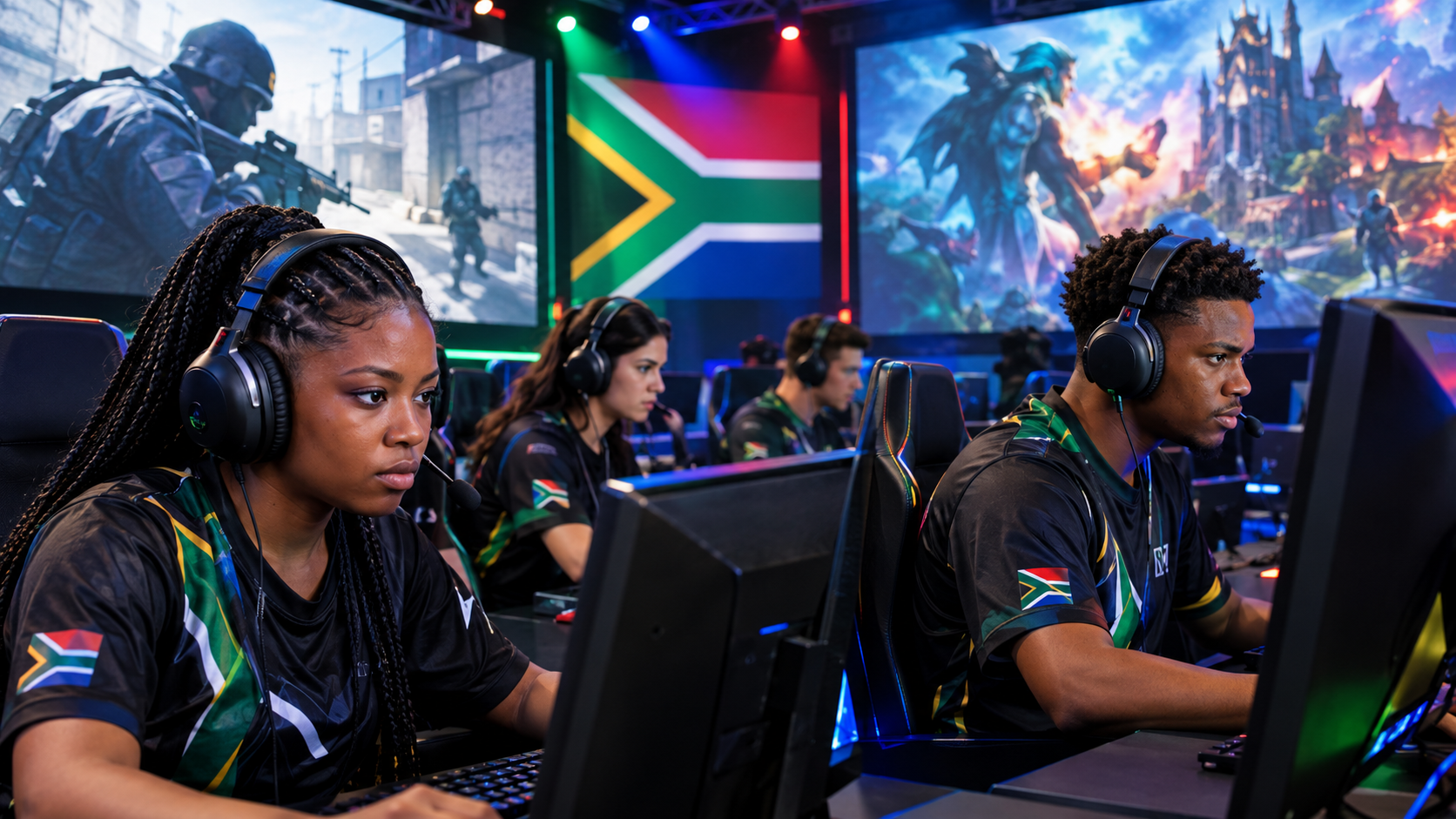
“Mind Sports South Africa announced supplementary national team trials for Counter-Strike 2 Women and Dota 2 to give eligible competitors an additional opportunity to represent South Africa at the 2026 IESF World Esports Championship. The online selection process was scheduled for 10 October, with 11 October available if matches needed to be completed, as organisers worked towards the international championship in Indonesia in December.”
A second opportunity for national selection
South Africa’s competitive gaming community has reached an important selection point after Mind Sports South Africa (MSSA) announced supplementary national team trials for Counter-Strike 2 Women and Dota 2. The online trials were scheduled for Saturday, 10 October 2026, with Sunday, 11 October, set aside as a contingency day if matches could not be completed on time. The process is intended to help South Africa identify eligible players for the International Esports Federation’s World Esports Championship 2026, scheduled to take place in Indonesia from 15 to 20 December.
National team trials are a key stage in the pathway from domestic competition to international esports. They provide a structured process through which eligible competitors can demonstrate their skill, teamwork, tactical understanding and ability to perform under pressure. In team-based games, strong individual mechanics are important, but selection also depends on communication, strategic discipline and how players respond to coordinated opposition.
MSSA said the supplementary process would apply to Counter-Strike 2 Women and Dota 2. These are different competitive titles, each demanding its own mix of technical skill and game knowledge. Counter-Strike 2 is a tactical first-person shooter in which teams must coordinate attacks, defence, economy management and map control. Dota 2 is a multiplayer online battle arena game that requires players to understand hero match-ups, timing, team fights, objectives and complex strategic decisions.
By providing another selection opportunity, the organisation aimed to address categories that could not properly be selected from the July trials. The move matters because international entries involve deadlines, eligibility requirements and preparation schedules. A country that misses a selection window or cannot finalise a team in time may lose the chance to participate, regardless of the quality of its players.
How the selection process is structured
MSSA’s announcement said selection would be based primarily on results achieved during the supplementary trials. The process concerns selection for the national team rather than choosing a club side. That distinction is important: a national representative is selected to compete for South Africa, not simply to extend a club’s tournament campaign.
The organisation stated that the captain would be selected from the captains participating in the supplementary trials. The selected captain would then submit a squad of ten players drawn from those who took part, subject to MSSA approval. The final WEC26 team would subsequently be chosen from that squad, in line with the number of players required by the IESF for the relevant category.
This structure combines competitive performance with a defined administrative process. Results provide the principal sporting basis for selection, while eligibility rules and approval requirements help establish a consistent framework. The announcement also said the supplementary trials were open to eligible teams across MSSA’s affiliated membership, with published eligibility, competition and selection requirements to be applied consistently.
Why Counter-Strike 2 Women and Dota 2 matter
The inclusion of Counter-Strike 2 Women gives female competitors a specific route to pursue international representation in a major esports title. Women remain underrepresented in many competitive gaming environments, and clear national pathways can help provide visibility, structured competition and opportunities to develop. A dedicated category can also encourage organisers, clubs and communities to invest in training environments where women can compete seriously and progress through recognised events.
For both titles, the trials represent more than a short competition. They are part of a process of identifying players who can learn together, prepare consistently and handle the pressure of representing South Africa against international opponents.
The road to Indonesia
The IESF World Esports Championship 2026 is scheduled for 15–20 December in Indonesia. That leaves a limited preparation window after October’s selection activity. Once squads are confirmed, players and team staff must turn selection into a practical plan involving practice sessions, strategic review, communication routines and preparation for opponents.
The announcement does not confirm the final South African roster, the results of the supplementary trials, or how the selected teams will perform in Indonesia. Those details should be reported only when MSSA or the event organisers publish them. The immediate confirmed development is the decision to hold additional trials and establish a route towards national selection in the two categories.
What the decision means for South African esports
The supplementary trials highlight the importance of dependable selection systems in a growing esports ecosystem. Competitive gaming requires more than talented individuals with access to powerful computers or consoles. It also depends on tournament organisers, governing structures, clubs, coaches, sponsors and communities that help players find competitions and develop their skills.
A national pathway can give aspiring competitors a clearer goal. Instead of seeing international representation as a distant possibility, players can identify the titles involved, follow selection announcements and understand that performance in recognised competitions may contribute to their prospects.
However, national representation should not be treated as a guarantee of professional income or long-term employment. Esports careers can be uncertain, and players need to balance training with education, work, wellbeing and other responsibilities. Organisations can support sustainable participation by communicating requirements clearly, encouraging fair play and making sure competitors understand the demands of high-level competition.
What fans should watch next
The next important updates will be confirmation of trial outcomes, the squad submitted by the selected captain, MSSA approval and the final team chosen for the IESF championship. Fans should check official MSSA communications for verified information rather than relying on speculation or unofficial roster posts. Any subsequent announcement should clarify which players have been selected and whether South Africa’s entries are confirmed in the relevant categories.
Supporters can also help strengthen the scene by following local tournaments, sharing official results, encouraging new competitors and respecting players regardless of the outcome. Esports communities are built through repeated participation, not only through attention during international events. A healthier domestic ecosystem gives players more chances to practise, test strategies and learn how to compete under pressure.
For the players involved, selection is both an opportunity and a responsibility. Representing South Africa means carrying national expectations while remaining focused on preparation, teamwork and fair competition. Those who make the final team will need to turn the trials into a foundation for the demanding work ahead.
Conclusion
MSSA’s supplementary trials for Counter-Strike 2 Women and Dota 2 are a timely step in South Africa’s preparations for the IESF World Esports Championship 2026. The online selection window, held on 10 October with 11 October available as a contingency, was designed to give eligible competitors another chance to pursue national representation after the July trials. The published process outlines how trial results, captain selection, squad submission and MSSA approval fit together.
The most important next step is confirmation of the outcomes and final entries. Until those details are formally announced, the story is about the selection opportunity and the pathway it creates, not about unverified winners or a confirmed roster. With the championship scheduled for Indonesia from 15 to 20 December, South African players now face a period in which organisation, teamwork and preparation will be central. The trials underline a simple point: international esports representation begins with fair domestic pathways that allow talent to be identified, assessed and developed.



