




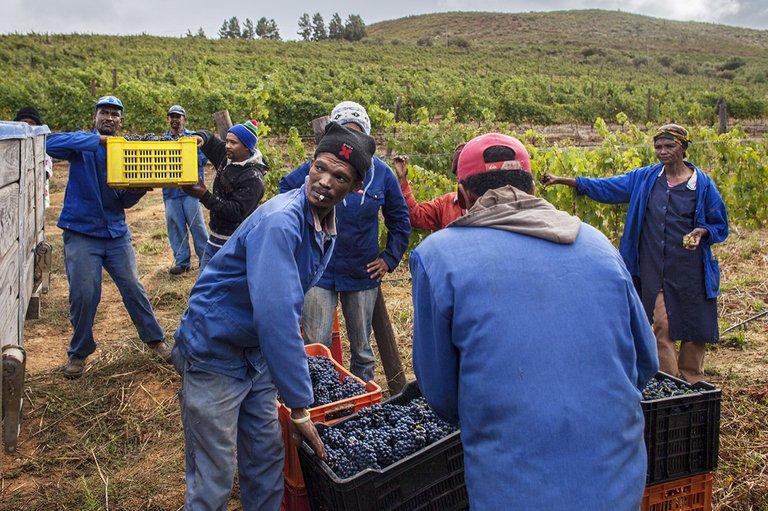
“South Africa’s Department of Land Reform and Rural Development has approached the Special Investigating Unit (SIU) over the failure of farm worker equity schemes that received nearly R700 million in public funding, according to a report published on 26 September 2026 by Moneyweb and GroundUp. The investigation could become an important development for South Africa’s land-reform and agricultural-property landscape because departmental assessments found that only 18 of 65 schemes visited were fully functional, while others had limited participation, financial problems, collapsed operations or could not be properly documented.”
South Africa’s land reform programme faces renewed scrutiny as SIU is asked to investigate farm worker equity schemes
The future of farm worker ownership in South Africa has come under renewed scrutiny after the Department of Land Reform and Rural Development approached the Special Investigating Unit to investigate failed Farm Worker Equity Schemes (FWES). The development, reported on 26 September 2026 by Moneyweb, follows years of concerns from Parliament and civil society organisations about the management, oversight and performance of schemes intended to give farm workers a greater economic stake in agricultural businesses.
The issue is significant for the country’s wider land and real estate sector because agricultural land is not only an important property asset but also a central component of South Africa’s land-reform programme. The equity schemes were designed as an alternative way of advancing ownership and participation in commercial agriculture, particularly where farms operate as productive businesses that may be difficult to divide into individual plots.
According to the latest reporting, the Department of Land Reform and Rural Development distributed almost R700 million to 89 farm worker equity schemes. The schemes were established from the 1990s onwards, with farm workers receiving shares in agricultural enterprises and potentially benefiting through dividends and participation in the businesses.
However, a recent departmental assessment has raised serious questions about how effectively that investment translated into sustainable ownership and economic benefits.
What are farm worker equity schemes?
Farm Worker Equity Schemes were developed as part of efforts to broaden economic participation in commercial agriculture. Rather than simply transferring pieces of farmland to individual beneficiaries, the model allowed workers to acquire equity in farming enterprises.
The concept was particularly relevant to sectors such as vineyards and orchards, where agricultural production can depend on large, integrated operations. Workers could therefore obtain an ownership interest while the farm remained commercially operational.
The underlying idea was that workers would gain more than employment income. Through shares in the agricultural enterprise, beneficiaries could potentially participate in decision-making and receive dividends linked to the performance of the business.
The model therefore connected land reform, agricultural investment, property ownership and rural economic development.
Government records presented to Parliament indicate that approximately R683 million had been approved across 89 schemes, while other reporting has described the overall public investment as nearly R700 million.
Yet the latest assessment suggests that the intended benefits have not been consistently achieved.
Department finds widespread problems among schemes
The Department of Land Reform and Rural Development assessed 65 equity schemes. Of those, only 18 were considered fully functional.
Another 16 were described as having limited functionality, with limited or no meaningful worker participation. Nineteen schemes involved workers who had sold their shares or no longer held ownership interests despite remaining employed on farms.
The assessment also identified six schemes that had collapsed, four experiencing serious financial difficulties and two that had entered business rescue.
The situation is further complicated by the fact that officials were unable to visit another 24 schemes because documentation relating to them could not be located.
For the property sector, these findings raise questions about the administration of ownership structures attached to agricultural land. Where ownership interests are unclear, poorly documented or no longer functioning as originally intended, the economic value of the underlying agricultural property can become difficult to assess from a beneficiary and governance perspective.
Why the SIU investigation matters
The SIU has not yet confirmed that a full investigation has been formally proclaimed.
SIU spokesperson Selby Makgotho told GroundUp that the organisation is currently in discussions with the department and is awaiting information needed to assess whether there is sufficient basis to motivate for a proclamation.
Once the relevant information has been received, the matter will be evaluated and referred to the SIU’s Case Assessment Committee for consideration.
This distinction is important. The current development is therefore an investigative process, rather than a completed finding of wrongdoing against particular individuals or organisations.
The department’s approach to the SIU follows pressure from Parliament and civil society organisations calling for greater scrutiny of the schemes.
Parliament’s Portfolio Committee on Land Reform and Rural Development has itself been examining the programme. On 23 September 2026, the committee said it had found significant problems involving beneficiary participation, accountability, access to financial information and state oversight.
Parliament has already raised concerns
The parliamentary investigation provides important background to the latest SIU development.
According to Parliament, its inquiry considered the implementation of the Farm Worker Equity Scheme programme and found concerns around whether the schemes had delivered meaningful ownership, participation and economic advancement.
The committee said government records reflected approximately R683 million in approved grants across 89 schemes. It also pointed to concerns involving insecure tenure, loss or dilution of shares, unclear inheritance rights, unequal bargaining power and insufficient access to independent legal and financial advice.
Earlier parliamentary oversight work also found concerns about the operation of individual schemes in the Eastern Cape.
In June, Parliament reported that beneficiaries had raised concerns about limited participation in management, inadequate access to financial information, uncertainty about dividends and weak communication with commercial partners. The committee said its oversight process had not yet reached final conclusions at that stage.
The September findings represent a further development because they have contributed to pressure for stronger intervention.
The long-running problem of oversight
One of the most notable elements of the latest report is that concerns about oversight are not new.
Moneyweb and GroundUp report that the Department of Land Reform and Rural Development had commissioned an internal report from Zalo Capital in 2013. That report reportedly recommended measures including rehabilitating failed schemes, creating a dedicated support unit and improving monitoring of departmental officials responsible for supporting the schemes.
According to the latest reporting, those recommendations were not implemented.
Terries Ndove, the department’s deputy director-general for land reform, told Parliament that monitoring of the schemes had been “poor”.
This history is important because it suggests that the current situation is not simply the result of recent difficulties in the agricultural property market. Instead, some of the challenges have developed over many years.
Impact on agricultural land and rural property
Agricultural land occupies an unusual position within South Africa’s real estate environment.
Unlike conventional residential property, farmland is simultaneously an investment asset, a productive resource and an important component of rural economic activity. Ownership therefore affects not only the value of the property itself but also the livelihoods of people who work on it.
Farm Worker Equity Schemes attempted to address this connection by providing workers with an economic ownership interest without necessarily breaking large agricultural properties into numerous smaller parcels.
When these arrangements work effectively, workers can potentially participate in the financial performance of agricultural enterprises while farms continue operating as productive commercial properties.
However, where schemes fail, beneficiaries may lose the expected economic benefits while the underlying ownership structure becomes increasingly difficult to understand.
That makes governance, documentation and transparency particularly important.
Western Cape and Eastern Cape heavily represented
The geographic distribution of the schemes also illustrates their significance for South Africa’s agricultural property market.
According to the latest reporting, 54 schemes in the Western Cape received approximately R366 million, while 21 schemes in the Eastern Cape received approximately R103 million.
Both provinces contain significant agricultural economies, including major wine, fruit and other commercial farming operations.
The problems identified therefore extend beyond individual beneficiaries. They potentially affect broader questions concerning rural investment, agricultural business structures, employment and the long-term management of land-reform assets.
Not every scheme has failed
The latest findings should not be interpreted as meaning that every Farm Worker Equity Scheme has collapsed.
The department’s assessment identified 18 schemes that were fully functional. Some workers have reportedly continued receiving dividends for years.
This is an important distinction because the current investigation concerns the performance and administration of schemes that have experienced difficulties, rather than a finding that the entire model has failed in every location.
The existence of functioning schemes could also provide useful information for policymakers examining how worker ownership can be structured more effectively.
What happens next?
The immediate next step is for the Department of Land Reform and Rural Development to provide the SIU with information relating to the schemes.
The SIU will then determine whether the available information is sufficient to motivate for a formal proclamation. If the matter proceeds, investigators could examine issues surrounding the administration and use of public funding, governance arrangements, documentation, beneficiary participation and other matters within the SIU’s mandate.
Meanwhile, Parliament is continuing its work on the Farm Worker Equity Scheme programme.
The Portfolio Committee has called for coordinated action to strengthen accountability and protect beneficiaries. It has also indicated that its findings and recommendations form part of a broader effort to address weaknesses in the programme.
For South Africa’s land under real estate sector, the story highlights the importance of more than simply transferring or financing property.
Land ownership structures need clear documentation, enforceable rights, appropriate governance and effective oversight. Without these elements, the intended economic value of land reform can be difficult to realise.
Broader implications for South Africa’s land market
The latest development comes at a time when land administration remains a major issue within South Africa’s property environment.
The government identifies restitution, redistribution and tenure reform as three central elements of its comprehensive land-reform programme. Land administration also plays a role in property rights, investment certainty, development and the functioning of the Deeds Registry system.
The farm worker equity controversy demonstrates how these issues intersect.
A land-reform project can involve agricultural land, corporate ownership, employment, public funding and property rights simultaneously. Consequently, successful implementation requires coordination between government departments, farmers, workers, financial institutions, legal professionals and other stakeholders.
The current SIU process could therefore become an important test of how South Africa deals with historical land-reform programmes when promised ownership or economic benefits have not been achieved.
For now, however, the SIU assessment remains ongoing. The allegations and concerns reported about individual schemes should not be treated as proven wrongdoing unless established through the appropriate investigative or legal processes.
Conclusion
The decision by the Department of Land Reform and Rural Development to approach the SIU over Farm Worker Equity Schemes places renewed attention on one of South Africa’s longstanding challenges: turning land-reform investment into durable ownership and economic participation.
Nearly R700 million was allocated to 89 schemes, yet departmental assessments found significant differences in performance, with only 18 of 65 assessed schemes operating fully. The findings have raised questions about governance, beneficiary participation, financial transparency, documentation and oversight.
The next stage will depend on the information supplied to the SIU and whether it determines that a formal investigation should proceed. At the same time, Parliament’s continuing work could shape future approaches to farm worker ownership and agricultural land reform.
For the South African real estate and land sector, the case underlines a central lesson: land ownership is not only about transferring property; it also requires secure rights, functioning institutions, transparent records and sustainable economic structures that allow beneficiaries to realise the value of ownership.



