




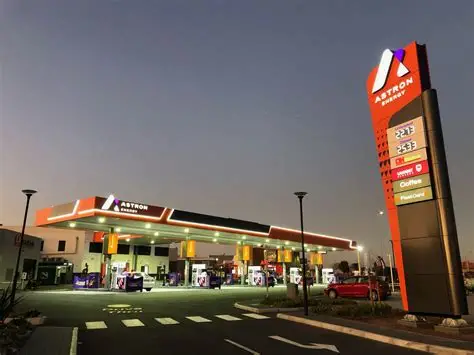
“Petrol and diesel prices in South Africa have risen sharply from 2 September 2026, with petrol up by 129 cents per litre and diesel surging by more than R2.90 per litre. The increase is attributed to higher Brent crude oil prices, global petroleum product shortages, and the implementation of a larger slate levy to recover billions in losses.”
South Africa’s energy landscape has once again been thrust into the spotlight following the announcement of significant fuel price increases for September 2026. The Department of Mineral and Petroleum Resources (DMPR) confirmed that petrol prices will rise by 129 cents per litre, while diesel prices will increase by more than R2.90 per litre. This adjustment, effective from 2 September, comes at a time when households and businesses are already grappling with inflationary pressures, rising transport costs, and broader economic uncertainty.
Global Oil Market Pressures
The primary driver of the fuel price hike is the increase in global crude oil prices. Brent crude rose from US$82.37 to US$87.85 per barrel during the review period. This surge was fueled by ongoing geopolitical tensions between the United States and Iran, uncertainty over oil flows through the Strait of Hormuz, and rising shipping costs. These developments have tightened global supply chains, leaving import-dependent nations like South Africa vulnerable to price shocks.
International Petroleum Product Shortages
Beyond crude oil, international petroleum product prices have also climbed. Petrol, diesel, and illuminating paraffin all recorded significant increases due to supply shortages linked to the Russia-Ukraine conflict and declining global inventories. The Basic Fuel Price (BFP) contributions rose by 127.79 cents per litre for petrol, 321.29 cents per litre for diesel, and 239.06 cents per litre for paraffin. These figures underscore the extent to which global disruptions ripple through South Africa’s domestic energy market.
Rand Exchange Rate Cushion
Interestingly, the rand provided some relief during the period under review. The currency appreciated slightly against the US dollar, moving from R16.46 to R16.26 per dollar. This appreciation reduced the upward pressure on fuel prices, offsetting contributions to the BFP by around 21–29 cents per litre across different fuel types. However, this cushion was insufficient to counterbalance the steep increases driven by global oil and product prices.
Slate Levy Adjustment
A critical factor in the September fuel price adjustment is the implementation of a higher slate levy. The cumulative slate balance stood at a negative R9.519 billion for petrol and diesel at the end of July 2026. To recover these losses, the DMPR introduced a levy of 83.28 cents per litre, up from 61.38 cents. This mechanism, designed to stabilize the fuel pricing system, has added further pressure on consumers already struggling with rising living costs.
Wage Adjustment for Forecourt Staff
In addition to global and structural factors, domestic labor agreements have also contributed to the price increase. The Minister of Mineral and Petroleum Resources approved a 4.9 cents per litre increase in petrol prices to accommodate wage adjustments for forecourt employees. This decision aligns with the Motor Industry Bargaining Council’s multi-year wage settlement agreement signed in August 2025.
Economic Implications
The fuel price hike has far-reaching implications for South Africa’s economy. Transport costs are expected to rise significantly, affecting logistics, agriculture, and manufacturing sectors. Consumers will feel the pinch through higher food prices, increased commuting costs, and inflationary pressures across essential goods. Analysts warn that the diesel increase, in particular, will have a disproportionate impact on freight and public transport, potentially slowing economic recovery efforts.
Public Reaction and Policy Debate
Public reaction has been swift, with civil society groups and trade unions expressing concern over the affordability of fuel. Calls for government intervention, such as temporary subsidies or tax relief, have resurfaced. However, policymakers argue that the adjustments are necessary to align domestic prices with international realities and maintain fiscal stability. The debate highlights the tension between economic pragmatism and social welfare in South Africa’s energy policy.
Long-Term Energy Transition
The latest fuel price hike also underscores the urgency of South Africa’s energy transition. With petrol and diesel costs rising unpredictably, renewable energy solutions such as solar and wind are gaining traction. Households and businesses are increasingly exploring off-grid options, despite challenges like levies and infrastructure costs. The government’s revised electricity pricing policy, which introduces national net billing for rooftop solar exports, is expected to accelerate this shift.
Conclusion
South Africa’s September 2026 fuel price adjustment reflects the complex interplay of global oil markets, geopolitical tensions, domestic fiscal mechanisms, and labor agreements. While the rand’s appreciation provided some relief, the combined impact of higher crude prices, international product shortages, and the slate levy has resulted in one of the steepest fuel price hikes in recent years. As households and businesses brace for higher costs, the development reinforces the need for a diversified energy strategy that reduces reliance on imported petroleum products and strengthens resilience against global shocks.



