




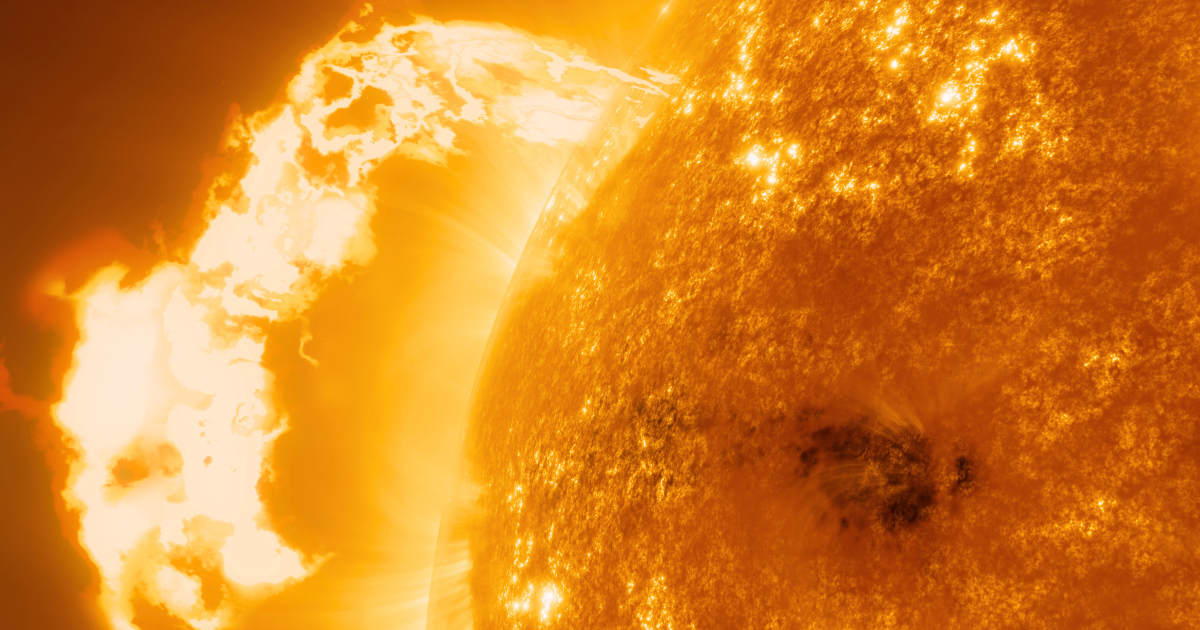
“The South African National Space Agency (SANSA) has detected an Earth-directed coronal mass ejection (CME), raising concerns about potential geomagnetic disturbances that could affect aviation, maritime, and defence communications. While the CME is not classified as severe, SANSA emphasizes the importance of preparedness as geomagnetic conditions may intensify.”
On 15 September 2026, the South African National Space Agency (SANSA) issued a bulletin confirming the detection of an Earth-directed coronal mass ejection (CME). This announcement has drawn attention not only within South Africa but across the African continent, as SANSA operates the only Space Weather Regional Warning Centre in Africa, recognized by the International Space Environment Service (ISES). The CME, though moderate in intensity, underscores the growing importance of space weather monitoring in safeguarding national infrastructure.
What is a CME?
A coronal mass ejection is a massive burst of solar plasma and magnetic fields released from the Sun’s corona. When directed toward Earth, CMEs interact with the planet’s magnetic field, potentially causing geomagnetic storms. These storms can disrupt:
- Satellite operations (leading to anomalies and radiation exposure)
- GPS navigation systems (causing errors in aviation and maritime sectors)
- Radio communications (especially high-frequency signals critical for defence and aeronautics)
- Power grids (through geomagnetically induced currents that destabilize electricity supply)
Current Space Weather Conditions
- Solar wind speed: 408.3 km/s
- Geomagnetic conditions: Quiet to active (Kp index 1–4)
- Sunspot activity: Four regions with simple magnetic configurations
These figures suggest that while the CME is not severe, conditions could escalate, warranting close monitoring.
SANSA’s Role in Africa
SANSA’s Space Weather Regional Warning Centre in Hermanus plays a pivotal role in:
- Monitoring solar flares and CMEs
- Forecasting geomagnetic conditions
- Providing HF radio frequency predictions
- Supporting defence, aviation, and maritime operations
This makes South Africa a continental leader in space weather forecasting, ensuring Africa is not left behind in global preparedness against solar-induced disruptions.
Potential Impact on South Africa
Although the CME is moderate, SANSA warns of possible consequences:
- Communication disruptions in aviation and maritime sectors
- Navigation errors in GPS-dependent systems
- Satellite anomalies due to radiation exposure
- Power grid fluctuations if geomagnetic currents intensify
These risks highlight the vulnerability of modern infrastructure to solar activity.
Global Context
Globally, nations such as the United States, China, and the European Union have invested heavily in space weather infrastructure. South Africa’s participation ensures Africa contributes to and benefits from international collaboration. The CME event demonstrates the interconnectedness of global systems, where solar activity can affect everything from telecommunications to national defence.
Historical Significance
South Africa has a long history of contributing to space science. From its role in supporting Apollo-era communications to its current leadership in space weather monitoring, the country has consistently positioned itself as a key player in global space research. The CME detection reinforces this legacy, showing how South Africa continues to bridge science, technology, and national security.
Public Awareness and Preparedness
SANSA’s bulletin also serves as a reminder of the importance of public awareness. Educating industries and citizens about space weather risks ensures better preparedness. For example:
- Airlines may adjust flight paths to minimize exposure to radiation.
- Maritime operators may prepare for potential communication blackouts.
- Power companies may implement safeguards against grid fluctuations.
Conclusion
The detection of an Earth-directed CME by SANSA is a wake-up call for South Africa and the continent. While the event is not severe, it highlights the importance of space weather monitoring in protecting critical infrastructure. As solar activity continues to be a global concern, SANSA’s leadership ensures Africa remains part of the international effort to safeguard against cosmic disruptions.



