




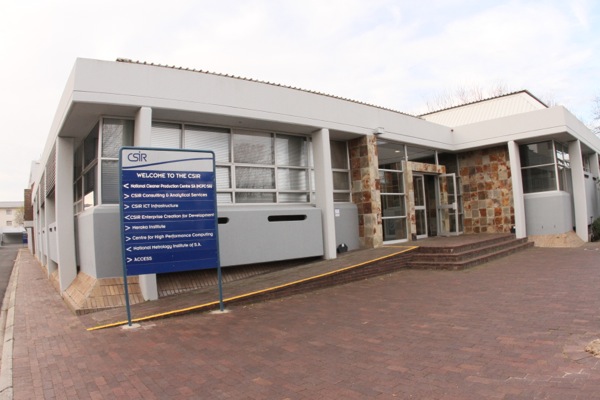
“South Africa has announced a R292 million investment in a new supercomputer to be deployed at the Centre for High Performance Computing (CHPC) in Cape Town. The system will deliver 4 petaflops of performance, tripling national computing capacity and enabling breakthroughs in genomics, climate modeling, AI, and astronomy.”
South Africa is stepping boldly into the future of computing with the announcement of a R292 million supercomputer project. Scheduled for deployment in 2026/27, this system will replace the country’s current flagship, Lengau, which has been Africa’s most powerful supercomputer since 2016. The new machine promises to triple national computing capacity, ushering in a new era of scientific discovery, innovation, and global collaboration.
Legacy of Lengau
Lengau, meaning “cheetah” in Setswana, was launched in 2016 and delivered 1.3 petaflops of performance. It supported diverse applications including:
- Weather and seismic modeling for disaster preparedness.
- Drug discovery and genomics, notably COVID-19 variant tracking.
- Fluid dynamics and computational chemistry for industrial innovation.
- Astronomy projects like the Square Kilometre Array (SKA) and MeerKAT telescope.
During the COVID-19 pandemic, Lengau’s contributions were particularly notable. It enabled genomic sequencing of SARS-CoV-2, helping scientists track variants and inform public health responses. This legacy underscores the importance of high-performance computing (HPC) in addressing national and global challenges.
The New Supercomputer
The upcoming system will deliver 4 petaflops of performance, tripling South Africa’s computing capacity. Located at the Centre for High Performance Computing (CHPC) in Cape Town, it will serve as the backbone for cutting-edge research. Key applications include:
- Genomics research for precision medicine.
- Climate modeling to predict and mitigate environmental risks.
- Artificial intelligence (AI) for advanced machine learning.
- Astronomy, supporting SKA, one of the world’s largest radio telescope arrays.
This investment positions South Africa as a continental leader in HPC, enhancing competitiveness in global research and innovation.
Strategic Importance
The supercomputer will:
- Support academic institutions, startups, and industries reliant on computational power.
- Strengthen South Africa’s role in international collaborations in science and technology.
- Provide infrastructure for AI-driven innovation, crucial for economic growth.
By investing in HPC, South Africa is not only building scientific capacity but also laying the foundation for economic transformation. Industries from healthcare to finance will benefit from the computational power, enabling breakthroughs that were previously unattainable.
Challenges Ahead
Despite the promise, challenges remain:
- Energy demands: Ensuring sustainable power supply amid South Africa’s history of load-shedding.
- Skills development: Training local scientists and engineers to maximize the system’s potential.
- Funding sustainability: Maintaining long-term investment in HPC infrastructure.
Addressing these challenges will require coordinated action from government, academia, and industry. Without sustainable energy and skills development, the full potential of the supercomputer may not be realized.
Global Context
Globally, supercomputers are central to scientific progress. Nations like the United States, China, and Japan have invested heavily in HPC, recognizing its role in driving innovation. South Africa’s investment places it firmly on the global map, signaling its ambition to be a serious player in scientific research and technological advancement.
Conclusion
The deployment of the new supercomputer marks a turning point in South Africa’s computing journey. By tripling national capacity, the country is poised to lead Africa in HPC and contribute meaningfully to global scientific collaboration. While challenges remain, the strategic importance of this investment cannot be overstated. It is a bold step towards a future where South Africa is not just a participant but a leader in the digital age.



