




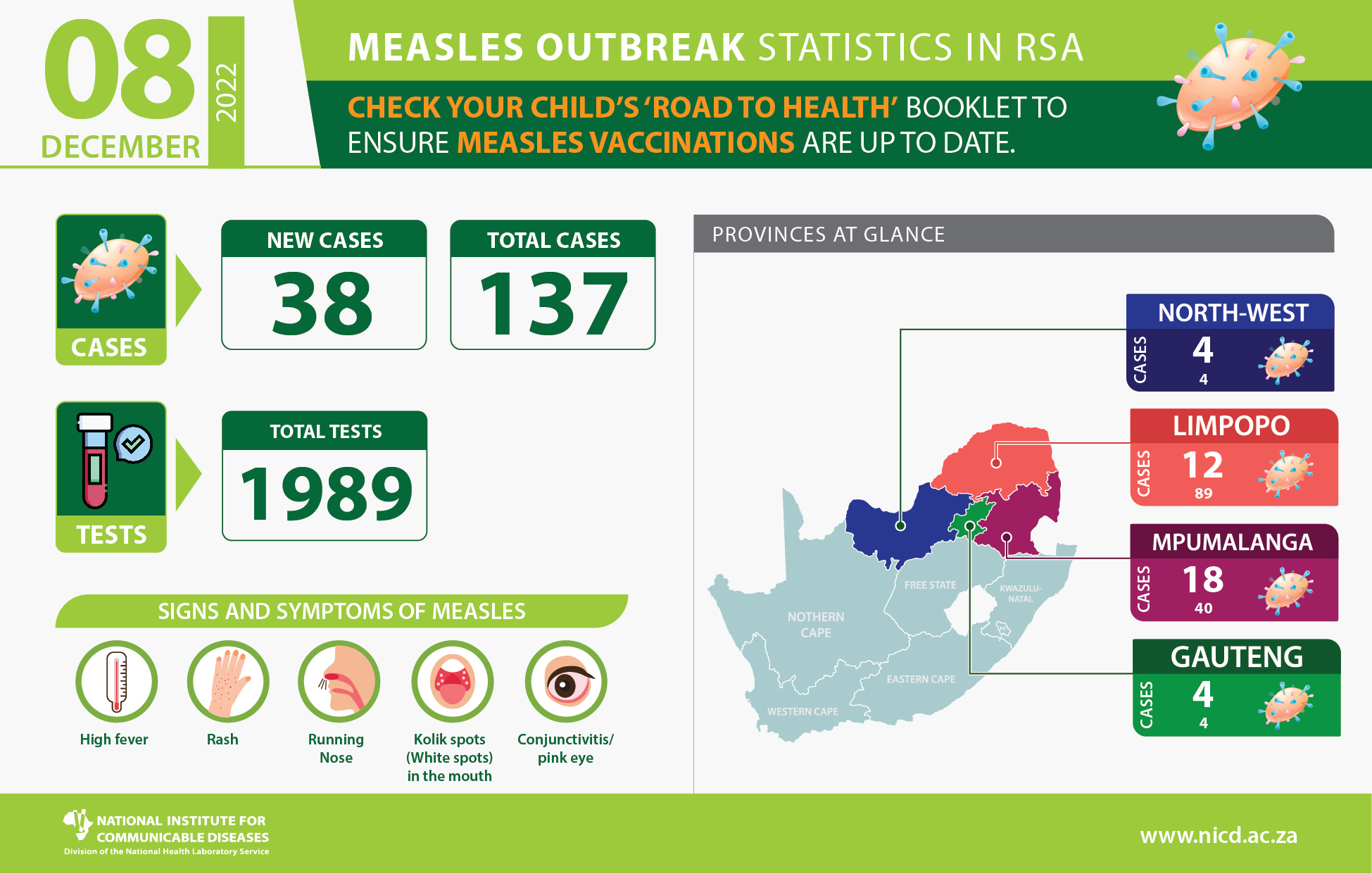
“The National Institute for Communicable Diseases (NICD) has released its latest measles and rubella situation report, confirming a rise in cases across South Africa and warning of potential nationwide spread. Health authorities are urging parents to ensure children are vaccinated, as gaps in immunization coverage remain a critical challenge.”
South Africa is once again facing the threat of measles and rubella outbreaks, with the NICD’s latest surveillance report showing a concerning increase in confirmed cases. These highly contagious viral diseases pose significant risks to children and vulnerable populations, and the current trend has prompted urgent calls for expanded vaccination campaigns nationwide.
Current Situation
- Measles cases have been reported in Gauteng, KwaZulu-Natal, and Limpopo, with clusters emerging in schools and community centers.
- Rubella infections are rising in parallel, raising concerns about congenital rubella syndrome (CRS), which can cause severe birth defects if pregnant women are infected.
- The NICD’s weekly bulletin emphasizes that low vaccination coverage is the primary driver of outbreaks.
Public Health Response
- The Department of Health has launched emergency vaccination drives in affected provinces, targeting children aged 6 months to 15 years.
- Mobile clinics are being deployed to rural areas, where access to healthcare facilities is limited.
- Schools are being urged to enforce immunization checks before enrollment.
Challenges
- Vaccine hesitancy remains a major obstacle, fueled by misinformation on social media.
- Healthcare system strain: Clinics already burdened by TB and HIV programs are struggling to allocate resources for outbreak control.
- Equity gaps: Rural communities face logistical barriers, including transport costs and limited cold-chain infrastructure for vaccines.
Expert Opinions
- Epidemiologists warn that measles is so contagious that 90% of unvaccinated individuals exposed will contract the disease.
- Pediatricians stress that rubella, though often mild in children, can have devastating consequences for unborn babies.
- Public health experts argue that South Africa’s immunization program must be restructured to ensure consistent coverage and rapid outbreak response.
Social Impact
- Parents in Gauteng have expressed frustration over long clinic queues and vaccine shortages.
- Community leaders in Limpopo are working with NGOs to raise awareness about the importance of vaccination.
- Religious groups are being engaged to counter vaccine misinformation and encourage participation in immunization campaigns.
Government Strategy
- The National Department of Health has pledged additional funding for vaccine procurement and distribution.
- Partnerships with the South African Medical Research Council aim to strengthen surveillance and data collection.
- The government is considering mandatory vaccination policies for school-aged children to curb future outbreaks.
Conclusion
The measles and rubella outbreaks in South Africa highlight the fragility of public health systems when vaccination coverage declines. While emergency measures are underway, experts caution that sustainable solutions require long-term investment in immunization infrastructure, community education, and healthcare workforce support. Without decisive action, the country risks recurring epidemics that could undermine broader health goals.



