




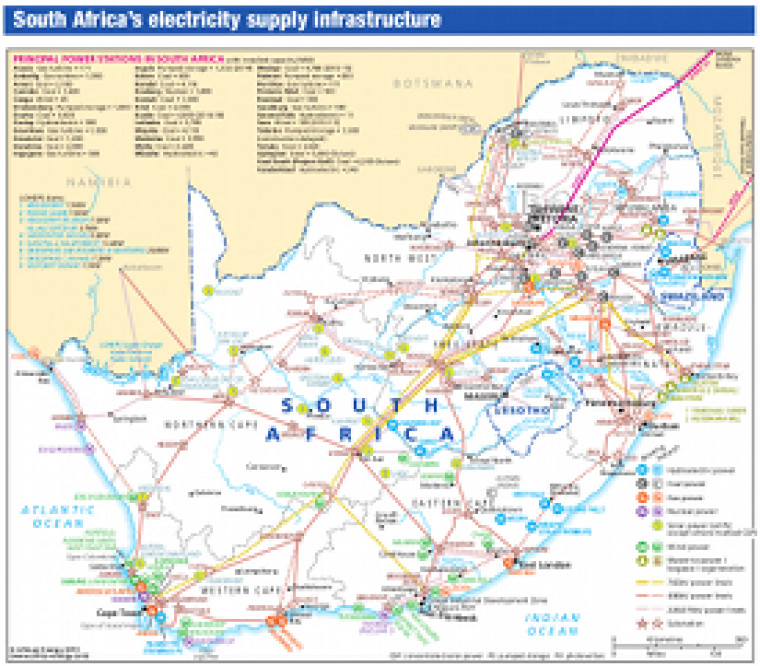
“South Africa is actively seeking Chinese investment to fund its ambitious R2.2 trillion energy expansion programme, which includes large-scale generation projects and 14,500 km of new transmission infrastructure. The government hopes this partnership will accelerate the energy transition, but experts warn that transparent procurement and local capacity-building are essential to ensure sustainable benefits.”
South Africa’s financial and economic stability has long been tied to its energy sector. On 4 August 2026, the country’s Electricity and Energy Minister, Kgosientsho Ramokgopa, announced a renewed push to attract Chinese investment into the nation’s R2.2 trillion energy expansion programme. This initiative is not just about electricity—it represents a broader financial strategy to secure foreign capital, stimulate industrial growth, and stabilize the macroeconomic environment.
Background: Energy Crisis and Financial Strain
South Africa’s persistent electricity shortages have weighed heavily on its economy. Rolling blackouts, known locally as “load shedding,” have disrupted businesses, reduced productivity, and undermined investor confidence. The financial cost is staggering: estimates suggest the economy loses billions of rand annually due to power interruptions.
The government’s solution is a massive infrastructure programme, including new generation capacity and 14,500 km of transmission lines. However, financing such a colossal project requires external support, hence the focus on China—a global leader in renewable energy and grid technology.
Why China?
China’s expertise in renewable energy technologies, battery storage, and grid infrastructure makes it a natural partner. Moreover, China has a long history of investing in African infrastructure, often through concessional loans and joint ventures. For South Africa, tapping into this capital could accelerate its energy transition while reducing reliance on coal.
Financially, Chinese investment offers:
- Access to cheaper financing compared to domestic borrowing.
- Technology transfer opportunities that could strengthen local industries.
- Diversification of funding sources, reducing dependence on Western institutions.
Financial Implications
The R2.2 trillion programme is expected to generate significant economic returns if managed properly. Key financial impacts include:
- Boosting GDP growth by stabilizing electricity supply.
- Attracting further foreign direct investment (FDI) into manufacturing and mining.
- Strengthening the rand through improved investor confidence.
However, risks remain. Without transparent procurement and competitive tendering, the programme could lead to debt dependency and import-heavy contracts that undermine local industry.
Governance and Oversight
Experts emphasize that institutional oversight is critical. South Africa’s history of corruption in large infrastructure projects raises concerns. To ensure financial sustainability, the government must enforce:
- Transparent bidding processes.
- Local procurement requirements.
- Skills development programmes to build domestic expertise.
Failure to do so could result in financial leakage, where billions are spent without meaningful local benefit.
Market Reaction
The announcement has already influenced financial markets. The rand stabilized after recent volatility, partly due to optimism that foreign investment could ease fiscal pressures. Equity markets also responded positively, with energy-related stocks showing modest gains.
Long-Term Outlook
If successful, the programme could transform South Africa’s financial landscape by:
- Reducing reliance on coal and lowering carbon emissions.
- Creating thousands of jobs in construction, engineering, and energy.
- Positioning South Africa as a regional energy hub.
Yet, the long-term outlook depends on balancing foreign investment with domestic capacity-building. The financial sustainability of the programme will hinge on whether South Africa can avoid the pitfalls of debt dependency and ensure that investment translates into real economic growth.
Conclusion
South Africa’s pursuit of Chinese investment in its energy expansion programme is a defining financial story of 2026. It represents both an opportunity and a risk: an opportunity to stabilize the economy and attract foreign capital, but a risk if governance failures undermine the benefits. For investors, policymakers, and citizens alike, the coming months will reveal whether this ambitious plan delivers on its promise.



