




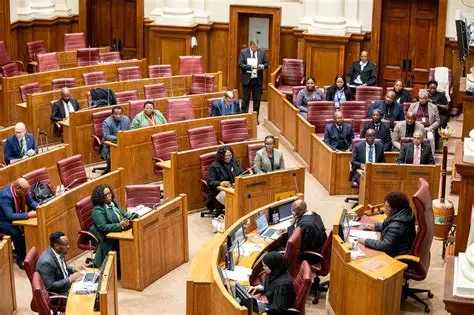
“South Africa has entered a new constitutional era with the commencement of the Constitution Eighteenth Amendment Act, which expands the High Court’s jurisdiction and strengthens judicial oversight of Parliament and the executive. The legislation is expected to enhance accountability, improve judicial efficiency, and bolster investor confidence ahead of the 2026 Local Government Elections.”
On 2 July 2026, South Africa officially commenced the Constitution Eighteenth Amendment Act, marking one of the most significant legislative milestones in recent years. Published in the Government Gazette, the Act introduces new frameworks for judicial jurisdiction and constitutional oversight, directly addressing long-standing debates about the role of the judiciary in safeguarding democratic principles. This development comes at a critical juncture: the Government of National Unity (GNU), formed after the 2024 elections, faces mounting pressure to demonstrate stability and accountability ahead of the 2026 Local Government Elections (LGE).
Background and Context
South Africa’s constitutional framework has always emphasized the separation of powers. However, disputes over land reform, employment equity, and healthcare regulation have exposed the limits of parliamentary and executive authority. Judicial oversight has increasingly become the “third actor” in resolving these disputes, often through Constitutional Court interventions.
Previous amendments focused on fiscal discipline and administrative reforms, but this latest change directly addresses judicial independence and constitutional enforcement. By expanding the jurisdiction of the High Court, the amendment reduces reliance on the Constitutional Court for preliminary disputes, thereby streamlining constitutional adjudication.
Key Provisions of the Amendment
- Expanded High Court Jurisdiction: The High Court now has broader authority to adjudicate constitutional matters, ensuring disputes are resolved more efficiently.
- Strengthened Oversight Mechanisms: Parliament and executive actions are subject to stricter judicial review, reinforcing accountability.
- Erratum Notice: Corrections in the Gazette ensure clarity in the application of the amendment, minimizing ambiguity in interpretation.
Political Implications
The GNU has struggled with ideological divisions, particularly on land reform, employment equity, and healthcare regulation. The amendment formalizes the judiciary’s role as a stabilizing force, ensuring that constitutional principles are upheld even amid political disagreements.
For opposition parties, the amendment is both a safeguard and a challenge. While it strengthens democratic accountability, it also limits the ability of political actors to push through controversial reforms without judicial scrutiny.
Economic and Investor Confidence
The legislation is expected to bolster investor confidence, particularly in sectors affected by regulatory uncertainty. By ensuring that executive power is exercised within constitutional boundaries, the amendment provides a more predictable environment for businesses.
Foreign investors, who have long expressed concern about policy volatility in South Africa, are likely to view this development as a positive signal. The emphasis on judicial oversight reduces the risk of arbitrary policy shifts, particularly in sensitive areas such as land expropriation and employment equity.
Judicial Efficiency and Public Trust
By expanding the jurisdiction of the High Court, the amendment reduces the burden on the Constitutional Court, allowing for faster resolution of disputes. This is expected to improve judicial efficiency and enhance public trust in the legal system.
Citizens, who often perceive the judiciary as the last line of defense against political overreach, are likely to welcome the amendment. The strengthened oversight mechanisms reinforce the principle that no branch of government is above the law.
Challenges Ahead
Despite its promise, the amendment is not without challenges. The expanded role of the judiciary may lead to increased caseloads for the High Court, requiring additional resources and capacity-building.
Moreover, political actors may attempt to circumvent judicial oversight through procedural maneuvers, testing the resilience of the new framework. The success of the amendment will depend on the judiciary’s ability to assert its authority without becoming entangled in partisan conflicts.
Conclusion
The Constitution Eighteenth Amendment Act represents a pivotal moment in South Africa’s democratic journey. By strengthening judicial oversight and expanding the jurisdiction of the High Court, the legislation enhances accountability, improves efficiency, and bolsters investor confidence.
As the country approaches the 2026 Local Government Elections, the amendment is likely to play a crucial role in shaping the political landscape. Whether it succeeds in fostering stability and trust will depend on the commitment of all stakeholders to uphold the principles of democracy and the rule of law.



