




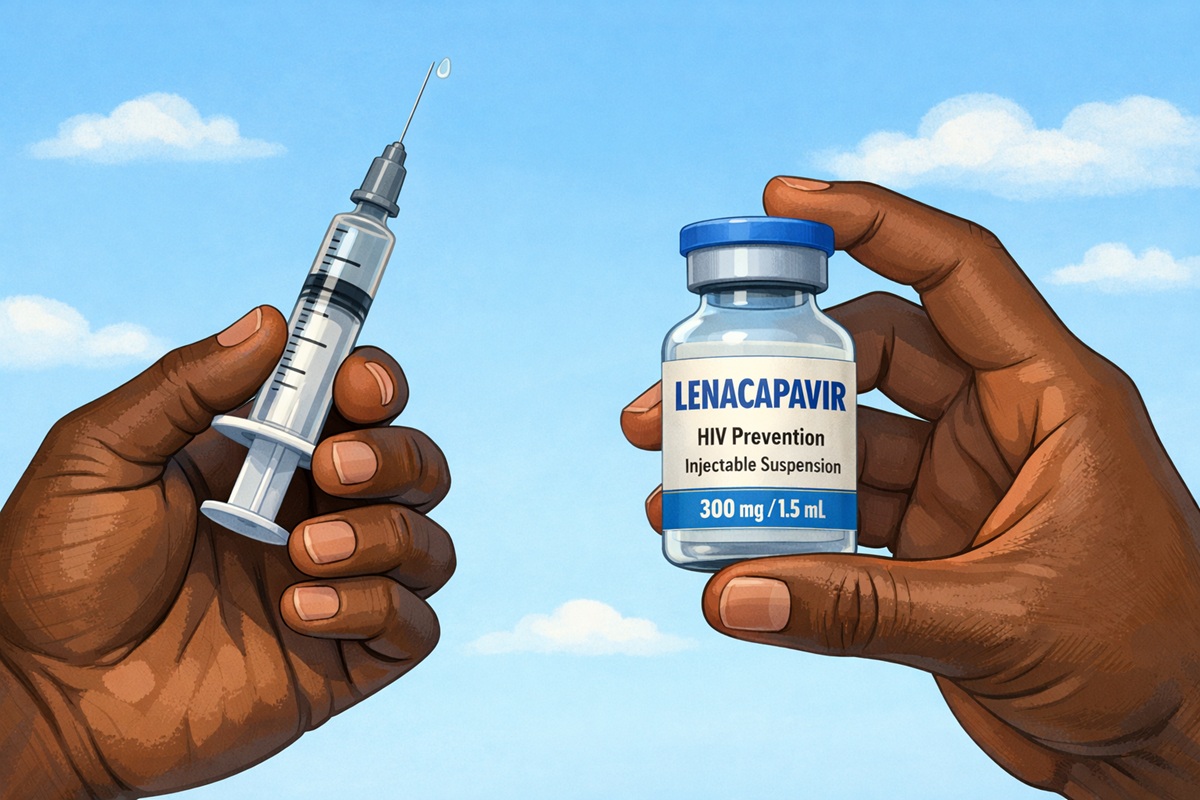
“South Africa has become the first lower-middle-income country to publicly roll out Lenacapavir, a twice-yearly HIV prevention injection, marking a historic milestone in the fight against HIV/AIDS. The initiative, launched with strong political backing and community engagement, aims to drastically reduce new infections, particularly among young women.”
South Africa has taken a bold and historic step in the global fight against HIV/AIDS by launching Lenacapavir, a revolutionary twice-yearly injection designed to prevent HIV infection. This rollout positions South Africa as the first lower-middle-income country to publicly implement this cutting-edge biomedical intervention, signaling a new era in public health strategy and HIV prevention across the continent.
The launch event, held in Mpumalanga’s Secunda at the Lilian Ngoyi Stadium, was more than a medical milestone—it was a cultural and political statement. The atmosphere resembled a festival, blending music, community mobilization, and scientific innovation. Nurses in bright orange scrubs demonstrated injection techniques on training models, while health promoters distributed educational materials and refreshments. School choirs revived harmonies reminiscent of the 2010 World Cup, drones hovered overhead capturing the moment, and vendors sold ribbons symbolizing different HIV prevention strategies: coral for Lenacapavir, teal for daily PrEP, and gold for viral suppression pride. This deliberate fusion of science and culture underscored the importance of emotional resonance in public health campaigns.
President Cyril Ramaphosa, addressing the crowd, described the initiative as “a continental pivot for public health.” His words reflected not only the national pride in pioneering this rollout but also the broader vision of positioning South Africa as a leader in HIV prevention innovation. The President emphasized that the success of Lenacapavir would depend on equitable access, community trust, and sustained funding. He urged international partners and local stakeholders to ensure that no one is left behind in this new chapter of HIV prevention.
Lenacapavir represents a significant advancement over existing prevention methods. Unlike daily oral PrEP (pre-exposure prophylaxis), which requires strict adherence and often faces challenges of stigma and forgetfulness, Lenacapavir offers protection through a single injection administered every six months. This innovation is particularly crucial for young women, who remain disproportionately affected by HIV in South Africa. By reducing the burden of daily medication, the injection promises to improve adherence rates and expand the reach of prevention efforts.
The logistical planning behind the rollout has been meticulous. Cold-chain management, specialized transport, multilingual consent forms, and community engagement strategies have all been integrated to ensure smooth implementation. Health workers have been trained extensively, and clinics across the country are being equipped to deliver the injections safely and efficiently. The government has also partnered with civil society organizations to raise awareness and combat stigma, recognizing that biomedical solutions must be accompanied by social acceptance.
Challenges remain, however. Funding sustainability is a pressing concern, as the cost of Lenacapavir is higher than traditional prevention methods. Ensuring equitable access across urban and rural areas will require ongoing investment and international support. Additionally, integrating Lenacapavir into existing health services without disrupting other critical programs, such as maternal health and tuberculosis treatment, will demand careful coordination.
Despite these challenges, the launch of Lenacapavir has been hailed as a turning point. Public health experts argue that this innovation could significantly reduce new HIV infections in South Africa, potentially altering the trajectory of the epidemic. If successful, the model could be replicated across other African nations, amplifying its impact on the continent’s fight against HIV/AIDS.
Community response has been overwhelmingly positive. Young people, particularly women, expressed hope that the injection would empower them to take control of their health without the daily burden of pills. Activists praised the government’s commitment to innovation and inclusivity, while healthcare workers highlighted the importance of continued training and support.
In the broader context, South Africa’s rollout of Lenacapavir reflects a global shift towards long-acting biomedical interventions in public health. It demonstrates how scientific breakthroughs, when combined with political will and community engagement, can reshape the fight against epidemics. For a country that has long been at the epicenter of the HIV crisis, this moment represents not just progress, but a profound reimagining of what is possible in public health.
As the stadium lights dimmed and the national anthem echoed through the crowd, one sentiment prevailed: hope. Hope that with Lenacapavir, South Africa can bend the arc of the epidemic, offering future generations a life free from the shadow of HIV.



