




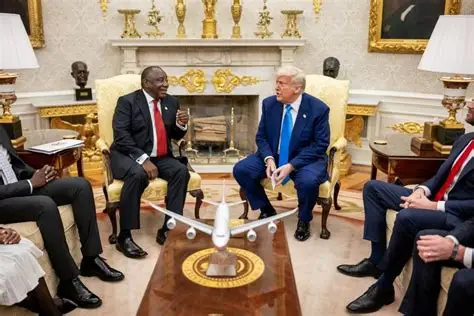
“South Africa has announced plans to prohibit imports of goods produced using forced or child labour, following the United States’ imposition of a 12.5% tariff on certain South African exports. The move signals Pretoria’s intent to align trade practices with global labour standards while seeking to ease tensions with Washington.”
South Africa’s trade landscape is undergoing a significant shift as the government signals its intent to prohibit goods produced through forced and child labour. This announcement comes in direct response to the United States Trade Representative’s (USTR) decision to impose a 12.5% tariff on South African exports not exempted under existing trade frameworks. The development marks a critical juncture in South Africa’s trade policy, with implications for exporters, labour rights, and international relations.
Background: U.S. Tariffs and Section 301 Investigation
The USTR’s tariffs stem from a Section 301 investigation under the U.S. Trade Act of 1974, which examined whether South Africa’s trade practices burden or restrict U.S. commerce. The investigation focused on the absence of enforceable prohibitions against goods produced with forced labour. As a result, South Africa was among 41 economies subjected to a 12.5% tariff, while 19 others faced a 10% tariff.
This decision followed the U.S. Supreme Court’s invalidation of former President Donald Trump’s “Liberation Day” tariffs, imposed in 2025 under emergency powers. The new tariffs reflect Washington’s renewed emphasis on ethical trade practices, particularly regarding labour rights.
South Africa’s Response
Trade, Industry and Competition Minister Parks Tau announced that the government will publish a Gazette notice requesting public comments on regulations to prohibit goods produced using forced or child labour. This move is designed to demonstrate South Africa’s commitment to international labour standards and to open dialogue with stakeholders across business, labour, and civil society.
Tau emphasized that South Africa will continue engaging with the USTR to reduce or eliminate the tariffs. He noted that while certain exports—such as automobiles, steel, and aluminium—are exempt due to existing Section 232 tariffs, many agricultural and industrial products remain affected.
Impact on South African Exporters
The tariffs pose challenges for exporters of goods ranging from macadamia nuts and citrus fruits to chemicals and critical minerals. Although some products have been exempted, the broader tariff regime threatens competitiveness in the U.S. market. For industries reliant on American demand, the additional 12.5% cost could erode profit margins and reduce export volumes.
However, the government’s proposed prohibition on forced-labour goods may help restore confidence among international buyers. By aligning trade regulations with global standards, South Africa could strengthen its reputation as a responsible trading partner.
Labour Rights and Ethical Trade
The announcement also underscores South Africa’s broader commitment to labour rights. Forced and child labour remain pressing global concerns, with supply chains often implicated in exploitative practices. By prohibiting such goods, South Africa aims to ensure that its trade policies reflect ethical values and human rights.
Civil society groups and trade unions have long advocated for stronger protections against exploitative labour. The government’s move could therefore bolster domestic support while enhancing South Africa’s standing in international forums such as the World Trade Organization (WTO) and the International Labour Organization (ILO).
International Relations and Diplomacy
The tariffs highlight the complex dynamics of U.S.-South Africa relations. While Washington seeks to enforce ethical trade standards, Pretoria must balance compliance with protecting its economic interests. The government’s proactive response may help ease tensions and pave the way for negotiations to reduce tariff burdens.
Moreover, South Africa’s stance could resonate with other trading partners. By adopting regulations against forced-labour goods, Pretoria may strengthen ties with countries that prioritize ethical trade, including members of the European Union and African Continental Free Trade Area (AfCFTA).
Economic Implications
The economic impact of the tariffs and proposed regulations will depend on several factors:
- Export Diversification: South African exporters may seek to diversify markets beyond the U.S., leveraging opportunities in Asia, Africa, and Europe.
- Compliance Costs: Businesses will need to ensure supply chains are free from forced labour, potentially increasing compliance costs but also enhancing credibility.
- Investment Climate: Aligning with global standards could attract investment from companies seeking ethical supply chains.
In the long term, South Africa’s commitment to ethical trade may strengthen its industrial base and support sustainable economic growth.
Challenges Ahead
Despite the positive intent, challenges remain. Implementing and enforcing regulations against forced-labour goods will require robust monitoring systems, coordination among agencies, and cooperation with international partners. Businesses may also face difficulties in tracing supply chains, particularly in sectors with complex global networks.
Additionally, negotiations with the U.S. will be critical. While South Africa’s move demonstrates goodwill, Washington may demand concrete evidence of enforcement before reconsidering tariffs.
Conclusion
South Africa’s decision to prohibit forced-labour goods represents a pivotal moment in its trade policy. By responding to U.S. tariffs with a commitment to ethical trade, Pretoria seeks to protect its exporters, uphold labour rights, and strengthen international relations. The move underscores the interconnectedness of trade, ethics, and diplomacy in today’s global economy.
As the government prepares to publish its Gazette notice, stakeholders across business, labour, and civil society will play a vital role in shaping the regulations. The outcome will determine not only South Africa’s trade trajectory but also its reputation as a champion of ethical commerce.



