




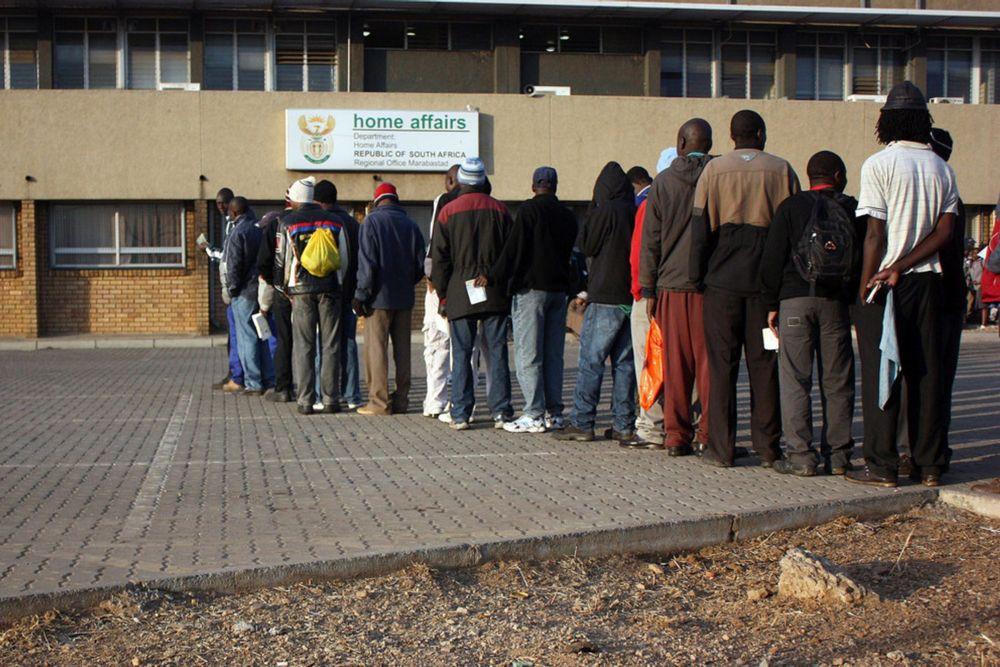
“South Africa’s Department of Home Affairs has directed refugee reception offices to accept asylum applications from people who may have entered the country unlawfully, following a Constitutional Court ruling that struck down restrictions on access to the asylum process. The move is a major policy shift that seeks to restore access to legal protection while raising immediate questions about administrative capacity, border management and the government’s ability to process a potentially larger number of claims.”
The directive, signed by acting Home Affairs director-general Thulani Mavuso on September 28, instructs refugee reception offices to receive anyone who reports in person and indicates an intention to seek asylum. That includes people who crossed the border outside an official port of entry, entered without a visa, failed to declare an intention to seek asylum at a port of entry or did not report to a refugee reception office within five days of entering South Africa.
Officials are also prohibited from demanding that applicants explain their unlawful entry, produce an asylum transit visa or demonstrate “good cause” before their applications can be accepted. The directive further says offices may not impose quotas or other administrative restrictions that prevent people from accessing the application process. TimesLIVE reported the directive on October 6, making it a major migration and human-rights policy development.
The policy follows a Constitutional Court ruling in May 2026 concerning the operation of the Refugees Act. The court record explains that the Act provides the framework for asylum applications, refugee status determination, exclusion and appeals, while section 21 governs how people seeking asylum are assisted at refugee reception offices. The judgment is central to understanding why Home Affairs has changed its administrative approach.
What has changed
For years, access to the asylum system was restricted for many people who did not satisfy procedural requirements at the border or shortly after arrival. The new approach does not mean every applicant will automatically receive refugee status. Instead, a person must be allowed to enter the process so officials can assess whether the claim meets legal requirements.
That distinction is important. South African law provides that an asylum application is considered through a status-determination process. A claim may ultimately be granted, rejected as manifestly unfounded, abusive or fraudulent, or rejected as unfounded, with legal mechanisms available for review and appeal. Government guidance explains that an asylum seeker’s permit is temporary and remains in place while the application is considered.
The policy therefore changes the point at which the state assesses eligibility. Instead of excluding certain people before their claims are considered, the system is being instructed to receive applications first and determine eligibility through the established legal process.
Why the issue matters politically
Migration and asylum policy has become one of the most politically sensitive issues in South Africa. The country faces pressure to strengthen border control, reduce undocumented migration and improve Home Affairs efficiency. At the same time, the Constitution and refugee law impose obligations to protect people who genuinely face persecution or other serious harm.
The new directive sits directly between those pressures. Supporters of broader access can argue that a functioning asylum system must allow people to present claims before the state decides whether they qualify for protection. Critics may argue that removing initial procedural barriers could increase pressure on crowded offices and create opportunities for people to use asylum applications to remain in the country even when they do not meet the refugee definition.
Home Affairs has acknowledged the capacity problem. Mavuso said applicant numbers had surged at the Durban office and warned that officials could face severe administrative delays if more people enter the system. At the same time, he stressed that officials cannot simply turn people away and instead need operational solutions such as longer opening hours and additional staff.
That creates a central policy test: access must be restored without allowing backlogs to become so severe that genuine refugees wait years for decisions.
The capacity challenge
South Africa’s asylum system has struggled with backlogs, staffing constraints and delays. A policy that increases access therefore requires more than a legal directive. It requires functioning reception offices, trained officials, reliable information systems, interpreters where necessary, effective case management and timely decisions.
The risk of abuse
The directive has intensified debate over possible abuse of the asylum system. Home Affairs officials have warned that some people may apply even when they are not fleeing persecution. The department has stressed, however, that economic hardship alone does not make a person eligible for asylum.
A person may enter the system, receive documentation that allows the claim to be considered, and still ultimately be refused refugee status. Access to the process should therefore not be confused with automatic recognition as a refugee.
Mavuso also warned that people who obtain asylum status should not return to countries they claim are persecuting them, because such travel could undermine the credibility of their claims. His comments highlight the department’s intention to distinguish legitimate protection needs from attempts to misuse refugee status.
The humanitarian dimension
Behind the policy debate are people whose legal status can determine whether they can live safely and remain protected while their claims are considered. South Africa’s official guidance states that people who flee their countries because of fear of persecution and lack documents such as passports or visas can apply for asylum at a refugee reception office.
For people unable to enter the asylum system because of procedural barriers, the directive could therefore be significant. It creates a route to have their circumstances assessed rather than being excluded before an official determination is made.
Border management and public confidence
The political difficulty is that humanitarian access must coexist with credible border management. South Africa cannot maintain public confidence if people believe immigration rules are routinely ignored or administrative systems cannot distinguish genuine protection claims from other migration motives.
The government will therefore need to demonstrate that opening access to the asylum system is accompanied by stronger processing and enforcement after claims have been assessed. Faster decisions would be particularly important. A credible system should be able to admit a person into the process, investigate the claim, decide it and act lawfully on the outcome.
Investment in technology and staffing is likely to be important. Digital case management, better information sharing and improved coordination between Home Affairs, border authorities and other institutions could help reduce delays while protecting applicants’ rights.
What happens next
The immediate test will be whether refugee reception offices can absorb increased demand. Home Affairs has indicated that it may need longer operating hours and additional staff. The department will also have to monitor application volumes, processing times and the quality of decisions.
For South African politics, the issue is likely to remain contentious. Migration is closely connected to debates about jobs, public services, national security, human rights and the rule of law. Political parties and civil-society organisations are likely to interpret the directive differently, as the country prepares for local government elections in November.
Ultimately, the significance of the new policy goes beyond whether more people can lodge asylum applications. It is a test of whether South Africa can balance constitutional obligations with effective immigration administration.
The new directive provides a clearer route into the asylum system. The harder task is ensuring that the system has enough capacity to make that route meaningful.
The central principle is clear: access to the asylum process and the final decision on refugee status are separate stages. South Africa is reopening the first stage to a wider group of applicants, while the responsibility for determining who genuinely qualifies for protection remains with the state’s legal and administrative system.



