




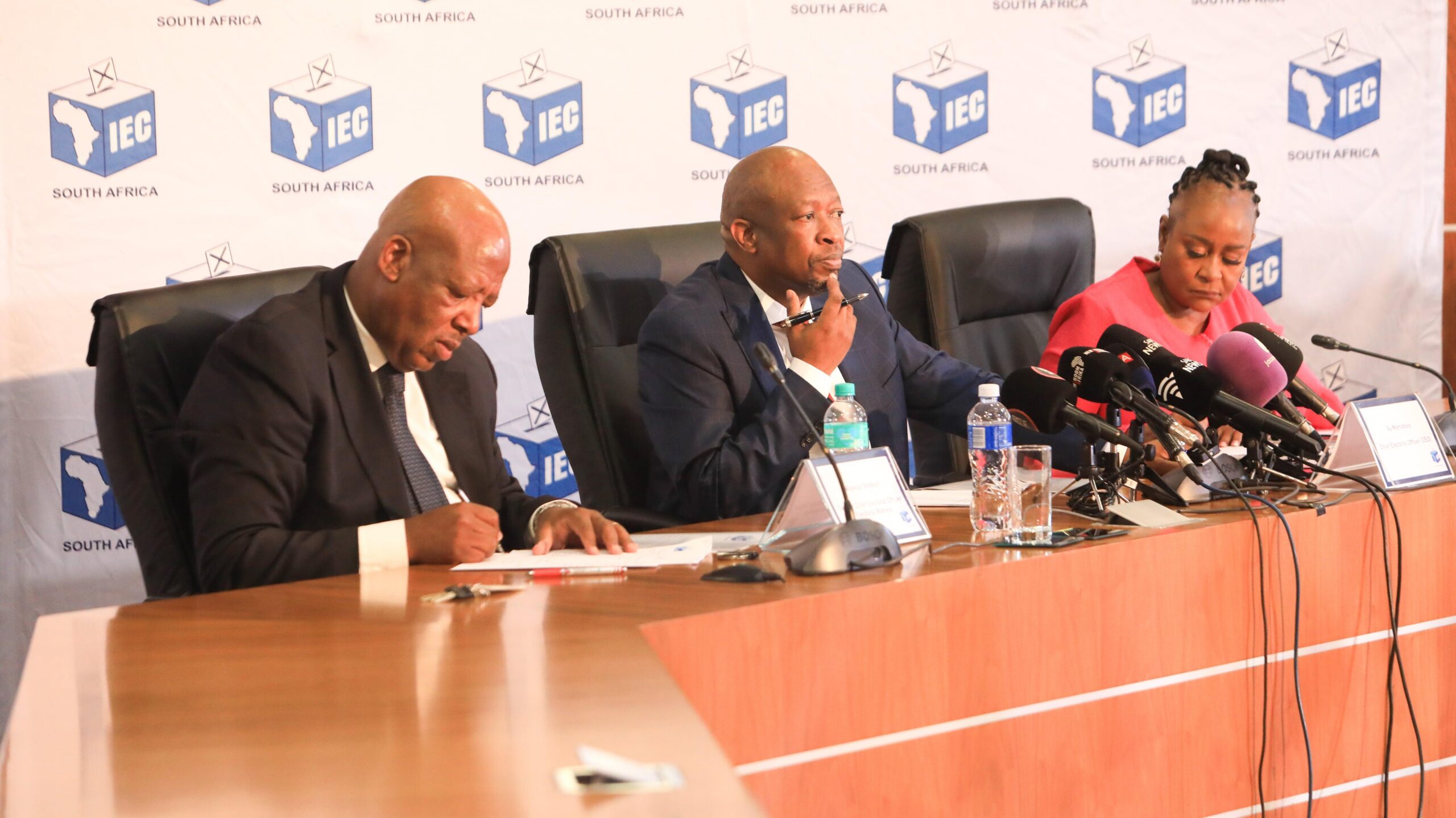
“South Africa’s Electoral Commission has opened its Election Results System to technical experts appointed by four political parties as part of preparations for the 2026 Local Government Elections. The audit, running from 5 to 12 October, is intended to strengthen transparency, security, reliability and public confidence in the system that captures, collates and converts election results into council seat allocations.”
South Africa’s preparations for the 2026 Local Government Elections have entered an important governance and accountability phase, with the Electoral Commission of South Africa (IEC) opening its Election Results System to scrutiny by political party-appointed technology experts. The exercise, which began on Monday, 5 October, and will conclude on 12 October, allows participating political parties to examine the system responsible for capturing and collating election results and assigning seats to contestants.
The development is significant because confidence in an electoral process depends not only on voting day procedures but also on the systems used to process and publish results. By allowing political parties to independently examine the Results System, the IEC is seeking to demonstrate that the technology supporting the election can withstand scrutiny from stakeholders who have a direct interest in the credibility of the outcome.
According to the IEC, four political parties have designated Information and Communications Technology experts to participate in the current review. They are the African Christian Democratic Party (ACDP), African National Congress (ANC), Democratic Alliance (DA), and uMkhonto we Sizwe Party (MKP). Political parties interested in taking part were required to indicate their intention and submit the names of their technical specialists by 30 September.
The commission has also confirmed that an independent external audit of the Election Results System has already been completed. The political party review therefore represents an additional layer of assurance rather than the first technical examination of the platform. The IEC says its practice of making the Results System available to political parties and contestants for auditing is intended to test its integrity, functionality, security and reliability.
This approach places electoral technology within the broader principles of democratic governance. Elections are not simply about casting ballots. They require institutions that can administer procedures consistently, protect information, produce accurate results and provide sufficient transparency for political competitors and citizens to trust the final outcome.
The importance of that confidence is particularly pronounced at the local government level. Municipal councils directly affect many aspects of daily life, including basic services, local infrastructure, planning, community development and municipal administration. Consequently, the legitimacy of the officials elected to those councils is closely connected to the credibility of the electoral process through which they obtain their mandates.
The 2026 Local Government Elections are also taking place against a wider national debate about municipal performance and governance. Cabinet approved a Revised White Paper on Local Government, 2026, in September, describing it as a framework intended to respond to persistent governance, institutional, financial and service-delivery challenges facing municipalities. The reform programme includes stronger implementation and accountability as well as measures aimed at improving institutional coherence and financial sustainability.
That context makes the IEC’s technology audit more than a technical exercise. It forms part of a much larger democratic process in which voters are expected to choose representatives who will be responsible for local government institutions. Ensuring that the election results are captured and allocated accurately is therefore essential to the legitimacy of the councils that will subsequently govern municipalities.
Parliament is also paying close attention to local government performance. The Portfolio Committee on Cooperative Governance and Traditional Affairs was scheduled on 6 October to receive briefings from key local-government institutions, including the South African Local Government Association, the Municipal Demarcation Board and the Commission for the Promotion and Protection of the Rights of Cultural, Religious and Linguistic Communities.
The parliamentary engagement highlights the continuing emphasis on professionalisation, institutional capacity and accountability within municipalities. Committee chairperson Dr Zweli Mkhize has previously said that professionalisation efforts must ultimately produce visible improvements in municipal performance.
Against this background, electoral integrity becomes a crucial starting point. A municipality cannot easily build public trust if citizens or political parties believe that the process used to determine elected representatives is unreliable. Conversely, a transparent and independently scrutinised election process can provide a stronger foundation for the incoming councils.
The IEC’s decision to involve political party ICT experts is therefore important because political parties are among the primary stakeholders in the electoral system. Their participation gives parties an opportunity to raise technical concerns, examine the safeguards in place and understand how the results platform operates.
It also creates an opportunity for political organisations to take responsibility for understanding the technology rather than relying solely on assumptions about the system. Technical participation can help parties distinguish genuine vulnerabilities from misunderstandings and can encourage more evidence-based debate about election administration.
The timing of the audit is also significant. With the 2026 Local Government Elections approaching, the commission is conducting the exercise before voters go to the polls. That provides an opportunity for concerns identified during the review to be investigated and, where appropriate, addressed before the system is required to process election results.
The IEC has stated that its objective is to administer the local government elections in a manner that is credible, transparent, inclusive and compliant with the law. Those principles are central to democratic governance because electoral institutions must be trusted not only by the governing party but also by opposition parties, independent candidates and voters.
The current audit also illustrates the importance of institutional checks and balances in South Africa’s constitutional democracy. The government system provides distinct responsibilities for the executive, Parliament and electoral institutions. Parliament’s role includes scrutinising and overseeing executive action, while the IEC administers elections independently within its constitutional mandate.
For voters, the technical details of an election results system may appear distant from everyday political concerns. However, the results produced by that system ultimately determine who occupies municipal seats and who receives the authority to make decisions affecting communities. The reliability of the technology is therefore directly connected to democratic representation.
The process may also help address misinformation surrounding elections. When credible stakeholders are permitted to inspect important parts of the electoral infrastructure, it becomes easier to provide evidence-based explanations about how results are processed. Transparency can consequently become an important defence against unsupported allegations that could undermine public confidence.
At the same time, scrutiny should not be regarded as a one-off exercise. Electoral credibility depends on continuous institutional improvement. Technology changes, cybersecurity threats evolve and electoral systems must adapt to new risks. Regular independent assessments, political party participation and clear communication with voters can therefore remain valuable beyond the 2026 election cycle.
The current exercise is scheduled to end on 12 October, after which the IEC will continue with broader preparations for the local government elections. The commission has already described the system audit as part of its assurance measures for transparency, credibility and confidence in the electoral process.
Ultimately, the significance of the audit extends beyond computer systems. It is about ensuring that the democratic choices made by South African voters are accurately reflected in the composition of municipal councils. When citizens cast their ballots, they expect those votes to be protected, counted and translated into representation according to the law.
As South Africa prepares for another important local government election, the scrutiny of the Results System provides an opportunity to reinforce that expectation. Political parties, electoral officials, Parliament and citizens all have a role to play in protecting confidence in the democratic process. A transparent election begins long before voting day, and the technical integrity of the results system is one of the foundations on which that confidence rests.
For that reason, the IEC’s decision to open its Results System to political party experts is among the most significant governance developments reported in South Africa on 6 October 2026. It demonstrates that electoral credibility depends not only on the final numbers announced after voting but also on the transparency, accountability and safeguards built into the machinery that produces those numbers.



