




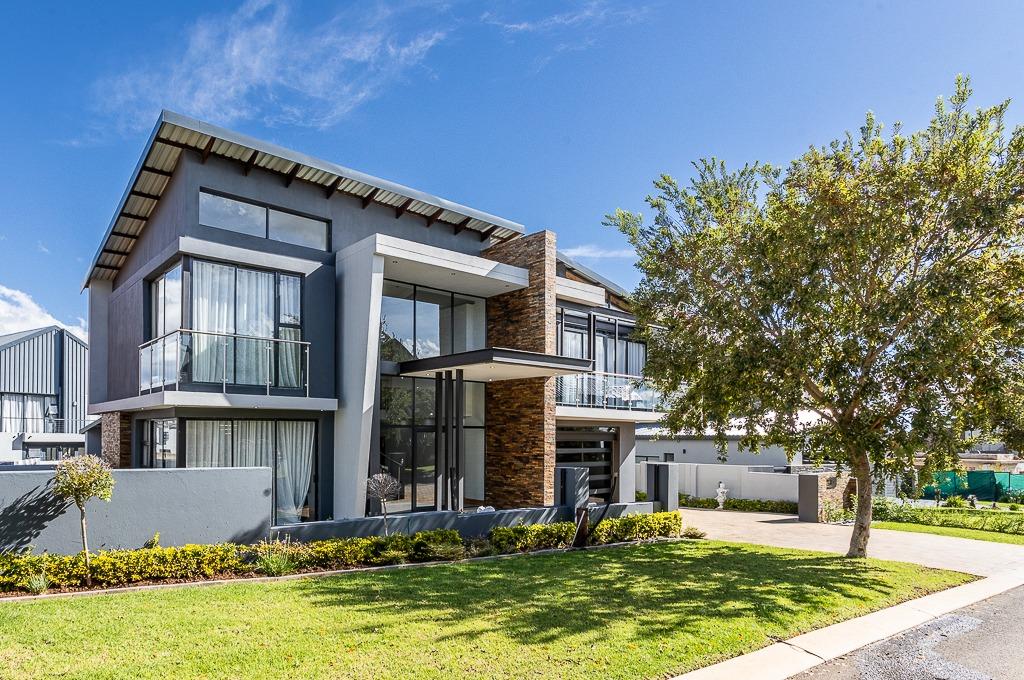
South Africa’s residential property market recorded annual price growth of 8.2% in May 2026, accelerating from a revised 8.1% in April, according to the latest Statistics South Africa Residential Property Price Index released today, 8 October 2026. The figures show a sharply divided market, with the Western Cape and Cape Town continuing to lead price growth while newly sold properties remained under pressure.”
South Africa’s Residential Property Market Shows Stronger Price Growth
South Africa’s residential property market has entered a new phase of stronger annual price growth, with the latest official data showing that residential property prices increased by 8.2% year on year in May 2026. The figures were released by Statistics South Africa (Stats SA) on Thursday, 8 October 2026, making the Residential Property Price Index one of the most important residential real estate developments published in South Africa today.
The May result represents an acceleration from the revised 8.1% annual increase recorded in April 2026. On a monthly basis, the national residential property price index increased by 0.7% between April and May, indicating that prices continued to rise as the market moved deeper into 2026.
The latest data provides an important picture of how different parts of South Africa’s residential market are performing. While national prices are rising relatively strongly, the increases are not evenly distributed across provinces or property types. The Western Cape remains the dominant contributor to national price inflation, while Gauteng is also making a substantial contribution because of its large share of the national residential market.
According to Stats SA, the Western Cape recorded annual residential property price growth of 11.2% in May. Because of the province’s substantial weighting in the national index, it contributed 4.7 percentage points to the overall 8.2% national increase. Gauteng recorded annual growth of 5.5% and contributed another 1.9 percentage points.
These figures demonstrate how strongly regional differences are influencing South Africa’s housing market. A national growth rate can therefore conceal significant variations between individual provinces, metropolitan areas and property categories.
Cape Town Continues to Lead Major Metropolitan Markets
The strongest metropolitan performance came from the City of Cape Town, where residential property prices increased by 11.5% year on year in May. The city also contributed approximately 4.5 percentage points to the annual increase recorded across all metropolitan areas.
Cape Town’s performance reinforces its position as one of South Africa’s strongest residential property markets. Demand in the city has remained comparatively resilient, while limited availability in desirable locations can place additional upward pressure on prices.
The broader metropolitan index increased by 8.0% between May 2025 and May 2026. After Cape Town, Ekurhuleni recorded growth of 7.3%, Tshwane rose by 5.3%, and Johannesburg increased by 4.8%.
The metropolitan figures show that the residential recovery is not confined to one city. However, Cape Town remains well ahead of the other major metropolitan markets, highlighting the continued strength of demand in the Western Cape.
For buyers, the divergence between regions is particularly important. A purchaser looking for a home in Cape Town may face considerably different price pressures from someone shopping in Johannesburg, Tshwane or other parts of the country. Consequently, national property statistics should be considered alongside local market conditions when evaluating a purchase.
Resold Homes Drive Much of the Price Growth
One of the most significant findings in the May data concerns the difference between properties being sold for the first time and existing properties being resold.
The index for resold properties increased by 8.3% year on year, while the index rose by 0.8% month on month in May. By comparison, properties sold for the first time recorded an annual decline of 0.3%, with the index falling by 0.2% during the month.
This divergence provides an important insight into the market. Existing homes are experiencing considerably stronger price growth than newly transacted properties. That could reflect differences in demand, construction costs, buyer preferences and the availability of new housing stock.
For developers, the weakness in first-sale prices could signal a more challenging environment for newly constructed residential projects. Developers must balance land, construction, financing and compliance costs against what buyers can realistically afford.
For existing homeowners, however, the 8.3% annual increase in resold property prices provides a more positive signal. Owners who purchased properties previously may be benefiting from stronger valuations, particularly in areas where demand remains high.
Freehold Homes Outperform Sectional Title Properties
The Stats SA figures also reveal a clear difference between freehold and sectional title housing.
Freehold property prices increased by 9.3% year on year in May, while the index increased by 0.5% during the month. Sectional title properties, including apartments and townhouses, recorded annual growth of 6.3%, with monthly growth of 0.7%.
The stronger performance of freehold property may indicate continued demand for stand-alone homes and properties that provide greater ownership of both the dwelling and land. At the same time, sectional title remains an important part of the South African housing market, particularly for buyers seeking more affordable entry points into established urban areas.
The difference also highlights why buyers should not treat the national house-price figure as representative of every type of property. Location, tenure, property size, age, condition and local demand can all influence the price trajectory of an individual home.
Provincial Performance Shows a Highly Uneven Market
Beyond the Western Cape and Gauteng, provincial price growth varied considerably.
Mpumalanga recorded annual residential property price growth of 9.5%, while Northern Cape prices increased by 7.4%. North West and Limpopo both recorded growth of 6.1%. KwaZulu-Natal increased by 4.5%, while Free State recorded 4.3% growth and Eastern Cape rose by 4.2%.
The variations suggest that South Africa does not have a single residential property market operating uniformly across the country. Instead, it has multiple regional markets shaped by local employment conditions, infrastructure, migration patterns, household incomes, development activity and buyer preferences.
This distinction is particularly important for investors. An investor considering residential property should examine local rental demand, employment growth, infrastructure investment and supply levels rather than relying solely on the national property-price increase.
What the Latest Figures Mean for Buyers
For prospective buyers, rising property prices can create both challenges and opportunities.
The biggest challenge is affordability. When property values rise faster than household incomes, buyers may need larger deposits or higher levels of borrowing to purchase the same type of home. Higher prices can also make it harder for first-time buyers to enter the market.
However, price growth can also provide confidence to existing homeowners and investors. Rising values may improve household wealth and strengthen the potential long-term return from property ownership.
Buyers should nevertheless avoid assuming that prices will continue increasing at exactly the same rate. The Stats SA figures measure historical transactions, and the latest 12 months of data remain subject to revision as additional deeds-office information becomes available.
Interest rates will also remain important. Mortgage affordability depends heavily on borrowing costs, meaning changes in monetary policy can influence buyer demand, transaction volumes and ultimately property prices.
Implications for Sellers and Developers
The latest figures give sellers reason to remain confident, particularly in high-performing areas. However, national growth does not mean every property will automatically command a higher price.
Sellers still need realistic valuations based on comparable transactions and local market conditions. Overpricing a property can discourage buyers even when broader market statistics are positive.
Developers face a more complicated environment. The decline in first-sale property prices suggests that affordability remains a significant constraint in parts of the market. Developers therefore need to pay close attention to the price points at which buyers are prepared and able to purchase.
Affordable housing, well-located developments and properties that offer strong value could remain particularly important as household budgets continue to face competing costs.
A Market That Is Growing, But Not Uniformly
The May 2026 Residential Property Price Index provides evidence that South Africa’s residential property market is experiencing stronger price growth. National annual inflation reached 8.2%, while Cape Town and the Western Cape remained the standout performers.
At the same time, the weakness in first-sale properties demonstrates that the market is not uniformly strong. Resold and freehold properties are experiencing considerably faster price increases, while new-property transactions remain under pressure.
The broader message for buyers, sellers, investors and developers is therefore one of caution combined with opportunity. South Africa’s residential market is clearly moving, but the direction and speed of that movement depend heavily on location and property type.
As the year progresses, future Stats SA releases will help determine whether the acceleration recorded through May represents the beginning of a sustained period of stronger residential price growth or simply a temporary phase in a market still adjusting to changing economic and affordability conditions.
For now, the latest official figures establish a clear headline: South African residential property prices continued to strengthen in May 2026, with national growth reaching 8.2% and Cape Town maintaining its position at the forefront of the market.



