




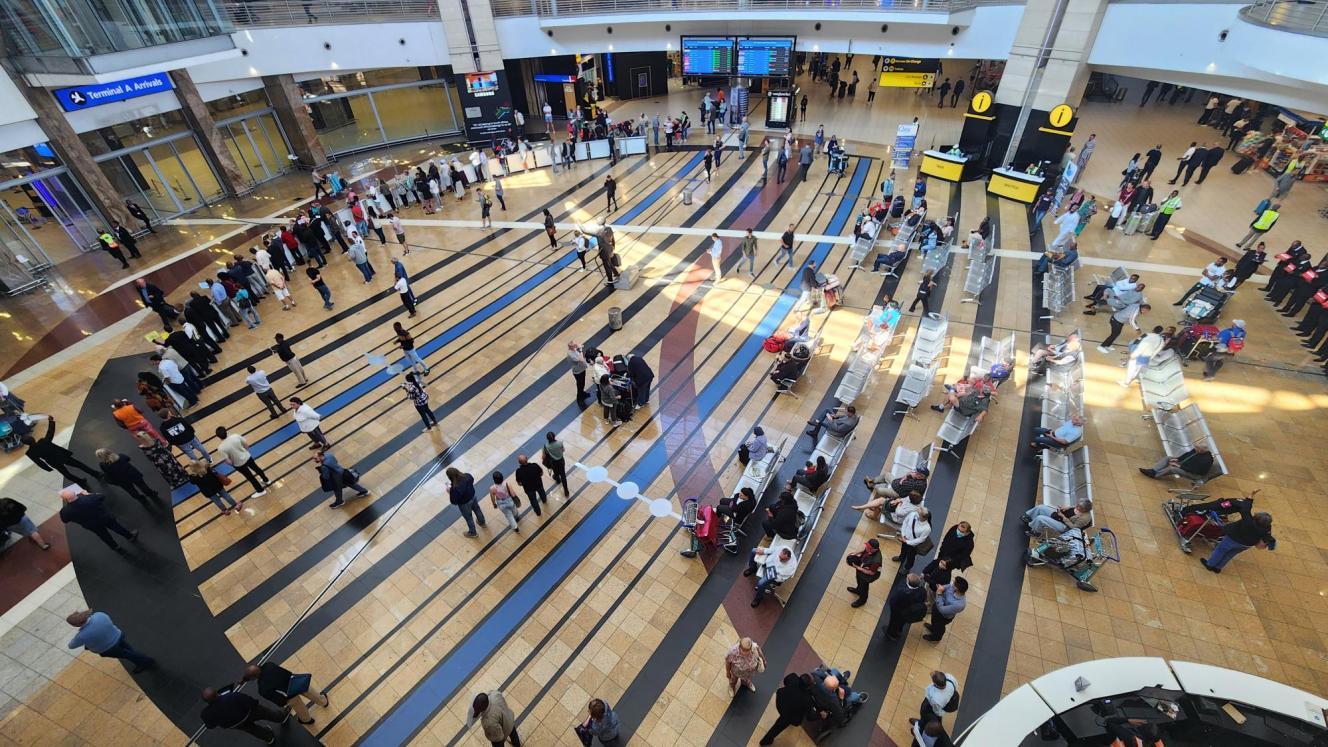
“South Africa is strengthening health surveillance at airports and other ports of entry ahead of the busy festive-season travel period, with additional attention directed towards travellers arriving from Ebola-affected areas. The measures include travel-history assessments, temperature screening, health questionnaires and preparedness arrangements involving hospitals and tourism stakeholders, as authorities seek to protect public health without unnecessarily disrupting tourism.”
South Africa Strengthens Border Health Screening Ahead of Festive-Season Travel
South Africa is stepping up health surveillance at its international airports and other ports of entry as the country prepares for the busy festive-season travel period, with authorities strengthening measures to prevent the possible importation of Ebola while maintaining confidence in the tourism industry.
The developments come as international travel increases towards the December holidays, traditionally one of South Africa’s busiest periods for domestic tourism, international arrivals, family reunions and cross-border movement. Health officials are working alongside tourism authorities and the Border Management Authority (BMA) to improve preparedness, passenger screening and public communication.
The latest measures reflect growing concern about the ongoing Bundibugyo virus disease outbreak in the Democratic Republic of the Congo (DRC), alongside reports of cases in other countries during 2026.
South Africa prepares for increased festive-season arrivals
South Africa’s tourism industry depends significantly on international connectivity, with visitors arriving through major airports, land border crossings and other entry points. The festive season brings additional pressure on these facilities as holidaymakers, returning residents, business travellers and regional visitors move through the country’s transport networks.
Authorities are therefore strengthening surveillance arrangements before passenger volumes increase further.
According to reporting by The National on 9 November 2026, the government is coordinating with tourism stakeholders while enhancing screening procedures designed to identify travellers who may require further medical assessment.
The National Department of Health has emphasised that the measures are precautionary and that the public should not panic.
Foster Mohale, spokesperson for the department, said officials were working with the Border Management Authority and other stakeholders to strengthen screening and public awareness.
The approach seeks to balance two important objectives: protecting South Africa against infectious disease threats and ensuring that travellers continue to experience orderly, efficient entry procedures.
Airports and border crossings receive increased attention
The Border Management Authority plays a central role in health screening at South Africa’s ports of entry.
Port health officials conduct temperature checks using thermal scanners, review travel histories and undertake visual assessments of arriving passengers. Travellers arriving directly from affected countries may receive additional attention, depending on their travel histories and circumstances.
Authorities also consider indirect travel routes.
A passenger arriving from a country that is not currently affected could still require assessment if their recent travel history includes a visit to an outbreak area.
This approach is important because international travellers frequently use connecting flights, regional transport networks and multiple border crossings when travelling between African countries.
South Africa’s major international gateways, including OR Tambo International Airport in Johannesburg, Cape Town International Airport and King Shaka International Airport in Durban, remain important entry points for international tourism and regional mobility.
Land border crossings also support substantial movement between South Africa and neighbouring countries, particularly during holidays.
Consequently, coordinated surveillance across different entry points is essential to the country’s preparedness strategy.
Health questionnaires strengthen traveller monitoring
One of the measures highlighted in the preparedness arrangements is a Travel Health Questionnaire for people travelling to South Africa from the Democratic Republic of the Congo and Uganda.
The questionnaire can be completed up to 24 hours before travel.
Travellers are required to provide information about their country of origin, countries visited during the previous month and any symptoms they may be experiencing.
The information allows health officials to assess possible exposure risks and determine whether additional medical attention is necessary.
The questionnaire also supports the referral of symptomatic passengers to designated health facilities for further assessment.
Officials may recommend monitoring for up to 21 days following suspected exposure, depending on the circumstances.
The Department of Health previously announced this questionnaire in July 2026, making it part of South Africa’s established preparedness arrangements rather than an entirely new travel requirement introduced in November.
Travellers should consult official government information before departure to confirm the applicable requirements.
Hospitals and healthcare workers strengthen preparedness
South Africa has also identified healthcare facilities that can receive suspected or confirmed Ebola cases.
According to The National’s report, 24 public hospitals and 12 private hospitals have been designated for this purpose.
Thousands of healthcare workers have received training to support preparedness, clinical assessment and emergency response.
The arrangements are designed to ensure that suspected cases can be referred appropriately without placing unnecessary pressure on facilities that are not equipped to manage high-risk infectious diseases.
The National Institute for Communicable Diseases (NICD) remains central to laboratory testing arrangements.
Its procedures require healthcare professionals to contact the NICD’s 24-hour hotline when a suspected viral haemorrhagic fever case is identified.
Testing for viral haemorrhagic fevers, including Bundibugyo virus disease, is centralised through the institute.
These measures support early detection, appropriate clinical management and coordinated public health reporting.
Understanding the Ebola outbreak
The current outbreak involves Bundibugyo virus disease, a form of Ebola caused by the Bundibugyo virus.
The World Health Organization has explained that this virus differs from the Zaire species responsible for previous outbreaks for which the Ervebo vaccine is licensed.
As of November 2026, there is no vaccine specifically approved for Bundibugyo virus disease.
However, research is advancing.
The WHO reported on 4 November that two candidate vaccines, ChAdOx1 and mRNA-1469, had been recommended for inclusion in the ongoing Tumaini clinical trial in the DRC.
Researchers are continuing to evaluate potential preventive interventions and treatments.
WHO also stresses that vaccination alone cannot end an outbreak. Effective surveillance, laboratory testing, contact tracing, clinical management, infection prevention, safe burials and community engagement remain essential.
These international developments explain why countries across the region are strengthening preparedness and information-sharing arrangements.
What the developments mean for South Africa’s tourism destinations
South Africa’s travel sector is entering a particularly important period.
Popular destinations such as Cape Town, Durban, Johannesburg, the Garden Route, the Kruger National Park and the Drakensberg typically attract visitors during the summer holiday season.
The industry includes hotels, guesthouses, restaurants, tour operators, safari lodges, transport providers, attractions and community-based tourism businesses.
For these businesses, public confidence in travel safety is essential.
Clear communication about screening procedures can help prevent unnecessary anxiety among prospective visitors.
The government is therefore working with tourism stakeholders to ensure that relevant health information reaches travellers.
Importantly, the WHO does not generally recommend travel or trade restrictions with countries affected by the current outbreaks. Its guidance emphasises evidence-based preparedness and public health measures.
South Africa’s approach should therefore be understood primarily as a precautionary screening and readiness strategy, rather than a general prohibition on travel.
Regional cooperation remains essential
The outbreak also highlights the importance of cooperation between African countries.
South Africa is part of a regional tourism and transport network in which people frequently travel between countries for holidays, employment, family visits and business.
Effective surveillance requires information-sharing between governments, health authorities, airlines, border agencies and regional institutions.
The Southern African Development Community (SADC) provides a platform for coordination on public health preparedness and cross-border responses.
Regional cooperation can improve early detection, emergency planning, laboratory capacity and communication.
It can also help countries avoid unnecessary restrictions that would damage tourism, trade and economic activity.
The importance of such collaboration has been reinforced by recent discussions involving health ministers and regional preparedness officials.
What travellers should do before departure
Travellers planning to visit South Africa during the festive season should take practical steps to prepare.
First, they should confirm their travel documentation and entry requirements before departure.
Second, passengers travelling from countries covered by South Africa’s health questionnaire requirements should complete the appropriate documentation within the required timeframe.
Third, travellers should provide accurate information about recent travel and any relevant symptoms.
Fourth, anyone who becomes unwell during travel should inform airline personnel or port health officials and follow medical instructions.
Travellers should also monitor official announcements from the Department of Health, the Border Management Authority and the NICD.
These measures can help passengers avoid unnecessary delays while supporting public health protection.
Protecting tourism while maintaining public health
South Africa’s festive-season travel preparedness demonstrates the importance of balancing tourism development with health security.
The country’s tourism economy depends on reliable transport connections, safe visitor experiences and confidence among domestic and international travellers.
By strengthening surveillance, training healthcare workers and coordinating with tourism stakeholders, authorities are seeking to reduce potential risks while maintaining the country’s attractiveness as a destination.
The coming weeks will be particularly important as holiday travel increases and regional movement intensifies.
Clear communication, responsible travel behaviour and effective coordination between government agencies and the tourism industry will remain essential.
Ultimately, the objective is to ensure that South Africa’s destinations remain accessible, welcoming and prepared for the holiday season while protecting the health of residents, visitors and tourism workers.
As the festive season approaches, travellers are encouraged to remain informed, follow official guidance and plan their journeys responsibly.
South Africa’s strengthened preparedness arrangements underline a broader message for the tourism industry: public health protection and successful destination development must work together to sustain confidence in travel.



