




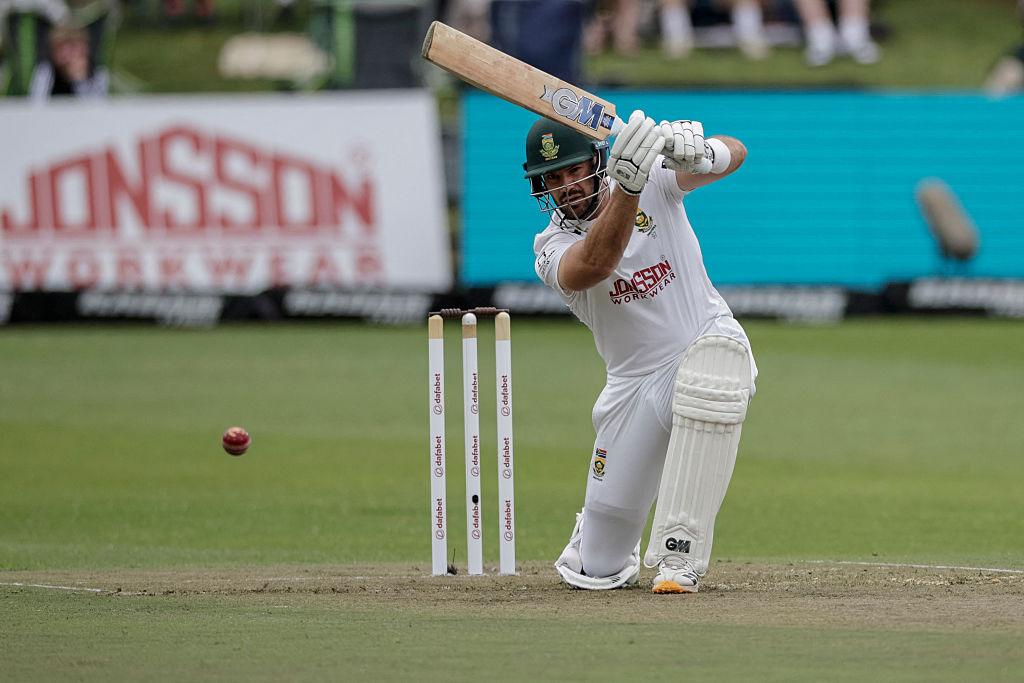
“Australia’s Scott Boland dismissed Aiden Markram and David Bedingham with consecutive deliveries as South Africa reached 20 for two after only 12.2 overs on the rain-affected first day of the second Test at St George’s Park. With Temba Bavuma and debutant Marques Ackerman unbeaten when play was abandoned, South Africa face an important batting challenge as they attempt to recover from their first-Test defeat and level the series.”
South Africa Face Major Test of Character After Scott Boland’s Double Strike in Rain-Interrupted Australia Test
South Africa’s attempt to recover against Australia in the second Test at St George’s Park in Gqeberha suffered an early setback on Sunday, 18 October 2026, when Australian fast bowler Scott Boland dismissed Aiden Markram and David Bedingham with consecutive deliveries. Persistent rain subsequently prevented further meaningful action, leaving the Proteas struggling at 20 for two after only 12.2 overs. As the teams return to the scheduled second day on Monday, 19 October, the focus is on whether South Africa can rebuild their innings and keep their hopes of levelling the series alive.
The second Test carries considerable importance for the home side following Australia’s convincing 214-run victory in the opening match in Durban. South Africa entered the Gqeberha encounter seeking an immediate response, but the visitors demonstrated once again how effectively their pace attack can exploit favourable bowling conditions. Although the weather restricted the contest, Boland’s short burst of outstanding bowling provided Australia with a significant early advantage.
Australia capitalise on favourable conditions
South Africa were sent in to bat after Australia won the toss and elected to field. The decision offered the Australian fast bowlers an opportunity to exploit the conditions at St George’s Park, where moisture in the atmosphere and assistance from the pitch can make life difficult for opening batters.
Markram and his fellow top-order players needed to establish a solid foundation, particularly after the disappointment of the first Test. However, Australia quickly demonstrated their intent through disciplined lines, controlled movement and persistent pressure.
Boland made the breakthrough by dismissing Markram for 11. The delivery moved in off the pitch, producing an inside edge before crashing into the batter’s middle stump. The dismissal was a reminder of the importance of precise seam bowling in Test cricket, where a slight deviation can expose even an experienced international batter.
The Australian bowler then removed Bedingham with the next delivery, creating a double strike that immediately changed the complexion of the innings. Bedingham had been among South Africa’s more successful batters in Durban, making his early departure particularly significant for the home team.
Boland’s consecutive wickets left South Africa at 20 for two. The visitors had not needed a lengthy spell to create a serious problem for their opponents, and the pressure shifted towards the remaining batters to prevent another collapse.
Rain interrupts South Africa’s recovery
After the early wickets, the weather became the dominant feature of the day. Rain repeatedly interrupted proceedings, limiting opportunities for both teams and frustrating spectators hoping to see a full day’s Test cricket.
Only 12.2 overs were bowled before the umpires abandoned play. South Africa were left on 20 for two, with captain Temba Bavuma unbeaten on four and debutant Marques Ackerman not out on five.
The limited playing time meant that the contest had barely progressed beyond its opening phase. Nevertheless, the wickets already taken gave Australia reason for encouragement, while South Africa were left with a difficult task when play resumed.
Rain interruptions are particularly frustrating in Test cricket because teams must continually adjust their preparation and approach. Batters may have to return to the middle after lengthy breaks, while bowlers must manage their workloads and maintain concentration despite uncertain conditions.
For South Africa, the interruption brought mixed consequences. It prevented Australia from extending their advantage during the remainder of the day, but it also meant the home side had little opportunity to establish a recovery before the scheduled close.
The forecast remained a concern for the next day’s proceedings, creating uncertainty over how much cricket could be played. Every lost session could become important in a match where the Proteas need a substantial first-innings total to challenge Australia’s position in the series.
Bavuma faces a crucial leadership challenge
Captain Bavuma has an important role to play as South Africa attempt to recover from their early setbacks. His immediate responsibility is to provide stability, protect his wicket and build partnerships with the batters who follow.
Test cricket frequently rewards patience rather than immediate aggression. When the ball is moving, batters must assess conditions carefully, judge which deliveries to leave and resist the temptation to force scoring opportunities.
Bavuma’s experience could prove valuable in that situation. Rather than allowing the pressure created by Boland’s double strike to influence the entire batting order, the captain must encourage a measured approach that prioritises partnerships and disciplined shot selection.
South Africa also need their middle order to respond if the remaining top-order players cannot build a substantial stand. The objective is not simply to avoid losing more wickets but to establish enough control to make Australia’s bowlers work for every breakthrough.
A competitive first-innings score would provide the home team’s bowlers with a better platform when Australia eventually bat. Conversely, another rapid collapse could place South Africa under severe pressure in a match already complicated by the weather.
The challenge is therefore both technical and psychological. South Africa must demonstrate that the opening setbacks will not determine the direction of the entire Test.
Marques Ackerman begins his international journey
Ackerman’s presence at the crease adds another important dimension to the match. The debutant survived the difficult opening period and remained unbeaten on five when play ended.
Making an international debut against Australia is a demanding introduction to Test cricket. The opposition possesses experienced fast bowlers who understand how to create pressure through sustained accuracy and subtle changes in pace and movement.
For Ackerman, the immediate priority will be to settle into his innings. He must become comfortable with the pace of the attack, establish his preferred scoring options and avoid unnecessary risks while conditions remain challenging.
A debutant’s contribution cannot be measured solely by the number of runs scored during an initial appearance. The ability to withstand difficult spells, communicate effectively with an experienced partner and remain composed under pressure can be equally important.
If Ackerman can turn his unbeaten start into a meaningful innings, he would provide South Africa with valuable stability and strengthen his own prospects at international level.
However, the task remains difficult. Australia’s bowlers have already shown that they can exploit small technical weaknesses, and the batter will need to make careful decisions whenever play resumes.
Australia’s bowling strategy delivers early rewards
Australia’s decision to field a pace-focused attack also attracted attention. The tourists left spinner Nathan Lyon out of the playing XI and included Boland among their fast-bowling options.
The early results supported the decision. Boland’s accuracy and ability to extract movement proved effective against South Africa’s top order, demonstrating the value of selecting bowlers suited to the conditions.
Australia’s broader objective is to maintain the pressure established during the first Test. Having secured a 214-run victory in Durban, the visitors entered the second match with an opportunity to strengthen their position in the series.
Their bowling unit has several ways to create difficulties for South Africa. Consistent seam movement can force defensive errors, while disciplined field placements can limit scoring opportunities and encourage batters to attempt risky shots.
Nevertheless, the visitors must also prepare for changing conditions. If the pitch becomes easier for batting or the weather removes the movement available to the seamers, Australia may need to adjust their lengths and tactical approach.
The rain also creates uncertainty around the match’s eventual duration. Australia will want to convert their early advantage into a position from which they can pursue victory, but lost overs could reduce the time available for both innings and any potential result.
Why the second Test matters after Durban
The wider series context makes the match particularly important. Australia’s opening victory placed South Africa under immediate pressure to respond, and a strong performance in Gqeberha would help restore confidence in the home team’s Test cricket.
The Proteas have an opportunity to demonstrate that the Durban defeat was not representative of their overall capabilities. A competitive performance would require improved batting partnerships, better management of difficult spells and consistent contributions from both experienced players and newcomers.
The second Test also offers an opportunity for South Africa to assess their batting combinations. Matthew Breetzke was brought into the squad after strong performances in the recent one-day international series, while Ryan Rickelton was assigned wicketkeeping responsibilities for this match. These changes underline the selectors’ efforts to find the right balance following the first Test.
Ultimately, the match is about more than recovering from two early wickets. South Africa need to establish a stronger collective performance, particularly against an Australian side that has already shown its ability to exploit weaknesses.
Weather could shape the final result
The biggest uncertainty surrounding the second Test remains the weather. The opening day demonstrated how quickly persistent rain can interrupt even a highly anticipated international contest.
If further sessions are lost, both teams may have to reconsider their normal Test-match strategies. Captains could face difficult decisions about declaration timing, batting tempo and the amount of time required to dismiss the opposition twice.
South Africa would ideally want enough time to build a competitive total and apply pressure with the ball. Australia, meanwhile, will seek to preserve their advantage and ensure that their early wickets translate into a meaningful result.
Weather interruptions do not necessarily eliminate the possibility of a decisive match, but they increase the importance of every available session. Teams that adapt quickly and make the most of short periods of play can gain a significant advantage.
Conclusion: South Africa must respond with patience and determination
The second Test at St George’s Park has begun in frustrating circumstances for South Africa. Boland’s two wickets in consecutive deliveries exposed the vulnerability of the top order, while rain prevented the home team from establishing a recovery before the end of the opening day.
Bavuma and Ackerman remain central to South Africa’s immediate hopes. Their ability to rebuild the innings, supported by the remaining batting order, could determine whether the Proteas regain control or allow Australia to strengthen their advantage.
For Australia, the early breakthroughs provide an encouraging continuation of their successful opening Test. However, the visitors must remain focused as changing weather conditions complicate their plans.
As the teams prepare for the next scheduled day of play, the central question is whether South Africa can turn a difficult start into a competitive contest. Their response will depend on disciplined batting, resilient partnerships and the ability to exploit whatever playing time the weather allows.
The opening day may have been short, but it has already established the stakes: South Africa need a determined recovery, while Australia will look to convert Boland’s early brilliance into another important step towards series victory.



