




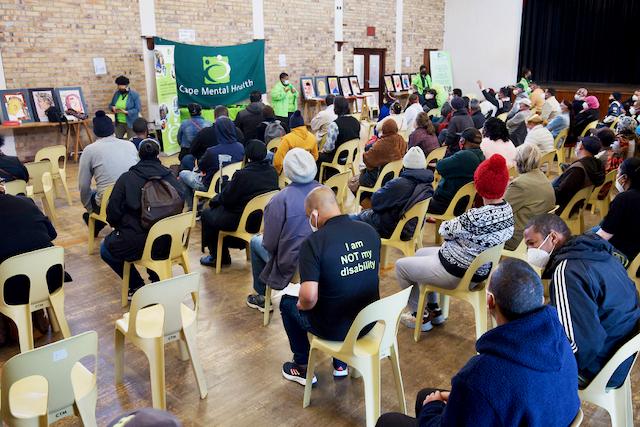
“As South Africa approaches World Mental Health Day on 10 October, attention is turning to the importance of listening to people with lived experience and allowing their experiences to influence mental-health services, workplaces and policies. A new South African-focused report also highlights the pressures faced by women, employees and frontline workers, arguing that mental wellbeing cannot be separated from safety, financial pressure, workplace conditions and the wider environments in which people live.”
South Africa’s Mental Health Conversation Moves From Awareness to Action
South Africa’s mental-health conversation is entering an important stage as the country prepares to mark World Mental Health Day on 10 October. Rather than focusing only on awareness, this year’s discussion is placing greater emphasis on the experiences of people who live with mental-health challenges and on whether those experiences actually influence the systems designed to support them.
The South African story gaining particular attention on 8 October is a report published by Lifestyle & Tech titled A World Built for Someone Else: Why mental health must be built with people, not for them. The article examines the 2026 World Mental Health Day theme, “Lived experiences heard: real voices, real change,” and argues that listening must go beyond inviting people to tell their stories. People who have experienced mental-health difficulties should also have a meaningful role in shaping services, workplace policies and support programmes.
The issue is particularly relevant in South Africa, where mental wellbeing is affected by a combination of personal, social and economic pressures. The article highlights research involving more than 6,000 South African women through First for Women’s Her & Now programme. The research suggests that many women are carrying significant pressures related to personal safety, unpaid care work, financial demands and gender-based violence.
According to the findings reported by Lifestyle & Tech, 90.1% of surveyed women said they never or rarely feel safe walking alone after dark. In addition, 79.5% said safety concerns had cost them money, while more than one-third reported spending at least five hours a day on unpaid domestic and care work. Among mothers of children under five, that proportion increased to 48.4%.
These findings demonstrate why mental health cannot always be addressed simply by telling people to become more resilient. Constant exposure to fear, insecurity, financial stress or excessive responsibilities can affect emotional wellbeing over long periods.
The report therefore challenges the idea that individuals should simply learn to cope with difficult circumstances. Instead, it asks organisations and institutions to consider whether the environments they create are contributing to stress or helping people manage it.
Women’s Safety and Mental Wellbeing
One of the strongest connections highlighted in the report is the relationship between women’s safety and mental health.
When women regularly change their behaviour because they fear violence, that fear can affect everyday decisions about travelling, working, exercising, socialising and spending time outside the home. Mental wellbeing is consequently influenced not only by what happens inside a person’s mind, but also by the conditions surrounding that person.
The report connects these concerns with gender-based violence in South Africa. It argues that conversations about women’s mental health cannot ignore the broader social environment in which women experience insecurity and violence.
This perspective is important because mental-health interventions can sometimes concentrate heavily on individual treatment while overlooking social factors. Counselling and clinical care remain important, but people may continue experiencing distress if the conditions contributing to that distress remain unchanged.
South Africa’s Mental Health Awareness Month therefore provides an opportunity to consider both sides of the issue: improving access to professional mental-health services while also addressing the circumstances that can undermine wellbeing.
The Workplace Is Also a Mental-Health Environment
The report also examines the rapidly changing workplace. Technology, artificial intelligence and changing job responsibilities are creating new opportunities, but they are also generating uncertainty for employees.
For some workers, the question is no longer simply whether they can perform their current job. They may also be wondering whether their role will change, whether their skills will remain relevant and whether artificial intelligence could eventually replace some of their responsibilities.
The article quotes Salesforce Senior Talent Program Manager Ursula Fear, who argues that people experiencing these changes are themselves important experts on what workplace transformation feels like. According to the article, providing opportunities for employees to develop new skills can give them greater confidence and a sense of control over change.
This is an important mental-health consideration. Uncertainty can create stress, particularly when employees feel that decisions affecting their careers are being made without their participation.
Consequently, companies may need to rethink how they approach employee wellbeing. Mental-health support should not necessarily begin only when an employee experiences a crisis. It can also involve creating workplaces where people can ask questions, develop new skills, communicate concerns and participate in decisions affecting their working lives.
Listening to Employees Beyond Policies
The report also looks at the hospitality sector, where workers frequently provide emotional support and service to customers while managing their own pressures.
Hospitality employees may work long hours, deal with demanding customers and experience financial difficulties or uncertainty. The article argues that workplace policies are valuable, but their real effectiveness becomes visible during ordinary working days.
A policy may say that employees can speak about mental-health concerns, but workers also need to feel safe enough to actually do so. Managers therefore have an important role in creating environments where asking for help is not interpreted as weakness or poor performance.
This approach reflects a broader shift in mental-health thinking. Instead of treating wellbeing as a programme that employees access separately from their working environment, organisations are increasingly being encouraged to consider how everyday management practices influence psychological wellbeing.
South Africa’s Wider Mental-Health Challenge
The discussion comes during a month when mental health is receiving heightened attention across South Africa. The National Department of Health’s 2026 health-awareness calendar identifies October as Mental Health Awareness Month, with World Mental Health Day scheduled for 10 October.
Other recent reporting illustrates the scale of demand for mental-health assistance. The South African Depression and Anxiety Group, or SADAG, recently said it receives between 2,000 and 3,000 calls every day, together with more than 900 WhatsApp messages. People contact the organisation about anxiety, depression, trauma, addiction, suicidal thoughts, grief and other challenges.
Those figures underline why public awareness needs to be accompanied by accessible support. Encouraging people to talk about mental health is valuable, but conversations must ultimately connect people with appropriate assistance.
Access to treatment is also affected by wider healthcare-system pressures. Recent reporting from Gauteng, for example, highlighted medicine-supply challenges affecting public healthcare facilities, with reports involving medicines for several chronic conditions, including some mental-health conditions. The provincial health department acknowledged supply challenges and said it was working to minimise treatment interruptions.
Building Mental-Health Services With People
The central message emerging from the 8 October story is that people with lived experience should not simply be the subjects of mental-health discussions. They should have a voice in determining how support is designed and delivered.
That means involving people in the development of services, listening to their experiences of healthcare and workplace systems, and using their knowledge to identify barriers that professionals or institutions may overlook.
It also means recognising that mental health is connected to housing, safety, employment, education, finances, relationships and community support.
For South Africa, this approach could help move the conversation beyond annual awareness campaigns. Mental Health Awareness Month can start conversations, but lasting change requires those conversations to influence decisions throughout the year.
As World Mental Health Day approaches, the challenge is therefore straightforward but significant: listen to people, take their experiences seriously and allow those experiences to shape action.
The message from the latest South African mental-health discussion is that real change begins when lived experience is treated as expertise. Whether the setting is a workplace, healthcare facility, community or household, people are more likely to trust support systems when they have helped shape them.
For South Africa, turning that principle into practice could make mental-health services more responsive, workplaces more supportive and public conversations more meaningful. The goal is not simply to ask people whether they are coping. It is to understand why they may be struggling and then change the systems around them where change is possible.
That is ultimately the significance of this year’s World Mental Health Day message: hearing people’s voices should be only the beginning. The next step is making those voices count.



