




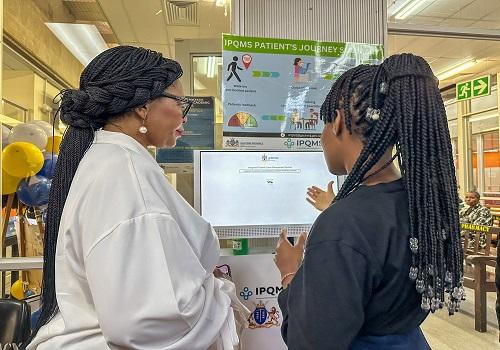
“Public Protector Kholeka Gcaleka conducted an unannounced inspection of Charlotte Maxeke Johannesburg Academic Hospital on Thursday, highlighting continuing concerns about patient access, infrastructure repairs and medicine availability at one of Gauteng’s major public hospitals. The visit comes months after her office found systemic administrative failures linked to delays in repairing damage caused by a 2021 fire, while hospital officials indicated that a significant number of patients arriving at the pharmacy may leave without their medication.”
Public Protector Kholeka Gcaleka conducted an unannounced inspection of Charlotte Maxeke Johannesburg Academic Hospital on Thursday, highlighting continuing concerns about patient access, infrastructure repairs and medicine availability at one of Gauteng’s major public hospitals. The visit comes months after her office found systemic administrative failures linked to delays in repairing damage caused by a 2021 fire, while hospital officials indicated that a significant number of patients arriving at the pharmacy may leave without their medication.
Public health spotlight falls on Charlotte Maxeke Hospital
South Africa’s public healthcare system is again facing intense scrutiny after Public Protector Kholeka Gcaleka conducted an unannounced oversight visit to Charlotte Maxeke Johannesburg Academic Hospital on Thursday, 8 October 2026. The inspection placed the day-to-day experience of patients at the centre of attention, with long queues, medicine-access difficulties and unfinished infrastructure work emerging as major concerns.
The Johannesburg academic hospital is an important part of Gauteng’s public healthcare network, providing specialised services to large numbers of patients. However, the facility has been dealing with the consequences of a major fire in 2021, which damaged parts of the hospital and disrupted healthcare services. More than five years later, repairs are still continuing.
Gcaleka’s visit is therefore significant because it provides another opportunity to assess whether previous investigations and government commitments are translating into meaningful improvements for patients.
According to reporting from Eyewitness News, the Public Protector encountered heavy traffic around the hospital and long queues inside the facility. The pharmacy was among the areas that immediately drew attention, with patients waiting for medicines and services.
The situation illustrates a central public-health challenge: access to healthcare is not determined only by whether a hospital exists. Patients must also be able to reach the facility, register, receive appropriate clinical attention, obtain prescribed medicines and return home with continuity of treatment.
Medicine availability becomes a major concern
One of the most striking moments during the inspection came when Gcaleka questioned the hospital pharmacy manager about patients who were being turned away without medication.
The manager reportedly told the Public Protector that approximately 50% of patients were being turned away without their medicines, explaining that many affected patients included cardiac, HIV and oncology patients.
If accurately reflected across the relevant patient population, such a situation represents a serious public-health concern because many chronic conditions require consistent treatment.
Patients living with cardiovascular conditions, HIV and cancer can depend on regular medication schedules. Interruptions may increase the risk of complications, poorer health outcomes and additional pressure on hospitals and clinics.
The pharmacy concerns also come amid broader reports of medicine-supply challenges in Gauteng. The provincial health department acknowledged on 7 October that some public healthcare facilities were experiencing medicine availability problems. Officials attributed the challenges to factors including changes in medicine contracts, supplier delays, procurement lead times, limited supplier participation and wider pharmaceutical supply-chain pressures.
The Gauteng Department of Health has said it is monitoring stock levels and moving medicines between facilities when necessary. It has also indicated that alternative pack sizes, manufacturers or clinically appropriate medicines may be supplied when particular products are unavailable.
That response is important, but the public-health test ultimately lies in whether patients receive the treatment they need without dangerous interruptions.
The long shadow of the 2021 fire
Medicine availability is only one part of the wider story at Charlotte Maxeke Hospital.
The hospital has been dealing with a lengthy reconstruction process since the devastating 2021 fire. The blaze resulted in significant disruption, including the evacuation of approximately 800 patients and the loss of medical supplies valued at more than R40 million.
The Public Protector previously investigated the delays surrounding the repair project. Earlier findings identified systemic and administrative problems involving the Gauteng departments responsible for health and infrastructure.
Previous reporting indicated that disagreements over custodianship, project management, planning, funding and coordination contributed to delays. A later assessment also indicated that the cost of completing the repairs could exceed R1.7 billion.
The continuing construction work means patients and healthcare workers are operating in an environment where parts of the hospital remain under repair while healthcare services continue.
During Thursday’s inspection, Gcaleka reportedly asked hospital management about the expected completion date for the remaining construction work. Officials had previously committed to a handover date in December, making progress toward that deadline an important issue for oversight.
Why the issue matters beyond one hospital
Charlotte Maxeke’s difficulties should not be viewed solely as a Johannesburg infrastructure story.
Major public hospitals function as important parts of the broader healthcare system. When a large academic hospital experiences disruptions, pressure can spread to other facilities as patients are redirected, specialist services become constrained and healthcare workers must manage demand in difficult conditions.
South Africa has made significant progress in several areas of public health, but the country continues to face a complicated combination of infectious diseases, chronic illnesses, medicine-supply challenges and infrastructure pressures.
The changing disease burden makes reliable healthcare delivery increasingly important. Recent mortality statistics highlighted by Health Minister Aaron Motsoaledi showed that diabetes was the leading underlying natural cause of death in South Africa in 2024, accounting for 28,767 deaths. The figures demonstrate the growing importance of managing non-communicable diseases alongside longstanding health priorities such as HIV and tuberculosis.
For people living with chronic diseases, a public hospital is often not simply a place visited during an emergency. It can be the point where patients repeatedly collect medicines, attend specialist appointments, undergo diagnostic procedures and receive long-term care.
Consequently, disruptions at a major hospital can have consequences extending far beyond the facility itself.
Accountability and public confidence
The Public Protector’s intervention also raises questions about accountability.
The office’s earlier investigation found problems with the administration of the hospital repair process. The new inspection provides an opportunity to determine whether corrective steps have produced measurable improvements.
For patients, accountability is ultimately about practical outcomes. They want functioning facilities, reasonable waiting times, adequate medicine supplies, safe infrastructure and respectful treatment.
Government agencies have repeatedly stated that healthcare improvements are being pursued, but public confidence depends on whether those commitments can be seen on the ground.
The situation also demonstrates why oversight institutions are important. Unannounced inspections can reveal conditions that may not be fully captured by official reports or routine administrative monitoring.
At Charlotte Maxeke, the visible queues and questions surrounding medicine availability provide a direct picture of the pressures facing patients.
What happens next?
The immediate focus will be on whether the hospital can meet its infrastructure commitments while maintaining essential services.
The December handover target mentioned during the inspection will be closely watched. At the same time, the medicine situation will require continued monitoring by Gauteng health authorities and hospital management.
The provincial department has said that it is attempting to redistribute available stock, source medicines from approved suppliers and use clinically appropriate alternatives where necessary.
Those measures may reduce the impact of shortages, but long-term improvement requires reliable procurement, effective supply-chain management, adequate planning and transparent communication with patients.
For the Public Protector, the challenge is also to ensure that previous recommendations lead to tangible changes rather than becoming another layer of reports and promises.
A wider public-health lesson
The Charlotte Maxeke episode highlights a fundamental principle of public health: healthcare quality depends on the entire system working together.
A hospital may have skilled doctors and nurses, but patients can still experience poor healthcare access if medicines are unavailable. Similarly, a facility can provide specialist services but struggle to operate efficiently if infrastructure remains damaged or construction disrupts clinical areas.
Public health therefore requires investment not only in medical professionals and medicines, but also in buildings, procurement systems, management, maintenance, data, accountability and patient-centred services.
Thursday’s inspection has placed these interconnected challenges firmly back in the national conversation.
For thousands of patients who depend on Charlotte Maxeke Hospital, the most important question is not simply whether another investigation will take place. It is whether the findings and oversight will eventually translate into shorter queues, dependable medicine supplies, safer infrastructure and more consistent access to care.
The Public Protector’s visit has once again brought those questions into sharp focus. As South Africa works to strengthen its public healthcare system, Charlotte Maxeke Hospital remains a significant test of whether government institutions can turn oversight, funding and reform commitments into practical improvements for the people who rely on them.



