




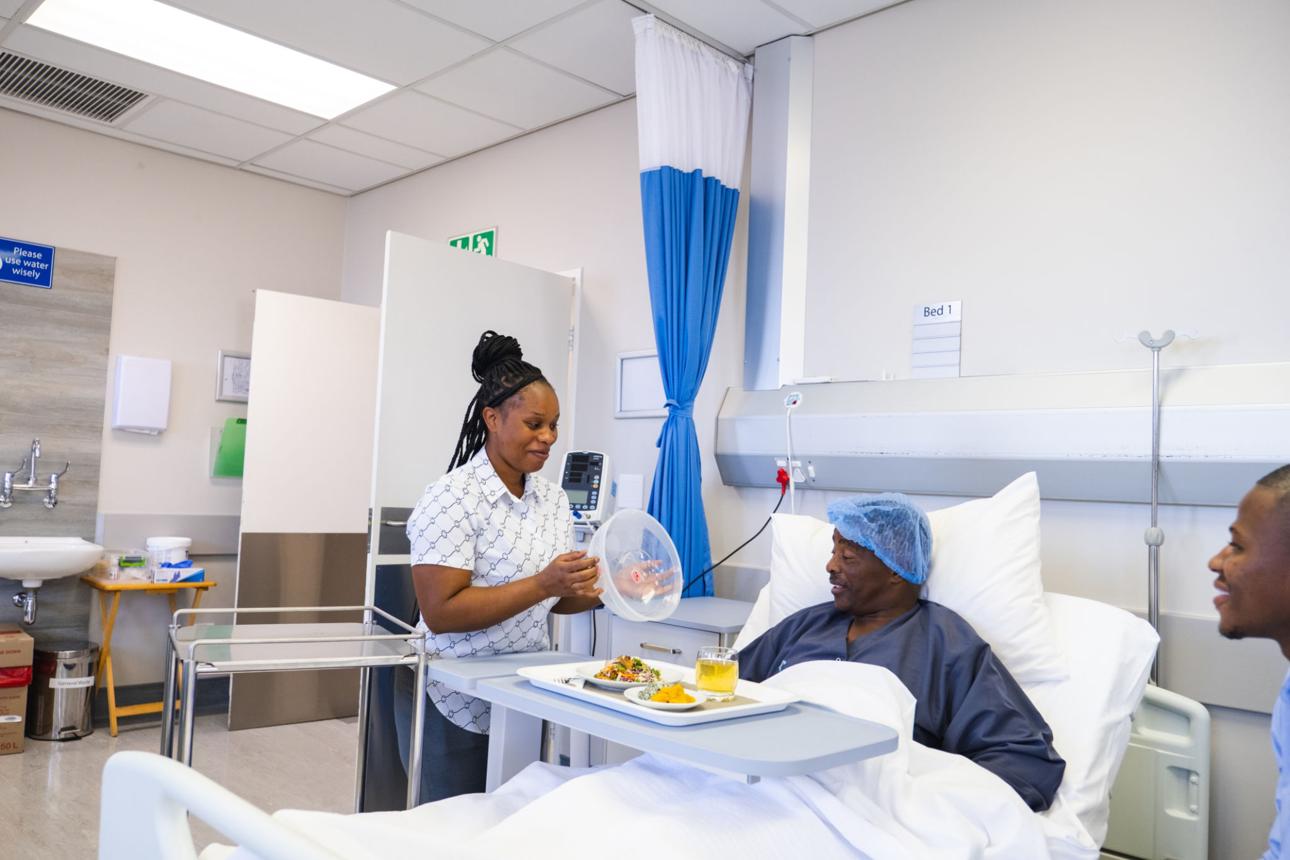
“A newly published South African study has highlighted a significant gap in hospital nutrition care after finding that 74% of surveyed healthcare professionals considered malnutrition a hospital priority, while only 47% reported screening patients for malnutrition. The research, conducted across 13 public hospitals in Mpumalanga, recommends stronger training, standardised protocols and multidisciplinary nutrition-care systems to ensure nutritional risks are identified and managed more consistently.”
A newly published South African study has drawn attention to a critical but sometimes overlooked part of healthcare: identifying and treating patients who are at risk of malnutrition while they are in hospital. Research involving 357 health professionals across 13 public hospitals in Mpumalanga found that although most respondents recognised malnutrition as a hospital priority, fewer than half reported routinely screening patients for it. The findings raise questions about whether nutrition risk is being identified early enough to support patients’ recovery.
The study, published on 5 October 2026 in Health SA Gesondheid, examined knowledge, attitudes and practices relating to nutrition support in public hospitals in the Ehlanzeni district. Researchers from Sefako Makgatho Health Sciences University and the University of South Africa surveyed staff in 10 district hospitals, two regional hospitals and one provincial hospital. Their central message is not that healthcare workers do not value nutrition, but that positive attitudes are not always being translated into consistent clinical practice.
According to the research, 74% of participants said malnutrition was a hospital priority, yet only 47% reported screening patients for malnutrition. That difference is important because hospital malnutrition can be difficult to recognise simply by looking at a patient. Illness may reduce appetite, interfere with digestion or absorption, increase nutritional requirements, or make eating difficult. Patients can therefore become nutritionally vulnerable even when they do not appear visibly underweight.
Nutrition screening is intended to be an early warning mechanism. It can help healthcare workers identify patients who may need a more detailed nutritional assessment and intervention. The study’s findings suggest that this first step is not happening consistently enough in the hospitals surveyed. The authors therefore recommend structured training, continuing mentorship and standardised protocols, with nutrition care delivered by a multidisciplinary team rather than being viewed as the responsibility of one profession.
The research also identified an important knowledge gap. Only 38% of respondents knew that severe malabsorption and undernutrition accompanied by poor oral intake can indicate the need for parenteral nutrition. Parenteral nutrition is specialised nutritional support delivered intravenously when the digestive tract cannot adequately provide nutrition. The result does not mean that every healthcare professional should independently prescribe such treatment. Instead, it illustrates why staff need clear training on when nutritional deterioration should trigger referral, assessment and specialist intervention.
At the same time, the study found encouraging attitudes toward shared responsibility. Only 7% strongly agreed and 11.4% agreed that nutritional care should be the sole responsibility of dietitians. This supports the idea that nutrition should be integrated into everyday patient care. Nurses may notice that a patient is eating very little. Doctors may identify a disease that affects nutritional needs. Dietitians can conduct specialised assessment and develop nutrition interventions, while pharmacists and other professionals can contribute to safe and coordinated care.
However, translating this shared responsibility into routine practice remains a challenge. Just over half of participants, 51%, said they rarely referred patients to dietitians, while 38.7% reported always referring and 10.4% said they never referred patients. These figures point to an uneven referral culture in which access to specialised nutrition support may depend partly on individual practice, knowledge or institutional routines.
The researchers found that education was the most consistent predictor of knowledge, attitudes and practices. This is significant because it suggests that improving nutrition care may require more than simply telling staff that malnutrition matters. Health workers need practical skills, clear protocols and continuing support that help them recognise nutritional risk and respond appropriately.
The study is particularly relevant as South Africa prepares for National Nutrition Week, scheduled for 9 to 15 October in the national Department of Health’s 2026 health-awareness calendar. The timing places nutrition in the national spotlight at a moment when the new research is highlighting the gap between recognising nutrition as important and embedding it consistently in healthcare delivery.
South Africa also faces a complex nutrition landscape in which undernutrition and diet-related chronic disease can exist alongside one another. That means nutrition policy and clinical care cannot focus on only one form of nutritional risk. Hospitals must be able to recognise patients who are undernourished, losing weight, unable to eat adequately or experiencing increased nutritional requirements, while broader public-health programmes must also address unhealthy dietary patterns and food insecurity.
The Mpumalanga research is valuable because it moves the conversation from general awareness to the practical question of what happens inside hospitals. If malnutrition is considered a priority by three-quarters of surveyed staff but fewer than half report screening patients, the challenge is partly one of implementation. Standardised screening pathways could make nutritional risk identification more routine and less dependent on individual judgement.
Such systems could also clarify responsibilities. A screening tool can identify patients who require further assessment, while protocols can define when nurses, doctors or other clinicians should refer patients to dietitians or other specialists. Training can then reinforce those procedures and help staff understand different forms of nutrition support.
There are, however, important limitations to the study. It was a cross-sectional survey, meaning the researchers collected information during a defined period rather than following participants over time. The findings also rely on self-reported practices. Consequently, the study cannot establish that a particular proportion of hospital patients actually went unscreened, nor can it prove that missed screening caused worse outcomes. Instead, it identifies a reported practice gap among healthcare professionals and provides evidence for further investigation and quality improvement.
That distinction matters when interpreting the findings. The results should not be read as an indictment of individual healthcare workers. Public hospitals operate under complex pressures, including staffing demands, time constraints, competing clinical priorities and resource limitations. Improving nutrition care therefore requires system-level support as well as individual education.
The researchers’ recommendation for a multidisciplinary approach is particularly important. Nutrition is not an isolated service that begins and ends with a dietitian. It is connected to diagnosis, medication, surgery, nursing care, rehabilitation, infection management and discharge planning. A patient who cannot eat adequately may need changes in the way food is offered, assistance with eating, treatment of an underlying condition, oral nutritional supplements, enteral feeding or, in specific circumstances, parenteral nutrition.
The timing of this research makes its message especially relevant. With National Nutrition Week beginning on 9 October, attention is likely to focus on healthy diets, food choices and the importance of good nutrition. The Mpumalanga study adds another dimension: nutrition is also a clinical safety and quality-of-care issue inside hospitals.
For South Africa, the next step is likely to be turning awareness into consistent practice. That could mean strengthening nutrition education for healthcare professionals, expanding routine screening, improving referral systems, using standardised protocols and ensuring multidisciplinary teams have the resources needed to act on identified risks.
The central lesson is straightforward. Recognising malnutrition as a priority is important, but recognition alone is not enough. Patients need their nutritional risks identified, assessed and managed as part of ordinary clinical care. The new evidence from Ehlanzeni suggests that South African public hospitals have a foundation of positive attitudes, but they still face a significant implementation gap.
As National Nutrition Week approaches, that finding gives the country an opportunity to broaden the nutrition conversation. Healthy eating matters before illness, during illness and throughout recovery. Making nutrition screening and support a more consistent part of hospital care could help ensure that patients receive not only the medicines and procedures they need, but also the nutritional support required to recover as safely and effectively as possible.



