




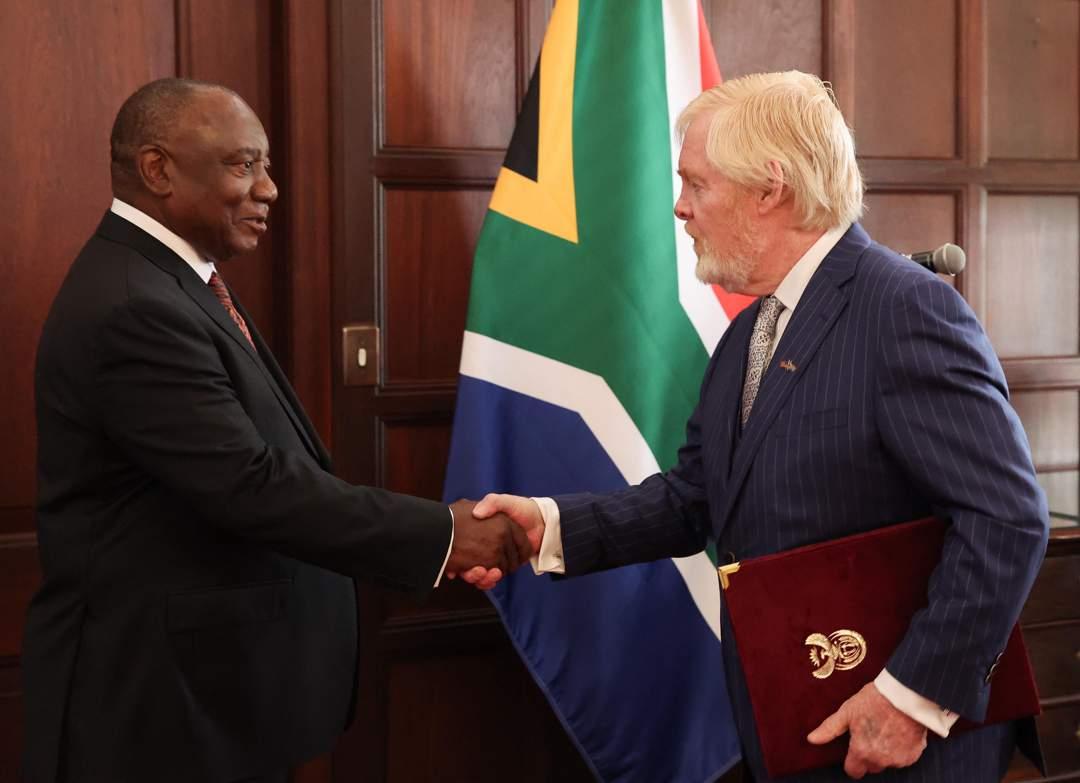
“South Africa’s Parliament is seeking a briefing from the Department of International Relations and Cooperation after the government issued a third diplomatic demarche to US Ambassador Leo Brent Bozell III in nine months. The dispute is the latest development in broader tensions over South African domestic policies, foreign-policy positions, trade, visa restrictions and Washington’s criticism of Pretoria.”
South Africa’s diplomatic relationship with the United States has come under renewed pressure after Parliament announced that it will seek answers from the Department of International Relations and Cooperation (DIRCO) over the latest formal protest against US Ambassador Leo Brent Bozell III. Parliament reported the development on October 3, 2026, after saying it wants a briefing on the circumstances surrounding the third demarche issued since Bozell began his diplomatic duties in South Africa.
The Portfolio Committee on International Relations and Cooperation said it was concerned by DIRCO’s confirmation that Bozell had been summoned on September 30. Parliament said this was the third formal diplomatic protest since the ambassador’s accreditation in April. The committee said it is awaiting a full briefing from DIRCO before concluding the substance of the latest complaint.
A demarche is a formal diplomatic communication used by one government to express a position, concern or protest to another government. In this case, DIRCO described the issue as involving “undiplomatic conduct”, but the department has not publicly provided a detailed account of every statement or action that led to the latest protest. Reuters separately reported that a senior DIRCO official confirmed the third demarche while saying the specific conduct was not detailed.
The latest dispute comes against a much wider deterioration in Pretoria-Washington relations. South Africa and the United States have disagreed over land policy, race-based economic legislation, minority rights, trade, visa restrictions and South Africa’s positions on international conflicts. Pretoria has repeatedly said that its domestic laws are matters for its constitutional institutions, while Washington has continued to press South Africa to address issues it considers important to the bilateral relationship.
Parliament’s response focuses particularly on diplomatic conduct and sovereignty. The committee said diplomats accredited to South Africa are expected to respect the laws and regulations of the receiving state and avoid interference in its internal affairs, referring to the Vienna Convention on Diplomatic Relations. It also argued that disagreements over domestic policy should be raised through established diplomatic channels.
The committee’s statement is significant because it shows that the dispute is no longer limited to exchanges between government departments and the US embassy. South Africa’s legislature is now seeking a formal explanation from DIRCO about how the diplomatic relationship is being managed and what consequences repeated diplomatic protests could have for bilateral relations.
At the same time, the parliamentary committee did not call for the relationship with Washington to be abandoned. Instead, it acknowledged the United States as an important trade, investment and historical partner and supported continued engagement. The committee referred to the August 27 meeting between President Cyril Ramaphosa and Ambassador Bozell as evidence that channels for engagement remain open.
That distinction is important. A diplomatic protest does not automatically mean that diplomatic relations have been severed or that negotiations have ended. Governments routinely use diplomatic notes, summonses and demarches to communicate serious disagreements while maintaining formal relations. In South Africa’s case, officials have repeatedly said that they remain willing to talk with Washington.
The US position, however, remains that Pretoria needs to respond to American concerns. SABC News reported that the US State Department said Bozell met South African officials to discuss bilateral relations while reaffirming Washington’s demands. The United States has also continued to raise concerns connected to South Africa’s domestic policies and international positions.
The disagreement has developed over several months. Bozell was summoned earlier in his tenure after public comments that South African authorities regarded as inappropriate. By September, the dispute had expanded to include disagreements about Pretoria’s response to US demands and the Trump administration’s criticism of South African policies.
South Africa has rejected Washington’s characterization of its domestic situation, arguing that policies such as Black Economic Empowerment and land reform are linked to the country’s constitutional project of addressing inequalities created by apartheid. DIRCO has also said that South Africa has a sovereign right to legislate through its democratic institutions and has urged the United States to address disagreements through bilateral engagement rather than unilateral measures.
The United States, for its part, has used diplomatic and economic pressure, including visa restrictions announced in September. Reuters reported that Washington has also pressed Pretoria on several policy issues and that the two countries remain engaged in discussions intended to resolve outstanding matters.
Trade and investment add another layer to the dispute. The United States is an important commercial partner for South Africa, while South Africa is also seeking to protect its economic relationships with other major powers and within groupings such as BRICS. Pretoria’s stated policy of non-alignment has become another point of discussion with Washington, particularly as South Africa maintains relationships with countries whose governments are often viewed by the United States as strategic competitors.
South Africa’s broader foreign-policy position therefore matters to the current dispute. DIRCO has said that Pretoria supports a rules-based international system, multilateralism, international law and the peaceful resolution of conflicts. The department has also described BRICS as an important platform for cooperation among emerging and Global South economies.
The diplomatic tension with Washington is unfolding while South Africa continues to participate in wider African and multilateral diplomacy. President Cyril Ramaphosa is scheduled to participate in the African Union Mid-Year Coordination Meeting in Egypt in his capacity as chairperson of the Southern African Development Community. The meeting is expected to address continental integration, conflict prevention, the African Continental Free Trade Area and cooperation among African institutions.
These commitments illustrate the broader environment in which South African foreign policy is being conducted. Pretoria is attempting to maintain relationships with multiple partners while defending its preferred approach to international affairs. The United States, meanwhile, is seeking clearer responses to issues it regards as central to the bilateral relationship.
Diplomatic practice also places value on preserving communication during periods of disagreement. Formal protests can signal that a government considers an issue serious while leaving room for further contact. That balance is now central to Pretoria and Washington as officials assess whether existing channels can produce practical progress.
The latest parliamentary intervention therefore provides a snapshot of a relationship under significant strain but not without channels for engagement. The third demarche is a clear sign of recurring disagreement, while Parliament’s decision to seek a DIRCO briefing demonstrates that the issue has become important enough to receive closer institutional scrutiny.
The central challenge for Pretoria and Washington is how to manage disagreements without allowing diplomatic friction to undermine cooperation in areas where both countries have established interests. Trade, investment, regional security, international institutions and people-to-people ties remain part of the relationship even as governments disagree over domestic legislation and foreign-policy choices.
As Parliament prepares to hear from DIRCO, the immediate focus will be on the facts surrounding the latest diplomatic protest. Beyond that briefing, the longer-term question is whether South Africa and the United States can use formal diplomatic channels to narrow their differences while maintaining their respective positions on sovereignty, domestic policy and international relations.



