




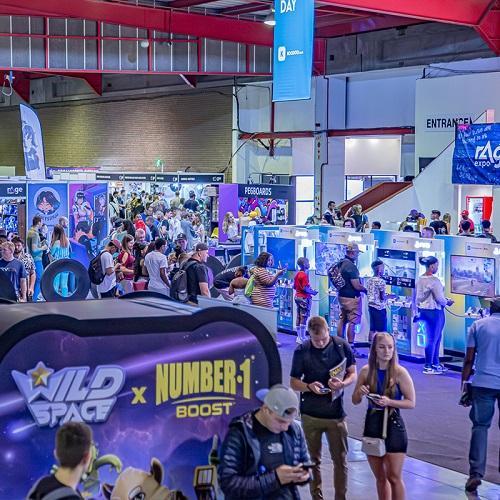
“Nedbank has become the headline sponsor of rAge Nation 2026, strengthening the relationship between corporate investment and South Africa’s rapidly developing gaming and esports ecosystem. The event, scheduled for 27–29 November 2026 at Level 8, Fourways Mall in Johannesburg, will combine competitive esports with LAN gaming, technology, creators, entertainment and gaming culture.”
Why the Nedbank Partnership Matters
The key part of the announcement is the shift in how gaming is being treated by mainstream business. Nedbank says its involvement goes beyond marketing and reflects a belief that gaming can create opportunities to play, compete, create, connect and build careers. That message matters in a market where professional players, streamers, tournament organisers, developers, designers and gaming creators increasingly form an interconnected ecosystem.
Nedbank has already been involved in esports through the Nedbank Esports Arena, a platform aimed at supporting South Africa’s amateur gaming community. According to the announcement, that platform is evolving into a broader digital service focused on the financial and lifestyle needs of gamers. Proposed benefits include selected gaming top-ups and vouchers, rewards linked to spending, and access to selected tournaments and events.
The development matters because esports sustainability depends on more than prize money. Players need equipment, connectivity, travel, tournament access and opportunities to develop their skills. A financial-services company can potentially become part of the infrastructure supporting participation, rather than simply appearing as a tournament logo.
rAge Nation’s Transformation
The sponsorship arrives as rAge itself changes direction. After more than two decades as a gaming and geek-culture event, rAge Nation 2026 is being presented as a festival of gaming, technology, entertainment and digital culture.
The official festival information lists competitive esports alongside LAN gaming, freeplay areas, music, cosplay, creators, exhibitors and technology experiences. The event website promotes a LAN experience for more than 1,000 players and says esports will include titles such as Counter-Strike 2, Valorant, League of Legends, FIFA and Rocket League. The esports programme is still being finalised, and teams and the complete tournament line-up have not yet been announced.
This wider format brings competitive gaming into contact with audiences who may not identify primarily as esports fans. Families, casual gamers, creators and first-time visitors can encounter competitive gaming alongside entertainment and pop culture.
For organisers, this creates a larger audience; for players, a stronger live environment; and for sponsors, more ways to connect with consumers. For the industry, it demonstrates that esports is part of a broader entertainment economy.
A Growing Professional Ecosystem
South Africa already has a developing competitive gaming scene across several titles. Local tournament organisers, university competitions and community platforms have helped create opportunities for players outside the biggest international circuits.
The timing is also important because South African players continue to seek international opportunities. Esports Central recently reported that a South African Rocket League team qualified for the FIFAe World Cup 2026 featuring Rocket League, scheduled for 20–25 October in Jeddah, Saudi Arabia. The squad includes David “2Die4” Morgenrood, Gareth “Snowyy” Spiers and Brayden “gunz” Keith, coached by Nicholas “cpZebra” Fourie.
That international pathway illustrates why domestic infrastructure matters. Players need local tournaments to develop before competing internationally, plus exposure to opponents, coaches, organisers, sponsors and audiences. Events such as rAge Nation can provide several of those elements.
The university pipeline is another part of the picture. Varsity Esports has expanded its competition across South African universities, giving students opportunities to compete in structured tournaments and pursue progression toward larger finals.
The Business Opportunity
The Nedbank announcement also highlights a broader economic argument. Gaming creates opportunities beyond professional play. A mature esports ecosystem needs broadcasters, commentators, event producers, social-media managers, graphic designers, video editors, photographers, coaches, referees, administrators, developers and technology suppliers.
For South Africa, that wider ecosystem is important because young people increasingly build careers around digital skills. Esports intersects with content creation, software, marketing, media production, entrepreneurship and event management.
The sponsorship represents more than funding. When a major financial institution attaches its name to a gaming festival, it can help normalise gaming as a legitimate commercial and cultural space.
Challenges Remain
Despite the optimism, South African esports still faces challenges. Reliable internet, suitable hardware, electricity, tournament infrastructure and affordable participation can limit who competes consistently. The gap between talented community players and aspiring professionals can remain significant.
There is also the question of long-term sustainability. Esports events can attract large audiences, but organisers need recurring sponsorship, ticket sales, media coverage and strong competitive structures. Players need reliable tournament calendars rather than isolated competitions.
That is why the development of platforms such as the Nedbank Esports Arena may be more important than a single headline sponsorship. If financial services, tournaments, rewards and community access are connected over time, the result could be a more durable ecosystem.
What Fans Can Expect
rAge Nation 2026 is scheduled for 27–29 November at Fourways Mall’s Level 8 rooftop venue. The event is planned as a three-day celebration, with competitive esports, LAN gaming, freeplay, creators, cosplay, music, technology and exhibitors.
The esports arena is expected to be a central attraction. The official esports page advertises a prize pool above R1 million across six titles, although the full tournament line-up and teams are still to be confirmed.
The competitive story is still developing. Qualifiers are ongoing, and organisers are expected to reveal more details closer to the festival. For players, that creates an incentive to follow qualification opportunities; for fans, the final match-ups could become a major November talking point.
A Wider Meaning for South African Esports
The Nedbank-rAge Nation partnership is important because it reflects a broader change in South Africa’s relationship with gaming. Competitive gaming is increasingly being discussed alongside entertainment, technology, education and entrepreneurship rather than being treated solely as leisure.
The next test is whether that recognition produces lasting opportunities. Sponsorship can grow events, but the strongest ecosystem will also support grassroots players, university competitors, creators and aspiring professionals.
If rAge Nation succeeds in bringing those groups together, it could become more than a large annual gathering. It could serve as a meeting point for the country’s competitive gaming economy, connecting players with sponsors, audiences, organisers, technology companies and potential career opportunities.
For South African esports, that is the story. Nedbank’s sponsorship gives rAge Nation commercial weight, while the expanded format gives esports a cultural stage. With international opportunities emerging for local players and domestic competitions continuing to grow, the industry has an opportunity to turn rising interest into a more structured and sustainable future.
As 27 November approaches, attention will increasingly turn to the teams, titles, qualifiers and prize-money details that will define the competitive programme. What is already clear, however, is that South African esports is becoming harder for mainstream business and culture to ignore.



