




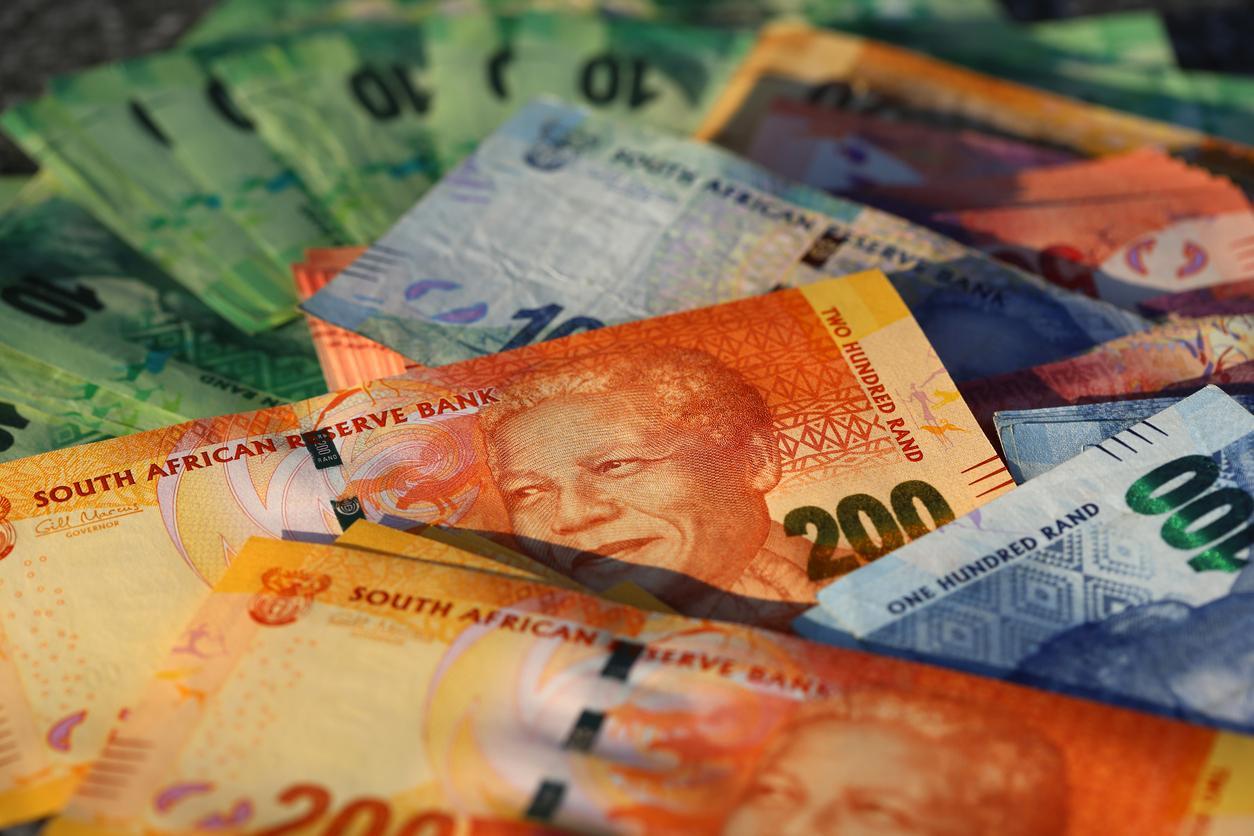
“The South African rand weakened in early trading on Wednesday as a firmer US dollar reduced demand for emerging-market currencies, while renewed concerns about global oil supplies increased pressure on South Africa’s import-dependent economy. The currency was trading around R16.5850 to the US dollar, while South African government bonds also weakened slightly as investors assessed global interest-rate expectations, higher energy costs and the country’s inflation outlook.”
South African Rand Slips as Stronger Dollar and Oil Supply Risks Weigh on Markets
South Africa’s financial markets came under renewed pressure on Wednesday, 7 October 2026, as the rand weakened against the US dollar amid a combination of global currency movements, rising oil-supply concerns and uncertainty over the direction of interest rates. The latest move highlights how closely South African markets remain connected to international developments, particularly changes in the US dollar, energy prices, global bond yields and investor appetite for emerging-market assets.
The rand traded at approximately R16.5850 per US dollar in early Wednesday trading, about 0.3% weaker than its previous close. Although the decline was relatively modest, it came at a sensitive time for the South African economy, which is already dealing with sharply higher fuel prices and increased inflation risks following disruptions to global oil supplies.
The currency’s movement is particularly important for investors because the rand is regarded as one of the more actively traded emerging-market currencies. It is also sensitive to global risk sentiment. When international investors become more cautious, money can move away from emerging markets towards assets perceived as safer, including US dollar-denominated investments.
Stronger dollar adds pressure
One of the immediate drivers of Wednesday’s rand weakness was the strengthening US dollar. Investors were awaiting the minutes of the US Federal Reserve’s September policy meeting for indications about the future direction of US interest rates.
The dollar’s performance matters significantly for South Africa. Higher US interest rates or expectations of tighter US monetary policy can make American assets more attractive to international investors. This can reduce demand for emerging-market currencies and increase demand for the dollar.
The Federal Reserve’s policy outlook has therefore become an important factor for South African market participants. Investors are closely watching US inflation, employment and economic-growth data for clues about whether American interest rates could remain high for longer.
The dollar had already been benefiting from increased demand for safe-haven assets. Reuters reported that the dollar index was edging higher as markets waited for the Federal Reserve minutes and further indications from policymakers.
For South Africa, a stronger dollar can have several consequences. It can increase the local-currency cost of imported goods, particularly commodities priced internationally in dollars. Oil is especially important because South Africa imports most of its fuel requirements.
Oil becomes a second pressure point
The second major factor affecting the rand is the renewed concern about global oil supplies.
Oil prices have been elevated amid continuing geopolitical tensions and disruptions affecting major energy routes. Reuters reported that oil prices rose as supply concerns associated with a storm threatening US oil-producing areas and attacks by Yemen’s Iran-backed Houthis on Saudi Arabia outweighed increased crude supplies from parts of the Middle East.
For South Africa, higher oil prices represent a significant economic risk because the country remains heavily dependent on imported petroleum products.
Moneyweb reported on Wednesday that petroleum products accounted for 24.5% of South Africa’s total imports in the second quarter of 2026, up sharply from 15.9% in the previous quarter. The publication described this as the highest proportion recorded since 1994.
The increased dependence on imported fuel means that a higher international oil price can quickly affect South Africa’s trade position, currency demand and domestic inflation.
The consequences are already visible at petrol stations. South African motorists began facing substantially higher fuel prices from Wednesday, with 95-grade petrol in Gauteng rising to about R30.25 per litre, while diesel prices moved above R33 per litre.
Fuel prices create an inflation challenge
The impact of higher oil prices extends far beyond motorists.
Fuel is a major input into transportation, manufacturing, agriculture, construction and retail distribution. When diesel and petrol become more expensive, companies face higher costs for moving goods and operating equipment.
Businesses can respond by absorbing those additional costs, reducing margins or passing them on to consumers through higher prices.
That is one of the reasons the South African Reserve Bank has become increasingly concerned about so-called second-round inflation effects.
In its latest monetary policy review, published on Tuesday, the central bank warned that persistent fuel, food and administered-price shocks could become embedded in inflation expectations and wages. The SARB argued that monetary policy needs to respond before these pressures become firmly established.
The bank described its recent approach as similar to “firefighting”, arguing that it is better to contain inflationary pressures early rather than wait until they become much harder to control.
Interest rates become increasingly important
The inflation situation creates a difficult policy dilemma for South Africa.
On one side, higher interest rates can help contain inflation expectations and support the rand by making local assets more attractive to investors.
On the other side, higher borrowing costs can weaken an already fragile domestic economy.
The South African economy grew only 0.4% in the first quarter of 2026 before contracting 0.2% in the second quarter, according to Business Day’s reporting on the latest Reserve Bank review. The SARB nevertheless maintained its 2026 growth forecast at 1.2%.
This creates a challenging environment for policymakers.
If the Reserve Bank raises interest rates to combat inflation, households and companies could face higher borrowing costs at a time when economic growth is already weak. However, failing to respond to persistent inflation could cause inflation expectations to rise and ultimately require even more aggressive monetary tightening.
The SARB has already increased interest rates by 50 basis points during 2026, with the policy rate reaching 7.25% after its September decision. Markets are anticipating additional increases over the following months.
Government bonds also face pressure
The pressure on the rand has also been reflected in South Africa’s government bond market.
Reuters reported that the benchmark 2035 South African government bond was slightly weaker in early Wednesday trading, with its yield rising by approximately two basis points to 8.825%.
Bond yields generally move in the opposite direction to bond prices. When yields rise, it means investors are demanding greater returns to hold the debt.
However, South Africa continues to attract significant interest from investors seeking relatively high yields.
A market report from Algoa FM on Wednesday said investors placed R16.3 billion in orders at the latest National Treasury fixed-rate bond auction against R2.55 billion offered, representing more than six times the amount available.
That strong demand demonstrates that the current market environment is not simply a story of investors abandoning South African assets.
Instead, investors appear to be weighing attractive yields against currency, inflation, geopolitical and fiscal risks.
The rand’s recent performance
The latest weakness also follows a difficult period for the rand.
Investec reported earlier this week that the currency had moved to around R16.70 per US dollar during the latest global risk-off period, compared with approximately R15.90 at the beginning of September. It also reported that foreign investors had sold a net R14.5 billion of South African bonds since early the previous week.
This suggests that the pressure on the currency is not purely a one-day development.
Global bond-market weakness has played a significant role. Rising international yields can make investors reassess emerging-market assets, particularly when the returns available from developed-market government securities become more attractive.
South Africa’s relatively high domestic yields can provide some protection, but they cannot completely isolate the country from global capital movements.
Weak commodity prices add another concern
The rand is also influenced by South Africa’s position as a major exporter of commodities.
Gold and platinum are particularly important because they generate significant foreign-exchange earnings. When their prices fall, the country’s terms of trade can deteriorate.
Reuters reported on Tuesday that weaker gold and platinum prices were weighing on South Africa’s export earnings, although the rand remained relatively resilient at the time.
This creates an uncomfortable combination for the economy: higher oil prices increase the cost of imports while weaker precious-metal prices can reduce export earnings.
In simple terms, South Africa can face a double squeeze.
It may have to spend more dollars buying energy while receiving less foreign currency from some commodity exports.
What investors are watching next
Markets are likely to remain focused on several developments in the coming days.
The first is the US Federal Reserve. Investors want to understand whether US policymakers remain concerned enough about inflation to maintain a restrictive monetary stance. Any renewed expectations of higher US rates could strengthen the dollar further and put additional pressure on emerging-market currencies.
The second is oil.
If international crude prices continue rising because of geopolitical or supply disruptions, South Africa’s inflation outlook could deteriorate further. This would increase pressure on the Reserve Bank to maintain or increase interest rates.
The third factor is the rand itself.
A sustained depreciation would make imported goods more expensive and could increase the speed at which international cost pressures reach South African consumers.
Finally, investors will be watching domestic economic activity. The Reserve Bank has maintained that structural reforms involving electricity, logistics and local government remain important to strengthening long-term economic growth.
Outlook for South African markets
Wednesday’s rand weakness is therefore more than a routine currency fluctuation. It reflects the interaction between international monetary policy, geopolitical risk, energy prices, domestic inflation and South Africa’s dependence on foreign capital.
The immediate decline to around R16.5850 per dollar remains relatively limited, but the broader market environment is challenging. Higher oil prices can worsen inflation, a stronger dollar can weaken the rand, and global bond yields can increase the cost of capital.
At the same time, South Africa continues to offer investors relatively high bond yields, while strong demand at the latest government debt auction indicates that international and domestic investors have not lost interest in the country’s fixed-income market.
The key question for the markets will be whether the current energy shock remains temporary or becomes embedded in inflation expectations.
If oil prices stabilise and global risk appetite improves, the rand could regain some ground. However, continued geopolitical uncertainty, elevated energy prices and expectations of tighter monetary policy could keep the currency and bonds under pressure.
For South African investors, the latest developments underline the importance of watching global markets as closely as domestic economic data. The rand, government bonds and equities are increasingly responding to forces beyond South Africa’s borders.
For policymakers, the challenge is even greater: they must contain inflation without unnecessarily damaging economic growth.
For now, South African markets remain caught between these competing forces, with the rand serving as one of the clearest indicators of how investors are assessing the country’s economic and global-risk environment.



