




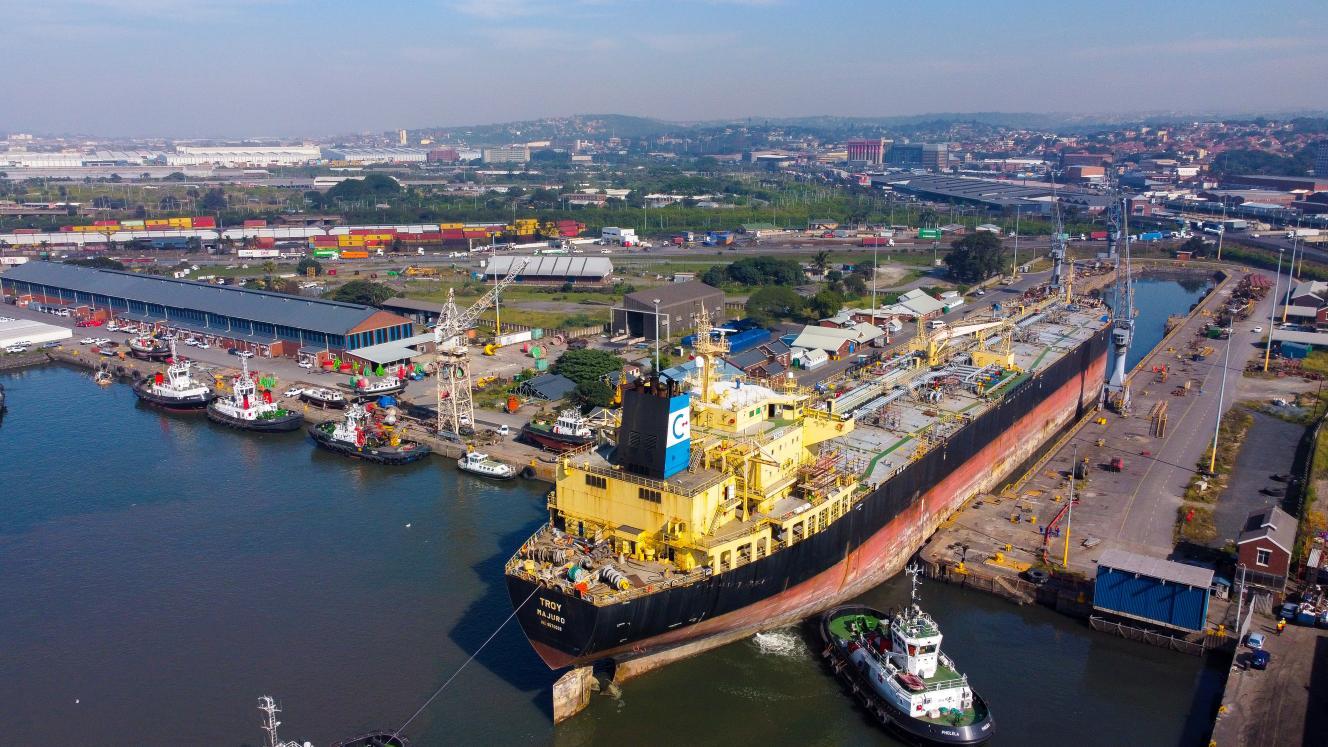
“South Africa’s fuel import bill has risen to its highest share of total imports since 1994, with crude oil and petroleum products accounting for 24.5% of imports in the second quarter of 2026, up sharply from 15.9% in the previous quarter. The surge highlights the country’s vulnerability to international energy shocks, as geopolitical disruption, higher oil prices and increased shipping costs are raising import costs and placing additional pressure on businesses, consumers and the country’s trade position.”
South Africa’s dependence on imported fuel has become one of the country’s most important trade and economic vulnerabilities, after petroleum products accounted for almost a quarter of all imports during the second quarter of 2026.
The latest figures show how dramatically the international energy crisis has changed the composition and cost of South Africa’s imports. According to analysis cited by Moneyweb, diesel, crude oil and petrol represented 24.5% of total imports in the three months to June, compared with 15.9% in the preceding quarter. That represents the highest share recorded since 1994.
The development comes at a particularly difficult time for South African consumers and businesses. From 7 October, the country’s regulated fuel prices increased sharply, with petrol and diesel prices rising by more than R3 a litre in several categories. The increases reflect higher international crude oil and refined petroleum prices, increased shipping costs and continuing uncertainty surrounding energy supplies through the Strait of Hormuz.
For South Africa, the issue is bigger than the price motorists pay at filling stations. Fuel is a major traded commodity, and increases in the cost of imported petroleum affect the country’s import bill, trade balance, inflation, transport costs, manufacturing expenses and ultimately household purchasing power.
The South African government has confirmed that the country imports both crude oil and finished petroleum products. The monthly fuel-pricing system therefore exposes domestic prices to international energy markets. In its October price announcement, the government said the average Brent crude price increased from about US$87.89 a barrel to approximately US$101 during the review period. It attributed the increase to continued US-Iran tensions, uncertainty over oil flows through the Strait of Hormuz, higher shipping costs and declining inventories.
These developments help explain why petroleum has suddenly taken up such a large share of South Africa’s import expenditure.
The South African Reserve Bank provides further evidence of the scale of the change. Its September 2026 Quarterly Bulletin says the value of merchandise imports increased significantly during the second quarter. Mining imports rose sharply, with the increase driven largely by higher values for refined petroleum products and, to a lesser extent, crude oil.
The Reserve Bank specifically noted that imported diesel, petrol and aviation kerosene became substantially more expensive as global fuel prices increased amid heightened war-related supply concerns.
This means that South Africa can experience a deterioration in its trade position even when the physical volume of fuel imported does not rise dramatically. If the international price increases sharply, the country must spend more foreign currency to purchase the same or a similar quantity of petroleum.
That creates an important trade challenge.
South Africa needs fuel to keep its economy functioning. Trucks require diesel to move goods between ports, factories, farms, warehouses and retailers. Airlines need jet fuel. Mining companies depend heavily on diesel and other energy products. Agriculture requires fuel for tractors, irrigation, harvesting and transportation. Manufacturers also face higher logistics costs when diesel prices rise.
Consequently, higher fuel import prices can spread through almost every part of the economy.
The impact is particularly significant because South Africa’s export economy remains heavily dependent on commodities. Mining exports, including gold and platinum, can generate substantial foreign exchange earnings, but those earnings can be offset when the cost of imported energy rises rapidly.
The Reserve Bank reported that South Africa’s trade surplus narrowed substantially in the second quarter of 2026 as the value of merchandise imports increased much more than the value of merchandise and net gold exports.
The central bank also said the country’s terms of trade deteriorated notably during the period because the rand price of imported goods and services increased much more than the price of exports. Higher international crude oil and refined petroleum prices were a major factor.
This demonstrates why the fuel import story is fundamentally a trade story rather than simply an energy story.
South Africa’s trade balance is determined by the relationship between what the country sells to the rest of the world and what it purchases from international suppliers. When the price of an essential import such as petroleum rises sharply, the country must spend more on imports. Unless export earnings rise sufficiently to compensate, the trade surplus comes under pressure.
There is, however, an important distinction between the latest fuel shock and the broader monthly trade picture.
South Africa recorded a preliminary trade surplus of R20.5 billion in August, according to the South African Revenue Service. Exports were approximately R181.8 billion while imports amounted to about R161.3 billion, including trade with Botswana, Eswatini, Lesotho and Namibia.
The August figures demonstrate that South Africa can still maintain a substantial trade surplus. However, the composition of trade remains vulnerable to global commodity prices and energy costs.
Earlier August data also showed that South Africa’s trade with the Americas swung from a deficit of roughly R5 billion in July to a surplus of about R2.3 billion. Exports to the region increased while imports fell. Nevertheless, South Africa remained in deficit with the Americas over the first eight months of the year.
This wider picture shows that South Africa’s trade performance cannot be judged from one monthly surplus alone.
The fuel crisis is also forcing changes in international sourcing. Disruptions affecting traditional energy supply routes have encouraged South Africa to seek alternative suppliers, including the United States and Nigeria. The shift illustrates how geopolitical developments can rapidly reshape commercial trade routes.
The Strait of Hormuz is particularly important because it is a major international energy corridor. Any disruption can increase not only the price of crude oil but also shipping and insurance costs. For an importing country such as South Africa, those additional costs eventually feed into the domestic economy.
Higher fuel costs can also influence the exchange rate. South Africa needs foreign currency to pay for imported petroleum. At the same time, weaker commodity prices can reduce export earnings. Recent movements in gold and platinum prices therefore matter because these commodities are important sources of export revenue.
The rand has also faced pressure from international developments. Reuters reported on 7 October that the rand weakened as a stronger US dollar and concerns about oil supply risks weighed on investor sentiment.
For South Africa, a weaker rand can make imported fuel even more expensive in local-currency terms. This creates a potentially difficult feedback loop: global oil prices rise, the cost of imported fuel increases, and a weaker rand can amplify the domestic price effect.
The consequences extend beyond motorists.
Transport companies face higher operating expenses, which can result in higher freight charges. Retailers may then face higher distribution costs. Manufacturers may pay more to move raw materials and finished products. Farmers can face increased costs for mechanised operations and transporting produce. Businesses may respond by raising prices, reducing margins or delaying investment.
Households experience the effect through transport and food prices as well as other goods whose distribution depends on road freight.
The Reserve Bank has already highlighted the inflationary consequences of the energy shock. Domestic consumer fuel-price inflation accelerated sharply during the first half of 2026, while headline consumer inflation also increased before moderating later in the year.
This creates a policy challenge for South Africa’s monetary authorities. If higher fuel prices generate broader inflationary pressure, interest-rate policy may have to remain tighter for longer. But higher interest rates can weaken household spending and business investment.
The trade implications therefore extend into economic growth.
The Reserve Bank reported that real GDP contracted by 0.2% in the second quarter of 2026, following six successive quarters of expansion. It also noted that real net exports deducted 1.1 percentage points from overall economic growth because import volumes increased considerably more than export volumes.
The combination of weaker growth, expensive imports and higher transport costs presents a difficult environment for South African businesses.
In the longer term, the situation also strengthens the case for improving domestic energy security. Increasing storage capacity, strengthening port infrastructure, improving logistics and ensuring reliable refining and fuel distribution systems could reduce some of the risks associated with external supply disruptions.
However, infrastructure alone cannot eliminate exposure to international prices. South Africa remains part of a global energy market, and international oil prices will continue to influence domestic costs.
The country’s trade strategy therefore needs to address both energy security and export competitiveness.
A stronger manufacturing sector could help by increasing the value of goods South Africa exports rather than relying disproportionately on raw materials. Greater diversification of export markets could also reduce dependence on a limited number of commodities and trading partners.
At the same time, investment in renewable energy and alternative transport technologies could gradually reduce petroleum dependence in parts of the economy. Such changes would take years rather than months, but the current import shock illustrates the economic value of reducing exposure to volatile fossil-fuel markets.
For now, however, South Africa remains exposed.
The record share of petroleum in the country’s import bill is a clear warning about how quickly an international crisis can alter domestic trade conditions. Although the country recorded a sizeable trade surplus in August, the underlying pressure from expensive energy imports remains important.
The central issue is not simply whether South Africa imports more fuel. It is how much the country must spend to secure the fuel it needs to operate its economy.
With petroleum accounting for 24.5% of imports during the second quarter, the answer is increasingly significant.
The latest figures show that international energy disruptions can quickly transform into domestic trade pressures. They also underline the importance of export diversification, reliable infrastructure, energy security and stronger domestic production capacity.
As global energy markets remain unsettled, South Africa’s ability to manage the cost of imported fuel will remain closely connected to its trade balance, inflation outlook, business competitiveness and economic growth.
The fuel import surge is therefore more than a temporary price story. It is a reminder that South Africa’s position in international trade remains deeply influenced by the country’s dependence on imported energy and by its exposure to geopolitical shocks far beyond its borders.
Key sources used
- Moneyweb: The lead report published on 7 October 2026 identifies the fuel import bill as reaching its highest share since 1994 and reports petroleum at 24.5% of total imports in Q2.
- South African Reserve Bank: Its September Quarterly Bulletin confirms the sharp increase in merchandise imports, particularly refined petroleum products and crude oil, and explains the effect on the trade balance and terms of trade.
- South African Government: The official fuel-price announcement confirms the 7 October increases and identifies higher Brent crude, shipping costs and Strait of Hormuz uncertainty as major factors.
- SARS: August 2026 trade statistics show a preliminary R20.5 billion trade surplus, providing important context for the broader trade position.
- Reuters: Reporting on the rand and international oil-market pressures provides current market context for South Africa’s external trade exposure.



