




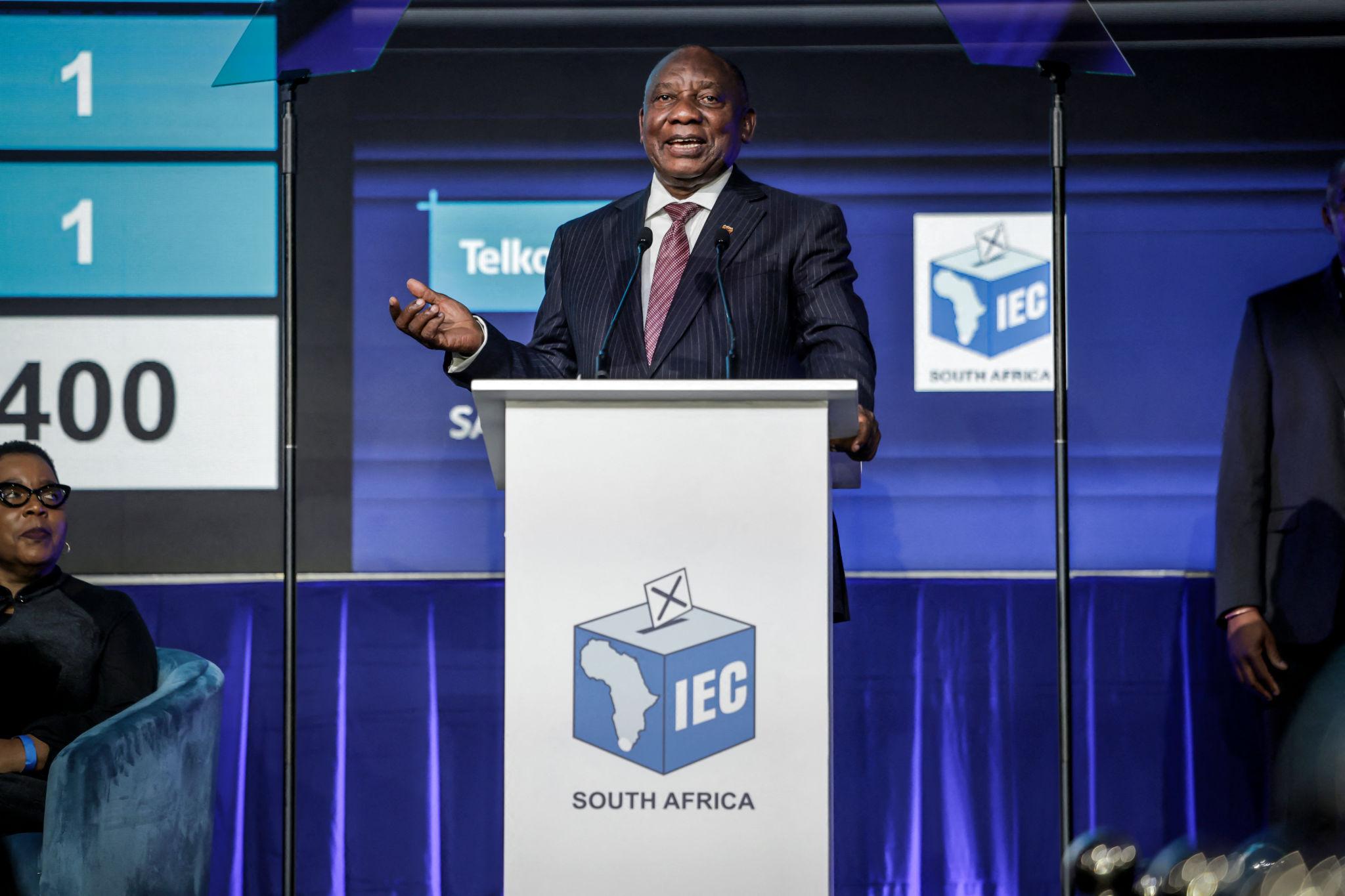
“South Africa’s African National Congress (ANC) has suffered its worst-ever electoral performance in the 2026 local government elections, securing approximately 31% of the vote as voters increasingly punish corruption, unemployment and failing municipal services. The results have accelerated the country’s transition towards coalition politics, with the Democratic Alliance (DA), uMkhonto weSizwe (MK) and smaller parties gaining influence while negotiations over municipal governments begin.”
South African Voters Deliver Historic Electoral Setback to ANC, Accelerating Coalition Politics
South Africa’s political landscape has entered a decisive new phase following the African National Congress’s (ANC) worst-ever electoral performance in the 2026 local government elections. The results, announced by the Electoral Commission of South Africa (IEC) on Sunday, November 8, have demonstrated growing public dissatisfaction with municipal governance, service delivery failures and longstanding corruption concerns. As political parties prepare for coalition negotiations, the country’s democratic system is increasingly defined by competition, accountability and the changing expectations of voters.
The ANC, which led South Africa’s transition from apartheid to democracy in 1994, secured approximately 31% of the national vote. This represents a substantial decline from its previous municipal election performance and confirms the erosion of its longstanding electoral dominance. The Democratic Alliance (DA) emerged as the second-largest political party nationally, receiving approximately 25%, while former president Jacob Zuma’s uMkhonto weSizwe (MK) Party secured around 10%.
The outcome marks another significant milestone in South Africa’s political transformation, with voters increasingly willing to support alternative political formations rather than automatically endorsing the governing party.
ANC Faces Its Most Serious Electoral Challenge
The ANC’s declining electoral support reflects years of accumulated public frustration. Although the party retains considerable organisational influence and historical legitimacy, its electoral performance increasingly depends on whether communities experience meaningful improvements in their everyday lives.
Unemployment, deteriorating infrastructure, electricity disruptions, water shortages, corruption allegations and unreliable municipal services have become central concerns for many voters. These problems have affected communities across several provinces, weakening confidence in municipal institutions and political leadership.
The 2026 elections therefore represented more than a contest between political parties. They became an opportunity for residents to express dissatisfaction with municipal performance and demand stronger accountability.
According to reporting by Reuters and Associated Press, voters increasingly judged political parties according to their ability to deliver essential services rather than historical political loyalties. The ANC’s losses in major urban centres demonstrate how these concerns have translated into electoral consequences.
The party has acknowledged the seriousness of its performance and faces pressure to rebuild public confidence. Its leadership must now confront questions about organisational renewal, municipal accountability and the effectiveness of its political strategy.
Democratic Alliance Strengthens Its Electoral Position
The Democratic Alliance emerged from the elections with strengthened influence in several major metropolitan areas. Its performance reflects growing support among voters seeking alternative municipal leadership and improvements in governance.
The party topped the poll in five of eight metropolitan areas, according to Reuters reporting, giving it significant negotiating opportunities in municipalities where no political formation secured an outright majority.
However, the DA’s electoral gains also present challenges. Governing municipalities through coalitions requires negotiations, compromises and the development of shared policy priorities. Consequently, electoral victories do not automatically translate into stable municipal administrations.
The party must demonstrate that its political promises can translate into measurable improvements in public services, infrastructure maintenance, financial management and community development.
Its ability to negotiate workable coalitions will determine whether the electoral gains become a sustainable political advantage ahead of the 2029 national elections.
MK Party Expands Its Political Influence
The electoral performance of uMkhonto weSizwe represents another important development in South Africa’s changing political environment.
Led by former president Jacob Zuma, the party attracted approximately 10% of the national vote, strengthening its position as an influential political alternative.
Its performance was particularly significant in KwaZulu-Natal, where the party secured substantial support and emerged as the leading political force in eThekwini.
The party’s electoral growth illustrates the fragmentation of support previously associated with the ANC. Political loyalties within the country’s liberation movement have become increasingly contested, creating opportunities for alternative organisations to mobilise dissatisfied voters.
Nevertheless, MK’s expanded influence will also bring greater scrutiny regarding its policy proposals, governance capabilities and participation in coalition administrations.
Coalition Negotiations Become the Central Political Challenge
The election results have created a complicated municipal governance environment.
With numerous municipalities lacking outright majorities, political parties must negotiate coalition arrangements to establish functioning administrations. Reuters reported that coalition discussions are expected to shape municipal leadership across the country during the coming weeks.
Smaller political parties and independent councillors could become particularly influential because their support may determine which larger parties control municipal councils.
These negotiations will involve decisions concerning mayors, deputy mayors, council speakers, executive committees and municipal policy priorities.
The process presents both opportunities and risks.
Coalitions can encourage cooperation across political divisions, broaden representation and improve democratic accountability. However, unstable agreements can also produce administrative uncertainty, leadership disputes and difficulties implementing municipal budgets.
South Africa’s political parties must therefore demonstrate that coalition arrangements can prioritise community interests rather than merely distributing political positions.
President Cyril Ramaphosa has urged newly elected councillors to cooperate across political differences and focus on improving municipal services. He emphasised that elected representatives must demonstrate that they deserve the confidence placed in them by voters.
Service Delivery Becomes the Defining Electoral Issue
The elections have reinforced the importance of service delivery as a central determinant of political support.
Across South Africa, residents continue to demand reliable water supplies, functioning electricity infrastructure, maintained roads, effective waste collection and safer neighbourhoods.
These concerns are particularly important in municipalities struggling with financial pressures, deteriorating infrastructure and administrative weaknesses.
Political parties increasingly recognise that communities expect tangible improvements rather than repeated campaign promises.
Ramaphosa’s post-election remarks highlighted this reality, stressing that South Africans judge government according to changes in their daily lives.
The message reflects a broader transformation in electoral behaviour. Voters are increasingly evaluating political leadership through practical outcomes, including employment opportunities, infrastructure development and the reliability of municipal services.
This shift could influence how parties campaign in future elections, with greater emphasis on measurable performance and community engagement.
Electoral Accountability and Democratic Participation
The 2026 elections also demonstrated the continued importance of South Africa’s democratic institutions.
The IEC declared the local government elections free and fair, marking the conclusion of a substantial national electoral exercise involving millions of voters and extensive logistical coordination.
The electoral process allowed citizens to express their political preferences through established democratic mechanisms.
Although the ANC suffered substantial losses, the election results demonstrate that South Africa’s political system continues to provide opportunities for competition and changes in political representation.
The growing presence of opposition parties, independent candidates and smaller political formations has expanded the range of choices available to voters.
However, democratic participation also requires political organisations to respect electoral outcomes, maintain transparency and ensure that elected representatives remain accountable to their communities.
The coming coalition negotiations will provide another important test of democratic maturity.
Implications for the ANC’s Leadership and National Elections
The ANC’s electoral setback is likely to influence its internal political discussions ahead of the party’s leadership transition.
President Cyril Ramaphosa is expected to step down as ANC leader in 2027, creating uncertainty concerning the party’s future leadership and political direction.
The election results could intensify debates over organisational renewal, candidate selection, governance reform and the party’s relationship with voters.
Leadership contenders will face increasing pressure to explain how the ANC intends to recover public confidence and address persistent service delivery challenges.
The implications extend beyond municipal government.
The results could influence political alliances, campaign strategies and voter expectations ahead of the 2029 national elections.
The ANC’s ability to rebuild its electoral support will depend on whether it can demonstrate meaningful improvements in governance and address concerns about corruption and administrative performance.
At the same time, opposition parties must establish that their electoral gains can produce credible alternatives capable of governing effectively.
Economic and Institutional Consequences
Political developments at municipal level have important implications for South Africa’s economic environment.
Municipal governments play a crucial role in infrastructure development, electricity distribution, water provision, sanitation, transport planning and local economic development.
Consequently, stable and effective municipal administrations are essential for attracting investment and supporting economic growth.
Investors and businesses generally require reliable infrastructure, predictable municipal regulations and efficient administrative processes.
Coalition instability could complicate these priorities, particularly where leadership disputes delay budget approvals or infrastructure programmes.
Conversely, successful coalition governments could improve transparency, strengthen financial management and encourage more effective municipal administration.
The electoral outcome therefore presents an opportunity for political parties to demonstrate that competitive democracy can contribute to improved governance and economic development.
The Road Ahead for South African Politics
South Africa’s 2026 local government elections have fundamentally altered the country’s political calculations.
The ANC remains an important national political organisation, but its declining electoral support demonstrates that historical dominance cannot guarantee continued voter confidence.
The DA has strengthened its position, MK has expanded its influence, and smaller parties have gained opportunities to shape municipal governance through coalition negotiations.
The immediate challenge is to establish stable municipal administrations capable of addressing communities’ pressing needs.
The next several weeks will reveal whether political parties can cooperate effectively and develop practical arrangements that support accountable governance.
Ultimately, the significance of the election results will depend on what happens after the ballots have been counted.
South Africans have communicated clear expectations concerning employment, infrastructure, municipal services and political accountability.
The country’s political leaders must now demonstrate that democratic competition can produce meaningful improvements in people’s lives.
As coalition politics becomes increasingly central to South Africa’s democracy, the 2026 elections may be remembered as a turning point in the relationship between political leadership and electoral accountability.



