




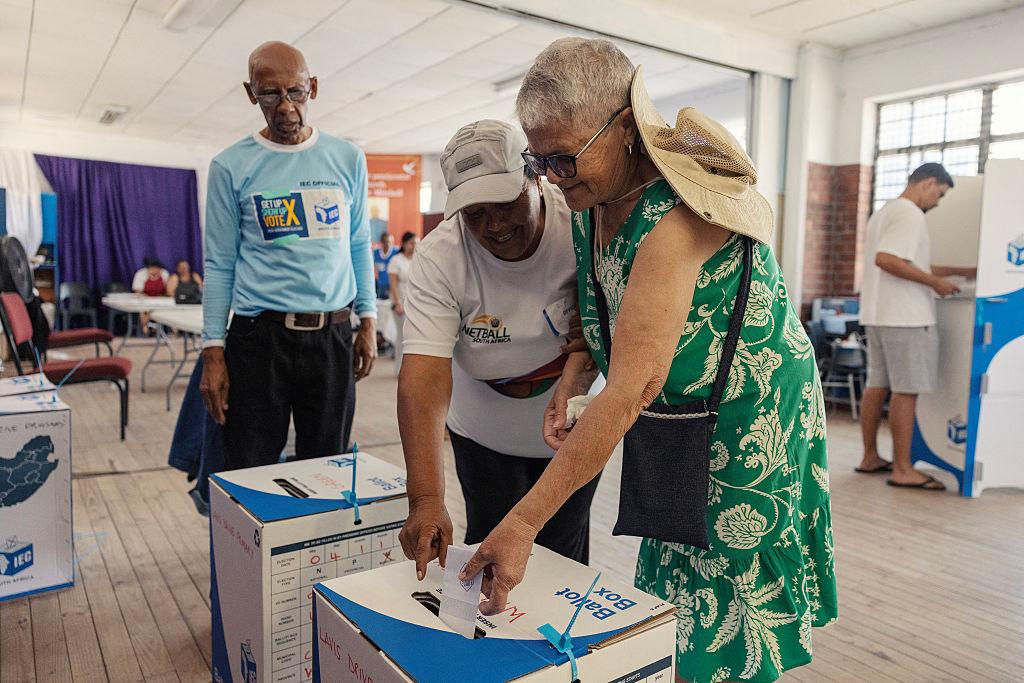
“South Africa’s Human Sciences Research Council (HSRC) has found that voters maintained strong confidence in the integrity of the 2026 Local Government Elections, with 90% considering the elections free and 91% regarding them as fair. However, trust in the Electoral Commission of South Africa (IEC) declined to 81%, indicating that while electoral confidence remains high, public trust in the institution responsible for administering elections requires continued attention.”
South Africans Maintain Confidence in Elections as Trust in IEC Falls to 81%, HSRC Survey Reveals
South Africans continue to express considerable confidence in the country’s electoral democracy, although public trust in the institution responsible for administering elections has declined, according to the latest findings from the Human Sciences Research Council (HSRC). The Election Satisfaction Survey (ESS) 2026, released following the country’s 4 November Local Government Elections, highlights the continued credibility of voting procedures alongside emerging concerns about institutional confidence, political accountability and public perceptions of electoral integrity.
The survey found that 90% of voters regarded the elections as free, while 91% considered them fair. Furthermore, 95% expressed satisfaction that their votes remained secret, and 83% reported strong confidence that their votes would be accurately counted. However, trust in the Electoral Commission of South Africa (IEC) declined to 81%, marking a notable reduction compared with previous election cycles.
These findings provide an important snapshot of public opinion at a time when South Africa’s political landscape is undergoing significant transformation.
Strong Public Confidence in Electoral Integrity
According to the HSRC, the overwhelming majority of voters maintained positive perceptions of the 2026 electoral process. The findings suggest that the fundamental mechanisms of democratic participation continue to enjoy substantial public acceptance despite growing political competition and dissatisfaction with some institutions.
The survey was conducted during the local government elections held on 4 November and presented at a media briefing at the National Results Operations Centre in Midrand on Friday, 6 November.
HSRC researcher Dr Ben Roberts explained that perceptions of electoral integrity remained strong, with voters generally satisfied with the procedures surrounding the casting and protection of ballots.
The 90% rating for electoral freedom and 91% assessment of fairness indicate that most respondents experienced the elections as legitimate democratic exercises. These perceptions are particularly significant because municipal elections determine the political leadership responsible for essential services, including water provision, sanitation, road maintenance, waste collection and local infrastructure.
The strong confidence in ballot secrecy is another important finding. According to the survey, 95% of voters were satisfied that their votes remained confidential.
This level of confidence supports the principle that citizens can participate in elections without fear of political intimidation or interference with their individual choices.
Trust in the IEC Continues to Decline
Despite the positive assessments of voting procedures, the survey identified a gradual decline in public trust in the IEC.
Trust in the Commission stood at 81% in 2026, compared with 85% in 2024, 89% in 2021 and 93% in 2019. In 2016, the figure was 91%.
The downward trend does not necessarily mean that most voters have lost confidence in the electoral institution. Rather, the findings suggest that public confidence, although still substantial, has become less consistent over successive election periods.
Approximately 5% of respondents reported distrust or strong distrust in the Commission, while 14% were neutral, uncertain or declined to answer.
Nevertheless, the decline deserves attention because public confidence is central to the credibility of democratic institutions. An electoral commission depends not only on the technical accuracy of its operations but also on the willingness of citizens and political parties to accept its impartiality and decisions.
The survey therefore presents a mixed picture: South Africans continue to trust the electoral process in substantial numbers, but confidence in the institution administering that process is gradually weakening.
Provincial Differences Highlight Uneven Public Confidence
The HSRC findings also reveal differences in trust across South Africa’s provinces.
The Eastern Cape recorded the highest level of trust in the IEC at 87%, followed by the Northern Cape at 85%, the Free State at 84% and the Western Cape at 83%.
Mpumalanga recorded 81%, while Limpopo registered 80%. North West and Gauteng each recorded 79%.
KwaZulu-Natal reported the lowest level of trust, at 72%.
These differences demonstrate that public perceptions of electoral institutions are not uniform throughout the country. Provincial experiences, political competition, local circumstances and exposure to electoral controversies may contribute to differences in institutional confidence.
However, the survey findings alone do not establish the precise causes of these provincial variations. Understanding them would require further investigation into voters’ experiences, political attitudes and local electoral conditions.
KwaZulu-Natal’s comparatively lower confidence is particularly noteworthy because the province has experienced intense political competition and changing electoral loyalties. Nonetheless, the result should not automatically be interpreted as evidence that voters in the province rejected the legitimacy of the elections.
Why Some Voters Continue to Trust the Commission
The HSRC survey identified several reasons why voters expressed confidence in the IEC.
Respondents cited the Commission’s professionalism, competence, fairness and impartiality. Others highlighted confidence in vote counting, its experience administering elections and positive interactions with electoral officials.
Ballot secrecy also remained an important source of reassurance.
Some voters viewed the Commission as an institution capable of managing a complicated national responsibility despite operational challenges.
These positive assessments indicate that the IEC continues to benefit from institutional experience and a substantial public reputation for electoral administration.
Maintaining this confidence, however, requires consistent performance, transparent communication and effective responses to public concerns.
Corruption Allegations and Electoral Mistrust
Although the majority of respondents expressed confidence in the IEC, those who distrusted the institution cited several concerns.
Perceived corruption and dishonesty were among the most frequently identified explanations for mistrust. Other respondents questioned whether votes were accurately counted, properly recorded and reflected in final election results.
Political bias and previous controversies also contributed to negative perceptions.
The HSRC noted that some voters’ concerns were influenced by allegations of corruption, bribery and fraudulent practices.
Importantly, these responses represent voters’ perceptions and explanations for distrust; they should not be interpreted as proof that electoral corruption or vote manipulation occurred.
Nevertheless, perceptions matter in democratic politics because public confidence can be affected by allegations even when those allegations have not been substantiated.
For the IEC, the findings underline the importance of addressing concerns through credible evidence, transparent procedures and accessible explanations of electoral processes.
Social Media and the Influence of Electoral Information
The survey also identified the influence of news reporting and social media on public perceptions.
Some respondents said rumours and reports about previous electoral disputes had contributed to their mistrust of the Commission.
This finding illustrates the increasingly important role of digital information in shaping political attitudes.
Social media platforms enable citizens to share election-related information, discuss political developments and scrutinise public institutions. However, misleading claims, unverified allegations and inaccurate interpretations of electoral procedures can also influence public confidence.
The challenge is therefore to ensure that voters have access to reliable information throughout the electoral process.
Clear communication about ballot counting, results transmission, complaints procedures and electoral safeguards can help address misunderstandings.
At the same time, citizens require opportunities to question institutions and raise legitimate concerns without being dismissed as politically motivated.
Voter Participation and Political Accountability
The survey findings emerge against the backdrop of changing political loyalties in South Africa.
Recent elections have demonstrated that traditional party dominance is weakening, while coalition politics and competition between political parties are becoming increasingly important.
Ipsos research published before the elections indicated that no single political party commanded strong majority support nationally. Its findings also suggested that many South Africans favoured cooperation between political parties at municipal level.
Meanwhile, preliminary election results reported by the Associated Press indicated substantial losses for the African National Congress in several important municipalities.
The changing political environment means that citizens are increasingly evaluating parties according to governance performance, service delivery and accountability.
Public confidence in electoral institutions is consequently connected to wider questions about democratic representation and political responsiveness.
Although the HSRC survey focused on election experiences rather than overall political satisfaction, its findings offer insight into how citizens perceive one of the country’s most important democratic institutions.
Implications for South Africa’s Democratic Future
The HSRC findings provide an encouraging assessment of electoral participation while identifying areas requiring attention.
The high ratings for electoral freedom, fairness and ballot secrecy demonstrate that many South Africans continue to regard elections as credible opportunities to exercise democratic choice.
However, declining institutional trust highlights the importance of maintaining transparency and public accountability.
The IEC will need to continue demonstrating impartiality, strengthening voter education and communicating effectively with citizens.
Political parties also have a responsibility to ensure that electoral disputes are addressed through established procedures and that public statements about alleged irregularities are supported by credible evidence.
Furthermore, the findings suggest that democratic confidence should not be measured exclusively through satisfaction with election-day procedures.
Citizens’ experiences of governance, municipal service delivery, political accountability and institutional responsiveness also influence their broader perceptions of democracy.
A credible electoral system must therefore be accompanied by effective governance and institutions that respond to public concerns.
Conclusion
South Africa’s 2026 Election Satisfaction Survey presents a mixed but significant picture of democratic confidence.
The majority of voters continue to regard elections as free and fair, maintain confidence in ballot secrecy and express trust in the accuracy of vote counting. Nevertheless, the decline in trust in the IEC from 93% in 2019 to 81% in 2026 demonstrates that institutional confidence requires sustained attention.
The findings do not indicate a wholesale rejection of electoral democracy. Instead, they highlight the coexistence of strong confidence in voting procedures and growing questions about institutional credibility.
As South Africa navigates increasingly competitive politics, coalition governance and changing voter expectations, maintaining public trust will remain essential.
The ultimate challenge for democratic institutions is not simply to conduct elections successfully, but to ensure that citizens continue to believe their participation matters, their votes are protected and their political choices are respected.



