




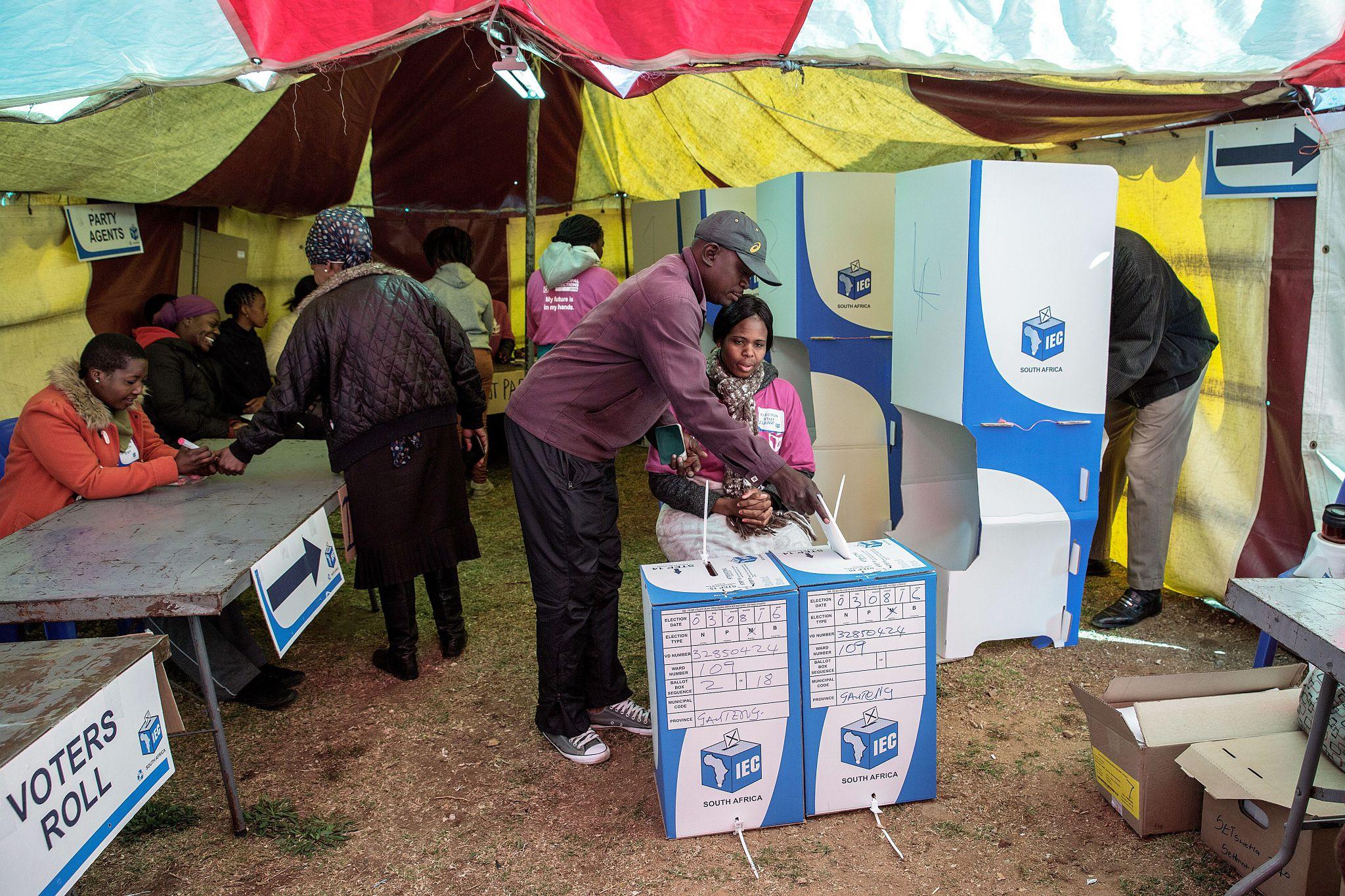
“South Africa’s 2026 local government elections have exposed a significant decline in public support for the African National Congress, with preliminary results showing the party losing substantial ground nationally and facing difficult contests in major metropolitan municipalities. The results reflect growing voter dissatisfaction with unemployment, corruption, crime and unreliable municipal services, while strengthening demands for accountable leadership, effective governance and political alternatives.”
South African voters deliver a powerful message of political dissatisfaction
South Africa’s 2026 local government elections are emerging as a defining moment in the country’s democratic development, with preliminary results demonstrating a significant shift in public opinion and a weakening of the African National Congress’s traditional political dominance. The elections, held on 4 November, have produced a substantial decline in ANC support, strengthened opposition parties and intensified discussions about the future of municipal governance, political accountability and public confidence in democratic institutions.
With approximately 81% of votes counted by Friday, 6 November, the ANC stood at approximately 32% nationally, compared with approximately 25% for the Democratic Alliance. The results indicated that the governing party could lose around 14 percentage points compared with its performance in the 2021 local government elections. These developments represent another major setback for the ANC following its loss of an outright parliamentary majority in the 2024 national elections.
The electoral outcome is particularly significant because it reflects the changing relationship between South African citizens and political institutions. For decades, the ANC enjoyed substantial electoral support because of its historic role in ending apartheid and establishing democratic governance in 1994. However, the latest results suggest that historical political loyalty is increasingly being challenged by practical concerns about employment, infrastructure, security and the quality of public services.
Public dissatisfaction becomes increasingly visible
One of the strongest messages emerging from the elections is that many voters are increasingly dissatisfied with the performance of municipal governments.
South African municipalities are responsible for essential services that directly influence household welfare and economic activity. These include water supply, electricity distribution, sanitation, waste collection, road maintenance and local infrastructure development.
In many communities, persistent service delivery failures have become major sources of frustration. Residents have experienced water interruptions, electricity problems, deteriorating roads, sewage infrastructure failures and inconsistent rubbish collection. Such challenges have reinforced perceptions that municipal institutions are struggling to fulfil their responsibilities.
Reuters reported before the elections that water shortages, unemployment, crime and housing affordability were among the central issues affecting voters in major metropolitan areas. Johannesburg, Tshwane and eThekwini faced particularly significant infrastructure and employment pressures.
Consequently, the elections increasingly became an opportunity for residents to express dissatisfaction with the condition of their communities.
The political implications are substantial. Rather than evaluating parties exclusively through historical associations or ideological commitments, voters are increasingly examining whether elected officials can provide reliable services, improve living conditions and respond effectively to local problems.
ANC loses ground as political loyalty changes
The ANC’s declining electoral support demonstrates how public opinion can evolve when citizens become dissatisfied with political performance.
The party’s historical legitimacy remains important, particularly among communities that remember its role in the liberation struggle. Nevertheless, that legacy increasingly competes with contemporary expectations regarding governance, economic opportunities and accountability.
Associated Press reported that the ANC acknowledged losing significant voter support and recognised the need to rebuild confidence among South Africans, particularly its historical supporters. Party spokesperson Mahlengi Bhengu said the organisation would undertake a serious examination of the message voters were communicating through the election results.
This acknowledgement highlights the growing importance of public confidence in determining political success.
For the ANC, rebuilding support will require more than campaign messaging. Voters are likely to expect practical improvements in municipal administration, infrastructure maintenance, financial management and responsiveness to community concerns.
The party’s declining support also raises questions about its ability to maintain political influence across different regions of South Africa.
Opposition parties benefit from changing voter preferences
The election results have strengthened the position of opposition parties, particularly the Democratic Alliance, ActionSA and the uMkhonto weSizwe Party.
The DA has emerged in a stronger position in several metropolitan municipalities, while ActionSA has positioned itself as an influential potential coalition partner in Gauteng. The MK Party has also demonstrated significant electoral strength in KwaZulu-Natal, particularly in the eThekwini municipality.
These developments indicate that South Africa’s political landscape is becoming increasingly competitive and fragmented.
The emergence of multiple influential parties creates opportunities for voters to support political alternatives that they believe better reflect their priorities.
However, fragmented electoral outcomes also create governance challenges. Municipalities without outright majorities may require coalition arrangements involving parties with different political programmes, priorities and leadership ambitions.
Reuters reported that coalition negotiations were expected to become particularly important in Johannesburg and other major metropolitan areas, with smaller parties potentially exercising considerable influence over the formation of municipal governments.
Coalition governments become a central public concern
The growing importance of coalition politics represents another major development in South African public opinion.
Coalitions can provide opportunities for political cooperation, accountability and broader representation. They can also introduce instability when parties disagree over budgets, leadership appointments, service delivery priorities or policy decisions.
Before the elections, Ipsos reported that approximately 65% of South Africans believed different political parties should work together at municipal level. The research also indicated that no single party commanded overwhelming national support ahead of the elections.
Ipsos
This suggests that many citizens recognise the importance of political cooperation in a fragmented electoral environment.
Nevertheless, voters may expect coalition governments to demonstrate greater stability and effectiveness than previous administrations.
Political leaders will therefore face pressure to negotiate agreements that prioritise municipal performance rather than simply distributing positions of authority.
The credibility of coalition governments will increasingly depend on whether they can improve service delivery, manage public finances responsibly and maintain transparent decision-making.
Unemployment and economic hardship shape political sentiment
Economic hardship remains one of the most important factors influencing public opinion in South Africa.
Unemployment, particularly among young people, continues to limit household income, reduce economic opportunities and contribute to frustration with political institutions.
For many citizens, elections provide an opportunity to demand policies that create employment, support entrepreneurship, improve education and strengthen economic participation.
The connection between economic conditions and political support is particularly visible in urban areas, where residents frequently encounter high living costs, inadequate infrastructure and limited employment opportunities.
Reuters highlighted unemployment and affordable housing among the major concerns affecting voters in metropolitan municipalities ahead of the elections.
These pressures reinforce expectations that political leaders should prioritise economic development and practical solutions rather than concentrating exclusively on political competition.
Public confidence and accountability remain essential
The election results also raise broader questions about public confidence in democratic institutions.
Democracy depends not only on citizens participating in elections but also on their belief that political institutions can respond meaningfully to their concerns.
When communities experience prolonged service delivery failures, corruption allegations or ineffective administration, confidence in government can weaken.
South Africa’s changing electoral landscape therefore highlights the importance of transparent governance, responsible leadership and stronger accountability mechanisms.
Political parties that demonstrate credible oversight, communicate openly with communities and respond effectively to complaints may become increasingly attractive to voters.
Similarly, municipal administrations must ensure that public resources are managed responsibly and that infrastructure investments produce measurable improvements in community welfare.
Voter behaviour reflects a more demanding electorate
The latest elections suggest that South African voters are becoming increasingly demanding in their expectations of political leadership.
Associated Press quoted political analyst Sandile Mnguni describing a change in voter behaviour, with citizens increasingly judging political leaders according to their performance in office rather than continuing to vote through historical loyalty.
This development has significant implications for political parties across the country.
The decline in ANC support should not automatically be interpreted as a permanent transfer of loyalty to opposition parties. Instead, it may reflect a broader willingness among citizens to reconsider their political choices.
Opposition parties could also experience declining support if they fail to meet public expectations after assuming municipal responsibilities.
Consequently, electoral success increasingly depends on delivering measurable improvements in citizens’ daily lives.
Municipal governance becomes the immediate test
The election results have created a new set of responsibilities for political leaders.
Municipal councils must now establish administrations capable of addressing infrastructure challenges, improving financial management and strengthening community engagement.
Johannesburg, Tshwane and eThekwini are particularly important because their governance outcomes influence economic activity, employment opportunities and the quality of life for millions of residents.
Coalition negotiations will determine which political parties control municipal leadership and how administrative priorities are established.
However, the public’s expectations are unlikely to end with the formation of new councils.
Residents will continue evaluating municipal administrations according to their ability to restore reliable water supplies, maintain roads, improve sanitation, reduce infrastructure failures and address neighbourhood safety.
These practical considerations will remain central to political legitimacy.
Implications for South Africa’s democratic future
South Africa’s 2026 local government elections demonstrate the continuing importance of public opinion in shaping democratic institutions.
The weakening of ANC dominance, the strengthening of opposition parties and the growing significance of coalition politics indicate that political competition is becoming more complex.
The results also demonstrate that citizens remain capable of using democratic participation to communicate dissatisfaction and demand change.
For political parties, the central challenge will be translating electoral mandates into effective governance.
For municipal administrations, the priority will be improving service delivery and rebuilding public confidence.
For citizens, the elections represent an opportunity to strengthen democratic accountability and ensure that political institutions remain responsive to community needs.
Conclusion
South Africa’s 2026 local government elections have delivered a powerful message about changing public opinion, declining political loyalty and rising expectations of accountable governance.
The ANC’s substantial losses demonstrate that historical political legitimacy cannot indefinitely substitute for effective administration, economic opportunities and reliable public services.
Meanwhile, opposition parties face the responsibility of proving that alternative leadership can produce meaningful improvements.
As coalition negotiations continue and final election results emerge, the country’s political future will increasingly depend on whether elected representatives can respond effectively to the priorities expressed by voters.
The central lesson of the elections is clear: South Africans are increasingly demanding results, accountability and leadership that places community needs at the centre of government.



