




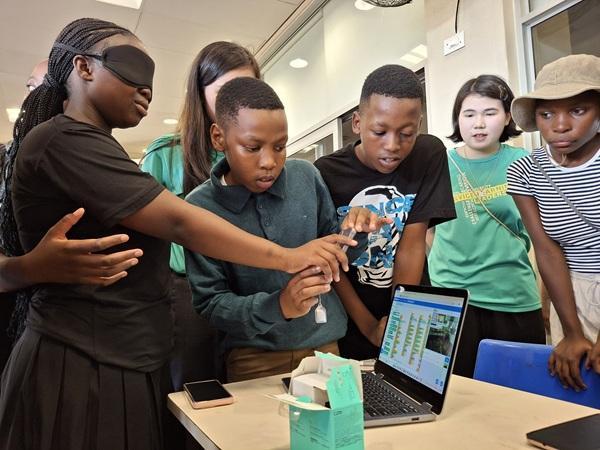
“South Africa has been identified as one of only three African Commonwealth countries meeting a youth artificial intelligence readiness benchmark, highlighting the country’s emerging position in AI education, digital skills and technological preparedness. The development brings renewed attention to the importance of equipping young people with practical AI knowledge, digital infrastructure and responsible technology skills as artificial intelligence increasingly transforms education, employment and economic development.”
South Africa Ranks Among Africa’s Leaders in Youth AI Readiness as New Commonwealth Index Highlights Digital Skills Opportunities
South Africa has emerged as one of the leading African countries in preparing young people for artificial intelligence, according to the newly published 2026 Commonwealth Youth AI Readiness Index. The study places the country 13th among 56 Commonwealth member states, positioning it among only three African Commonwealth nations that have crossed the benchmark for youth artificial intelligence readiness.
The findings highlight South Africa’s growing potential to participate in the AI-driven economy while drawing attention to the importance of education, digital infrastructure, workforce development and responsible technology adoption.
The index, compiled by the Ayre Think Tank, examines how effectively countries are preparing young people aged between 15 and 29 to benefit from artificial intelligence in education, employment and entrepreneurship.
South Africa achieved a score of 56.8 out of 100, exceeding the readiness benchmark of 53 points. Mauritius ranked eighth, making it the highest-performing African Commonwealth country, while South Africa followed in 13th place. Nigeria ranked 15th.
Singapore topped the international rankings, followed by Malta, Australia, the United Kingdom and Canada.
South Africa Demonstrates Growing AI Preparedness
South Africa’s position reflects a combination of technological infrastructure, education opportunities, digital participation and initiatives aimed at developing practical AI skills among young people.
The index assessed 56 Commonwealth countries using 102 indicators across seven pillars. Researchers reviewed 1,128 sources to evaluate the conditions influencing young people’s ability to participate in the AI economy.
The assessment considered access to technology, digital capabilities, educational opportunities, employment prospects, entrepreneurship and safeguards against the potential negative consequences of artificial intelligence.
A further pillar covering critical judgement and human agency was excluded from the published rankings because researchers lacked sufficiently comparable evidence across participating countries.
Only 15 Commonwealth countries achieved the readiness benchmark, leaving 41 countries below the threshold.
South Africa’s achievement is particularly significant because it demonstrates that African economies can establish meaningful foundations for AI participation despite differences in resources and technological development.
However, the ranking does not suggest that the country has resolved every challenge associated with AI adoption. Instead, it provides an indication of the opportunities available if existing strengths are supported by sustained investment and effective policy implementation.
Young South Africans Show Strong Interest in Artificial Intelligence
One of the notable findings concerning South Africa is the growing enthusiasm among young people for artificial intelligence.
According to evidence referenced in the index, 88.2% of young South African respondents expected to use AI for education or work during the following year.
Approximately half reported already using AI tools for their studies.
These figures demonstrate that artificial intelligence is becoming increasingly relevant to young people’s educational experiences and career expectations.
Students are using AI-powered tools to explore information, improve writing, understand difficult subjects and support research activities. Meanwhile, young professionals and entrepreneurs are increasingly interested in applying AI to business operations, communication, productivity and innovation.
The index also highlights the growing importance of AI among entrepreneurs.
In a separate survey covering entrepreneurs aged between 18 and 64 who were starting or operating businesses, 49.2% of South African respondents expected AI tools to become very important to their operations over the following three years.
Among the five Commonwealth countries with comparable findings, South Africa recorded the highest proportion.
This suggests that AI adoption is not limited to established technology companies. Small businesses, independent entrepreneurs and emerging enterprises are also beginning to recognise its potential value.
Training Partnerships Strengthen South Africa’s Position
South Africa’s readiness ranking comes amid several initiatives designed to expand access to digital education and AI-related training.
In March 2026, the Department of Higher Education and Training signed an agreement with Google to provide an initial 10,000 scholarships for professional qualifications in areas including artificial intelligence, cybersecurity and data analysis.
The programme targets students and educators at public universities and training colleges, with particular attention to rural and township communities.
The initiative aims to improve access to practical technology education and strengthen the connection between academic learning and employment opportunities.
Microsoft and the Youth Employment Service have also supported digital learning initiatives.
In May 2026, the organisations reported that more than 70,000 young South Africans had participated in digital learning programmes.
These initiatives demonstrate how partnerships between government, educational institutions and technology companies can contribute to workforce development.
Artificial intelligence increasingly requires workers who understand not only how to use digital tools but also how to evaluate their outputs, manage information securely and apply technology to practical challenges.
Coursera Reports Growing AI Learning Interest
South Africa’s increasing participation in AI education is also reflected in online learning trends.
Recent Coursera findings cited alongside the index indicated that AI course enrolments in South Africa increased by 75% year-on-year.
Popular learning areas included generative AI, data and analytics, and agentic AI and AI agents.
The growth suggests that learners are increasingly seeking opportunities to understand emerging technologies and develop skills relevant to changing employment conditions.
For students, these capabilities could improve readiness for future careers.
For existing workers, they may provide opportunities to improve productivity, adapt to workplace changes and develop new professional competencies.
For entrepreneurs, AI education can support the development of new products, services and business models.
Nevertheless, increased enrolment does not automatically translate into professional competence. Practical experience, mentorship, access to appropriate technology and opportunities to apply learning remain important components of effective skills development.
AI Could Create Significant Economic Opportunities
The Commonwealth index also explores the potential economic effects of artificial intelligence.
For South Africa, the study estimates that AI could increase the country’s GDP level by approximately US$9.184 billion after ten years under a moderate scenario.
Under an optimistic scenario, the potential increase could reach approximately US$13.670 billion.
These estimates illustrate the possible economic benefits associated with greater AI adoption, productivity improvements and technological development.
However, researchers caution that these figures are not guaranteed outcomes or precise forecasts of future economic growth.
The potential benefits depend on multiple factors, including investment, infrastructure, skills availability, business adoption and the ability of workers to adapt to technological changes.
Moreover, increased national economic output does not necessarily mean that all communities or young people will benefit equally.
Ensuring that AI creates meaningful opportunities requires policies that connect technological development with employment, entrepreneurship and inclusive economic participation.
Infrastructure Remains a Critical Challenge
Despite South Africa’s relatively strong ranking, access to reliable technology remains an important consideration.
Artificial intelligence requires dependable internet connectivity, electricity, computing resources and suitable digital devices.
Young people in communities with limited connectivity or inadequate infrastructure may struggle to access the same opportunities as those in well-connected urban areas.
The Commonwealth study illustrates the difference between infrastructure availability and meaningful digital participation through examples from other African countries.
In Togo, 4G coverage reaches 99.7% of the population, but only 44.9% of young people reportedly use the internet.
In Malawi, electricity reaches just 15.6% of the population, according to World Bank data cited by the research.
These examples demonstrate that technological infrastructure alone does not guarantee effective participation.
For South Africa, expanding affordable connectivity, improving electricity reliability and strengthening access to digital devices will remain important for ensuring that AI education reaches young people across geographical and socioeconomic boundaries.
The Importance of African AI Innovation
The index also highlights the need for African countries to develop their own AI capabilities rather than relying exclusively on technologies produced elsewhere.
Artificial intelligence systems often reflect the languages, cultural contexts, data and commercial priorities of the environments in which they are developed.
Consequently, technologies created primarily for other markets may not adequately address local challenges.
South Africa’s multilingual society presents opportunities for developing AI tools that support African languages, local educational requirements, healthcare needs, agriculture and public services.
Developing locally relevant systems could strengthen innovation while creating opportunities for researchers, technology entrepreneurs and businesses.
The index emphasises that young people should be equipped not merely to consume AI products but also to question, improve and develop alternatives suited to their own communities.
This approach could help South Africa strengthen its technological independence and encourage greater participation in global AI development.
Responsible AI and Human Oversight
The readiness assessment also places importance on safeguards that protect young people and enable them to challenge automated decisions.
As AI systems become increasingly involved in education, recruitment, financial services and public administration, questions surrounding fairness, privacy, accountability and transparency are becoming more significant.
Young people need to understand that AI-generated information may be inaccurate, biased or incomplete.
Digital education should therefore include critical thinking, information verification, data protection and responsible technology use.
Institutions deploying AI systems should also ensure that appropriate human oversight remains available, particularly when automated decisions affect people’s rights or opportunities.
The index identifies safeguards that enable young people to question automated decisions as one of five priorities for improving AI readiness.
Five Priorities for the Future
The report identifies five broad priorities for ensuring that artificial intelligence benefits young people across Commonwealth countries.
These include affordable access to technology, practical digital skills, stronger connections between education and employment, AI systems adapted to local languages and needs, and safeguards that allow individuals to challenge automated decisions.
For South Africa, these priorities provide a framework for building on its current readiness position.
Expanding training opportunities, strengthening university-industry partnerships and improving access to AI tools could help young people develop the competencies required for future employment.
At the same time, encouraging entrepreneurship and local research could support the development of AI-driven businesses and innovative solutions to national challenges.
A Foundation Rather Than a Final Achievement
South Africa’s 13th-place ranking represents an important indication of progress in preparing young people for artificial intelligence.
Nevertheless, readiness should be understood as an ongoing process rather than a final achievement.
AI technologies continue to evolve, creating new opportunities and changing the skills required in education and employment.
The country’s future performance will depend on its ability to maintain investment in digital infrastructure, strengthen practical education, support innovation and ensure that technological benefits reach underserved communities.
The findings also reinforce the importance of cooperation between government, educational institutions, businesses and young people themselves.
South Africa has established a promising foundation for youth AI participation. Turning that foundation into lasting economic and social benefits will require sustained commitment, practical skills development and responsible technological innovation.
Ultimately, the country’s AI readiness will be measured not only by its international ranking but also by whether young South Africans can use artificial intelligence to improve their education, secure meaningful employment, establish successful businesses and contribute to the development of solutions that address the country’s needs.



