




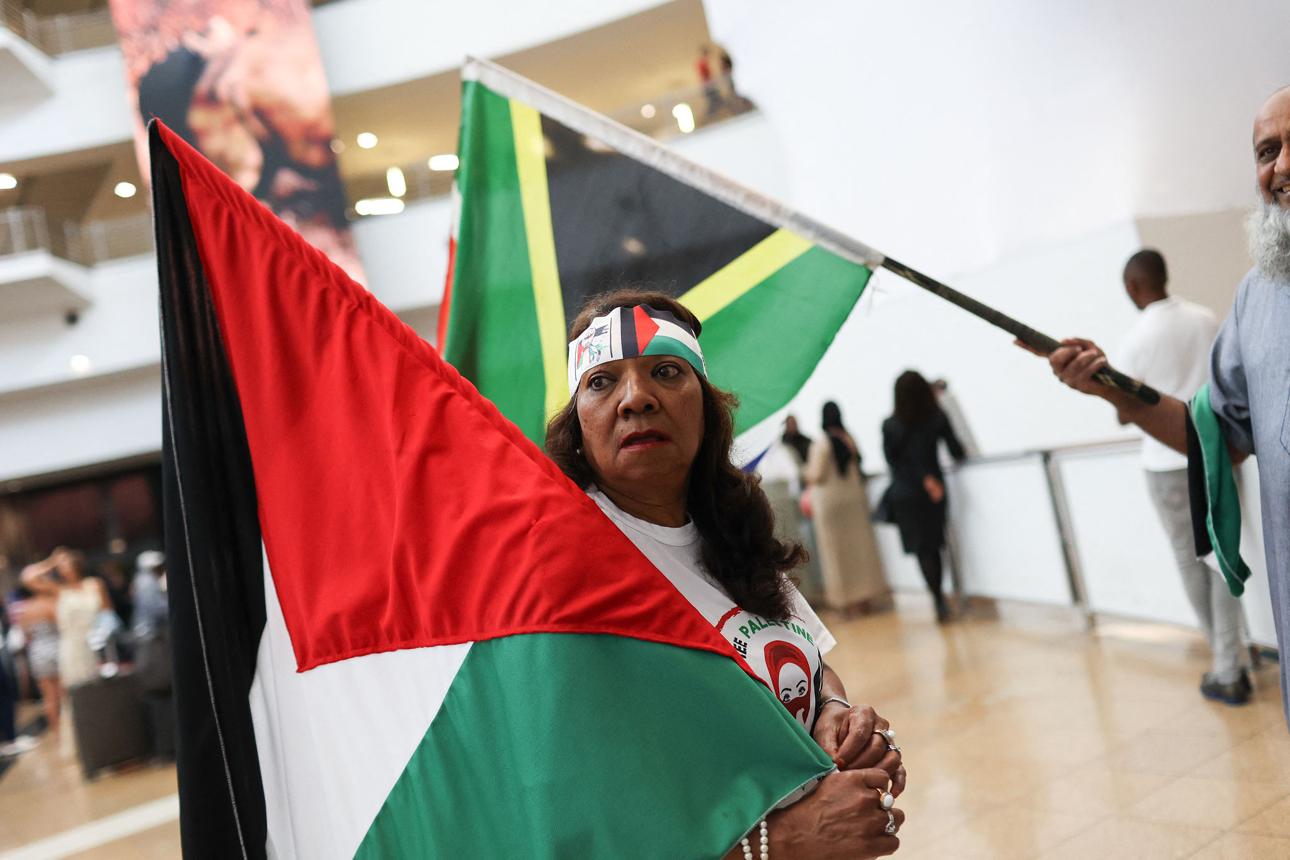
“South Africa has joined 20 other countries in condemning Colombia’s inauguration of an embassy in Jerusalem, arguing that the move conflicts with relevant United Nations resolutions and risks undermining international efforts to achieve a peaceful settlement based on a two-state solution. The joint statement calls on Colombia to reverse its decision and reiterates support for an independent Palestinian state, with East Jerusalem as its capital.”
South Africa Strengthens International Opposition to Colombia’s Jerusalem Embassy Decision
PRETORIA, SOUTH AFRICA — 17 October 2026
South Africa has reinforced its diplomatic position on the Israeli-Palestinian conflict by joining 20 other countries in rejecting Colombia’s inauguration of an embassy in Jerusalem. The joint statement, published by the Department of International Relations and Cooperation (DIRCO) on 16 October, argues that the move contradicts relevant United Nations Security Council resolutions and threatens international efforts to achieve a just and lasting peace through a two-state solution.
The announcement highlights South Africa’s continued commitment to a foreign policy centred on international law, Palestinian self-determination and multilateral diplomacy. It also demonstrates how disputes over diplomatic representation can become significant international political issues when they intersect with questions of sovereignty, territorial status and the recognition of states.
South Africa’s position on Jerusalem
According to the joint statement, the foreign ministers of 21 countries, including South Africa, strongly condemned Colombia’s inauguration of its embassy in Jerusalem. The participating countries argued that actions intended to change the legal or historical status of occupied Jerusalem, or recognise it as Israel’s capital, have no legal effect under the international framework they referenced.
South Africa’s participation places its position within a wider diplomatic coalition that includes countries from Africa, the Middle East and Asia. The signatories include Egypt, Palestine, Türkiye, Saudi Arabia, Indonesia, Malaysia, Pakistan and several other states.
Their statement calls on Colombia to reconsider and reverse its decision, while respecting international law and the rights of the Palestinian people. It specifically supports the establishment of an independent and sovereign Palestinian state, with East Jerusalem as its capital.
The issue is significant because Jerusalem holds religious, historical and political importance for Israelis and Palestinians. Its status has remained one of the most contentious questions in efforts to negotiate a comprehensive settlement of the conflict.
For South Africa, the embassy dispute is therefore not simply a disagreement about the location of a diplomatic mission. It concerns the principles that should guide international recognition, the treatment of occupied territory and the role of international institutions in resolving competing territorial claims.
The role of United Nations resolutions
The joint statement specifically refers to United Nations Security Council Resolutions 476 and 478, adopted in 1980. These resolutions addressed Israel’s actions concerning Jerusalem and rejected measures intended to alter the city’s legal status.
Resolution 478 called on states that had established diplomatic missions in Jerusalem to withdraw them. The countries issuing the latest statement argue that Colombia’s decision conflicts with this established international position.
The broader diplomatic debate concerns whether states should take unilateral actions that may influence the outcome of negotiations over disputed territory. Countries opposing the embassy move maintain that the status of Jerusalem should be addressed consistently with international law and the rights of the Palestinian population.
Nevertheless, diplomatic disputes of this nature involve complicated questions of international recognition, state sovereignty and the interpretation of United Nations decisions. Governments may disagree over how particular measures should be implemented, even when they acknowledge the importance of international law.
South Africa’s position reflects its stated preference for a negotiated settlement that respects the rights and security of the people affected by the conflict.
Why the two-state solution remains central
The two-state solution remains the principal framework referenced in the joint statement. Under this approach, Israel and an independent Palestinian state would coexist, with arrangements negotiated for borders, security, Jerusalem, refugees and other outstanding issues.
The embassy dispute matters because diplomatic recognition and the placement of embassies can communicate a government’s position on contested political questions. Countries opposing Colombia’s action argue that it undermines international efforts to reach a negotiated agreement on Jerusalem’s status.
South Africa has consistently presented Palestinian self-determination as an important element of its international engagement. By joining the statement, it has reaffirmed that position alongside governments that share its concerns about the implications of changing diplomatic arrangements in Jerusalem.
However, issuing a statement does not itself resolve the underlying conflict. Progress would require sustained negotiations, credible diplomatic engagement and practical arrangements addressing the competing national aspirations and security concerns involved.
The challenge for the international community is to preserve a framework for negotiations while responding to developments that individual governments consider prejudicial to a peaceful settlement.
South Africa’s broader foreign policy approach
South Africa’s involvement in this statement illustrates the importance it places on multilateral diplomacy. Rather than presenting its position solely through a national declaration, Pretoria has joined a coordinated statement involving governments across several regions.
Such cooperation can increase the diplomatic visibility of a shared position. It also allows participating countries to communicate their concerns collectively and encourage governments to reconsider decisions they regard as inconsistent with international commitments.
At the same time, South Africa’s foreign policy must balance principled positions with practical diplomatic engagement. Its relationships with countries across Africa, Asia, Europe and the Americas create opportunities for dialogue, but they can also require careful management when governments disagree over international conflicts.
The latest statement demonstrates how Pretoria continues to use formal diplomatic channels to express its position on contested international questions.
The effectiveness of this approach will depend partly on whether statements lead to further discussions, renewed negotiations or concrete policy changes. Diplomatic declarations can establish a country’s position clearly, but their practical influence varies according to the responses of other governments and the wider political circumstances.
Colombia faces calls to reconsider its decision
The signatories have called on the Colombian government to reverse its decision concerning the embassy in Jerusalem. Their stated concern is that the move could prejudice Palestinian rights and weaken efforts to establish a sovereign Palestinian state with East Jerusalem as its capital.
The statement establishes the signatories’ collective position, but it does not establish that Colombia has agreed to reverse the decision. Any subsequent change would depend on Colombia’s response and its assessment of the diplomatic, legal and political considerations involved.
The development also illustrates the continuing sensitivity surrounding diplomatic missions in contested territories. The location of an embassy can carry political significance beyond the practical work of providing consular services or maintaining bilateral relations.
For governments, such decisions may affect relationships with regional partners, influence perceptions of foreign policy priorities and generate reactions from international organisations.
Colombia’s next steps will therefore be important in determining whether the dispute remains a diplomatic disagreement or becomes the subject of additional international engagement.
Implications for Africa and international diplomacy
For African governments, the statement raises broader questions about the application of international law and the continent’s participation in global diplomatic debates.
South Africa frequently emphasises multilateral institutions as forums through which states can address conflicts and disagreements. Its participation in the statement reflects an approach that seeks to influence international discussions through collective diplomatic action.
African countries also have an interest in preserving the credibility of international institutions. Questions about territorial sovereignty, recognition and the peaceful resolution of disputes extend beyond the Middle East and can influence diplomatic debates elsewhere.
However, African governments do not necessarily share identical views on every international issue. Their participation in particular statements depends on national interests, historical relationships, regional priorities and assessments of international law.
South Africa’s decision to join this particular declaration demonstrates its support for the position expressed by the signatories, rather than establishing that every African country holds the same view.
The development also reinforces the importance of diplomacy that is consistent, carefully documented and grounded in recognised international frameworks.
The humanitarian dimension
Behind the diplomatic disagreement lies the continuing human impact of the Israeli-Palestinian conflict. Questions about Jerusalem’s status cannot be separated entirely from wider concerns about civilian safety, political rights, access to essential services and the prospects for lasting peace.
Although the statement focuses specifically on Colombia’s embassy decision, its reference to Palestinian self-determination connects the dispute to the broader question of whether a viable political settlement can be achieved.
A lasting resolution would require more than diplomatic positioning. It would need meaningful negotiations, protection of civilians, attention to humanitarian needs and credible arrangements addressing the political and security concerns of both peoples.
International diplomacy can contribute by maintaining channels of communication, supporting negotiations and discouraging actions that make an agreement more difficult to achieve.
South Africa’s latest statement places it among governments calling for international engagement to remain consistent with the two-state framework and the relevant United Nations resolutions.
What happens next?
The immediate question is whether Colombia will respond to the call to reconsider its embassy decision. The published statement does not provide evidence that the government has agreed to reverse its position, so further developments will need to be assessed through subsequent official announcements.
South Africa and the other signatories may continue raising the issue through bilateral contacts and multilateral diplomatic forums. The dispute could also form part of wider discussions about the Israeli-Palestinian conflict and the future of a negotiated settlement.
For Pretoria, the challenge will be to maintain its stated foreign policy principles while supporting diplomatic efforts capable of producing practical results.
Ultimately, the significance of this development will depend on whether the international response contributes to constructive engagement or simply adds another disagreement to an already complex conflict.
South Africa’s participation nevertheless sends a clear diplomatic message: Pretoria supports Palestinian statehood, regards the status of Jerusalem as an issue governed by international law and favours a settlement based on the two-state solution.
The central issue now is whether diplomatic pressure will prompt reconsideration of Colombia’s decision and contribute to renewed efforts toward a peaceful, negotiated resolution.



