




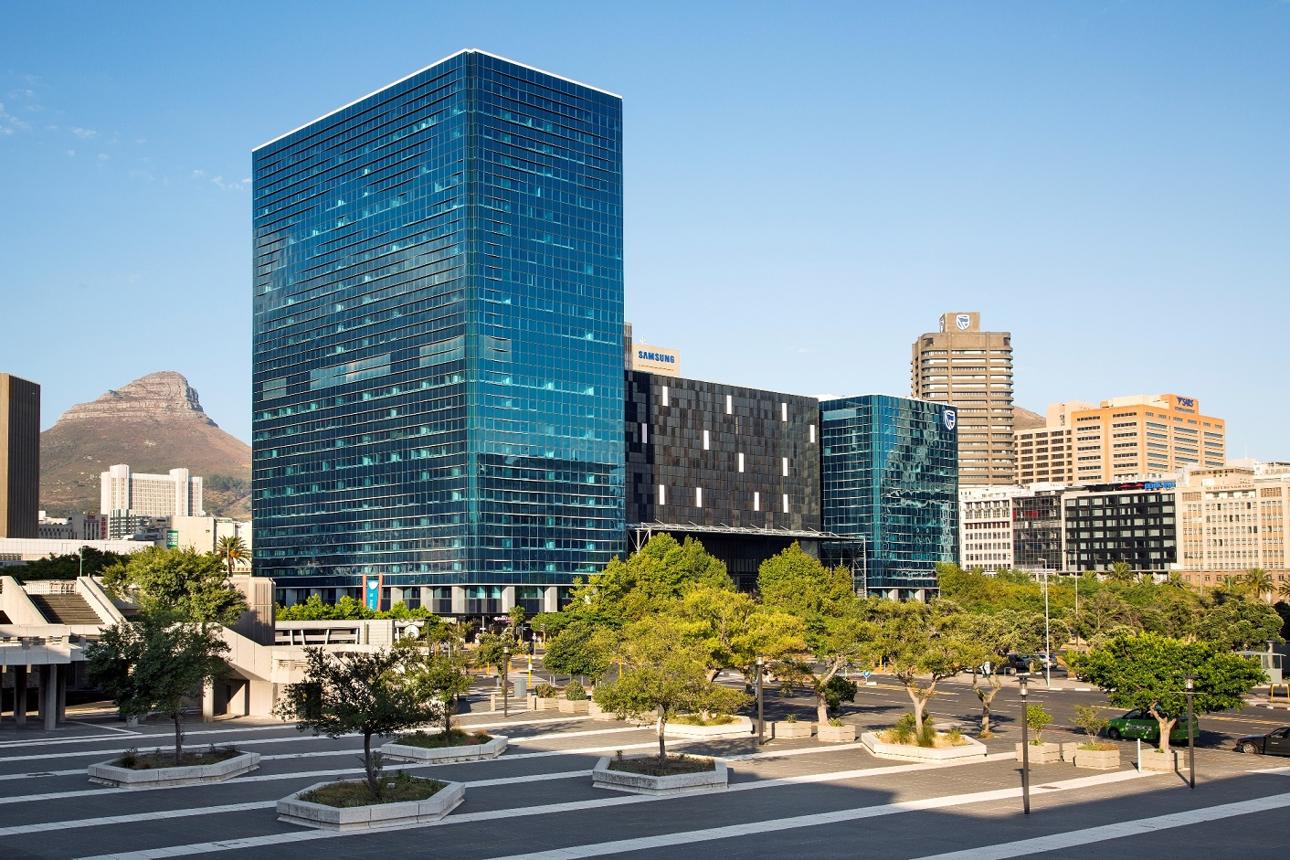
“South Africa’s commercial property sector is showing signs of recovery, with the national office vacancy rate declining to 11.8% in the third quarter of 2026, according to research highlighted by Property Wheel. The improvement suggests that demand for quality office accommodation is strengthening, creating opportunities for property owners, investors and developers, although economic conditions and municipal infrastructure challenges remain important risks.”
South Africa’s Commercial Property Market Shows Signs of Recovery as Office Vacancies Decline
South Africa’s commercial real estate market is showing encouraging signs of improvement as demand for office accommodation strengthens and vacancy levels continue to decline. The latest figures highlighted by the South African Property Owners Association (SAPOA) indicate that the national office vacancy rate dropped to 11.8% in the third quarter of 2026. This development represents an important improvement for a sector that has experienced significant pressure from economic uncertainty, changing workplace arrangements and reduced demand for traditional office space.
The latest figures suggest that South Africa’s commercial property industry could be entering a more stable phase. Although the recovery remains uneven across different cities and property categories, declining vacancies are providing renewed confidence among landlords, investors, developers and financial institutions.
Declining office vacancies provide encouragement
Office vacancies have been one of the biggest challenges facing South Africa’s commercial property industry since the COVID-19 pandemic. Businesses increasingly adopted remote and hybrid working arrangements, reducing their requirements for conventional office accommodation. Consequently, many commercial buildings experienced declining occupancy, putting pressure on rental income and property valuations.
However, the latest improvement indicates that conditions are gradually changing. The national office vacancy rate of 11.8% in Q3 2026 represents a meaningful improvement compared with the approximately 17% peak recorded in mid-2022. Furthermore, the second-quarter rate of 12.1%, reported in September, had already demonstrated that the recovery was gaining momentum.
The reduction suggests that businesses are gradually returning to physical workplaces or reconsidering their office requirements. Some organisations are also seeking better-quality premises that support collaboration, employee productivity and professional engagement.
For commercial landlords, lower vacancy levels can translate into improved rental collections, stronger tenant retention and more predictable property income. Nevertheless, the figures should not be interpreted as evidence that every office market has recovered equally.
Quality office buildings attract stronger demand
One important development shaping the recovery is the growing preference for modern, well-managed commercial buildings.
Businesses increasingly consider factors such as accessibility, security, energy efficiency, parking facilities, reliable connectivity and workplace design when selecting office accommodation. As a result, buildings that offer these features may enjoy a competitive advantage over older properties requiring significant refurbishment.
Major commercial centres, including Sandton, Johannesburg, Cape Town and Pretoria, continue to play important roles in South Africa’s office property market.
In these locations, businesses are evaluating office accommodation according to operational requirements and long-term affordability. Consequently, property owners must provide more than basic office space if they want to attract and retain tenants.
Modern office developments are also increasingly incorporating environmentally responsible features, including energy-efficient lighting, improved ventilation, water-saving systems and renewable energy solutions.
These improvements can help reduce operating expenses while supporting corporate sustainability objectives. For tenants facing rising operating costs, efficient buildings can therefore become more attractive leasing options.
Johannesburg and Cape Town experience different market conditions
Although South Africa’s overall office vacancy rate is improving, geographical differences remain important.
Johannesburg continues to face challenges in certain commercial districts, particularly where infrastructure reliability, municipal service delivery and security concerns influence business decisions. Some office locations have struggled to maintain occupancy because companies prefer areas offering better transport connections, dependable utilities and improved working environments.
Sandton remains an important commercial and financial centre. Its established business infrastructure, corporate presence and accessibility continue to support demand for quality office accommodation.
Cape Town, meanwhile, has benefited from relatively strong interest in selected commercial districts. The city’s economic activity, business environment and expanding professional services sector have helped support demand for attractive office locations.
Research reported in September 2026 highlighted the improvement in national office market conditions, while also noting that Johannesburg continued to carry more vacant office space than stronger-performing markets such as Cape Town.
These differences demonstrate why investors must examine individual locations rather than relying exclusively on national vacancy statistics.
Hybrid working continues to influence office demand
The growth of hybrid working remains an important consideration for commercial property owners.
Many South African businesses have adopted arrangements that allow employees to divide their working time between offices and home. This has changed how organisations evaluate their property requirements.
Instead of providing large offices with individual workstations for every employee, companies increasingly prefer flexible environments that encourage meetings, teamwork and collaboration.
Consequently, some businesses are reducing their total office footprints while investing in better-quality accommodation.
This trend creates opportunities for landlords who can adapt existing buildings to changing tenant expectations. Flexible leasing arrangements, shared meeting facilities and adaptable floor plans may help commercial property owners remain competitive.
However, older buildings that cannot accommodate these requirements may face continuing pressure.
For developers, understanding workplace trends is becoming essential when planning new commercial projects. Buildings designed around flexibility, efficiency and employee experience are better positioned to respond to changing demand.
Investors reconsider opportunities in commercial property
Improving occupancy levels could also encourage renewed investment in South Africa’s commercial property sector.
Investors generally consider rental income, vacancy levels, operating costs, financing conditions and potential capital appreciation when evaluating commercial properties.
When vacancies decline, property owners may experience improved income stability. This can strengthen investor confidence, particularly when combined with disciplined financial management and manageable debt levels.
Standard Bank’s September 2026 assessment, reported by the Mail & Guardian, described the property market as potentially entering a stronger investment period over the following two to four years. However, the bank also identified weak economic growth, borrowing costs and infrastructure problems as important challenges.
This outlook suggests that investment opportunities could increase, although investors will need to remain selective.
Well-positioned office buildings with reliable tenants and competitive operating costs may attract greater attention. Conversely, properties in poorly maintained locations or buildings requiring substantial investment could struggle to deliver attractive returns.
Commercial property investment therefore requires careful consideration of both market conditions and individual asset performance.
Infrastructure remains a major concern
Despite the encouraging vacancy figures, infrastructure challenges continue to influence South Africa’s commercial property environment.
Reliable electricity, water, road networks, public transport and municipal services are essential for successful commercial operations.
When infrastructure becomes unreliable, businesses may experience increased operating expenses and disruptions. Property owners may also need to invest in backup electricity, alternative water systems, security improvements and building maintenance.
These additional expenses can affect rental affordability and reduce the financial returns generated by commercial buildings.
Municipal service delivery is particularly important in established commercial districts where ageing infrastructure and inconsistent maintenance can undermine property values.
Investors are therefore paying closer attention to the condition of surrounding infrastructure when assessing commercial property opportunities.
Improving public services could strengthen confidence in business districts and encourage further private investment.
Retail and industrial property offer additional opportunities
Although office accommodation remains an important indicator of commercial property performance, South Africa’s wider commercial property market includes retail, industrial and logistics developments.
Retail property owners are increasingly focusing on convenience, accessibility and customer experience. Shopping centres that provide essential services, restaurants, entertainment and everyday shopping opportunities can strengthen their relationships with surrounding communities.
Industrial and logistics properties are also attracting attention because of demand for warehousing, distribution and supply-chain facilities.
The expansion of e-commerce and the need for efficient delivery networks have encouraged businesses to reconsider their logistics requirements.
Recent commercial developments reported in South Africa illustrate continued investment in industrial estates, distribution facilities and retail centres. These projects demonstrate that commercial property investment extends beyond conventional office buildings.
However, each property category has different investment requirements and risks. Industrial properties depend heavily on logistics access and operational suitability, while retail developments rely on consumer spending, tenant performance and the strength of their surrounding catchment areas.
Developers must respond to changing market requirements
The improving office market creates opportunities for property developers, but it also introduces new responsibilities.
Developers must understand the needs of prospective tenants before committing significant capital to new projects.
Demand assessments, location analysis, infrastructure evaluations and construction cost management are important components of successful commercial development.
In areas with established demand, upgrading existing buildings may provide better investment opportunities than constructing entirely new office developments.
Refurbishment can improve building efficiency, attract tenants and extend the useful life of existing commercial assets.
Furthermore, environmentally sustainable construction is becoming increasingly relevant as businesses evaluate the environmental performance of their premises.
Developers who integrate energy efficiency, water conservation and responsible building management into their projects may improve their competitiveness.
The economic outlook will influence recovery
South Africa’s commercial property recovery remains closely connected to the country’s broader economic performance.
Economic growth, employment creation, business investment and consumer confidence all influence demand for commercial accommodation.
When businesses expand, they may require additional offices, retail facilities, warehouses and distribution centres. However, economic uncertainty can encourage companies to delay expansion or reduce operating expenses.
Interest rates and financing conditions also influence the ability of developers and property investors to undertake new projects.
High borrowing costs can increase development expenses and reduce investment returns. Consequently, a sustained recovery will require favourable financing conditions alongside stronger business confidence.
Commercial property owners must also manage their debt carefully and maintain sufficient financial flexibility to respond to changing market conditions.
What the recovery means for South Africa’s commercial property sector
The reduction in the national office vacancy rate to 11.8% represents an encouraging development for South Africa’s commercial real estate industry.
It suggests that the difficult conditions experienced after the pandemic are gradually easing and that selected office markets are benefiting from stronger demand.
Nevertheless, the recovery should be viewed as a gradual process rather than a complete return to previous market conditions.
Property owners must continue improving their buildings, strengthening tenant relationships and controlling operating expenses. Developers need to prioritise locations with credible demand, while investors must carefully assess property quality, rental performance and infrastructure risks.
Retail and industrial property markets will also remain important contributors to the industry’s development.
Ultimately, South Africa’s commercial property sector has an opportunity to build on the latest improvement by creating more efficient, sustainable and competitive business environments.
The decline in office vacancies provides a positive signal, but continued progress will depend on economic growth, reliable infrastructure, responsible investment and the ability of property businesses to respond to changing commercial requirements.
If these conditions improve, South Africa could experience a stronger commercial property investment environment over the coming years, creating opportunities for businesses, investors, developers and communities.



