




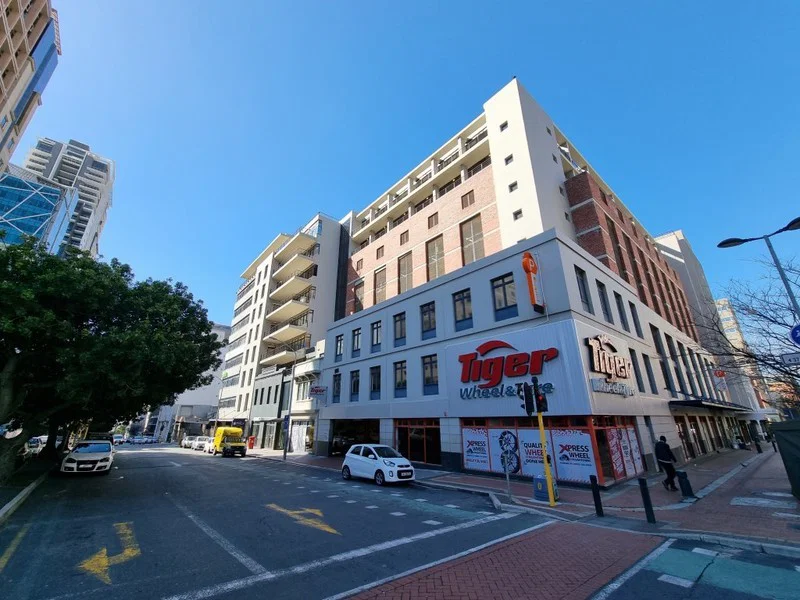
“South Africa’s commercial property sector has entered September 2026 with renewed optimism, as first-time buyers now represent 54.5% of all loan applications, reshaping demand in office, retail, and mixed-use spaces. Stable interest rates and government subsidies are lowering entry barriers, diversifying ownership, and fueling growth across Johannesburg, Cape Town, and Durban.”
The South African commercial real estate market has long been a mirror of the country’s economic confidence, reflecting shifts in consumer demand, investor sentiment, and macroeconomic stability. In September 2026, the sector is undergoing a remarkable transformation: first-time buyers (FTBs) have surged into the market, accounting for 54.5% of all loan applications. This unprecedented trend is reshaping the landscape of office, retail, and mixed-use developments, signaling a democratization of property ownership and a new era of inclusivity in commercial investment.
Interest Rate Stability and Market Confidence
At the heart of this surge lies the South African Reserve Bank’s (SARB) decision to hold the prime lending rate steady at 10.50% and the repo rate at 7.00%. While these rates remain elevated compared to pre-2024 levels, their stability has created a predictable environment for investors and buyers. Developers and institutional investors now have the confidence to plan long-term projects without the fear of sudden financing shocks. Analysts suggest that if inflation continues to ease—currently at 5.5%—a modest rate cut could occur in Q4 2026, further boosting affordability.
This stability has shifted buyer psychology. Instead of waiting for potential cuts, buyers are acting decisively, integrating current rates into their affordability calculations. The “wait-and-see” approach has given way to “buy-when-ready,” particularly in segments where stock is limited.
First-Time Buyers Entering Commercial Real Estate
Traditionally, FTBs have focused on residential properties. However, the current wave of activity is spilling into commercial real estate, particularly small-scale office spaces, retail shops, and mixed-use developments. Government subsidies such as FLISP (Finance Linked Individual Subsidy Program) and the R1.2 million transfer duty exemption have lowered entry barriers, enabling new investors to participate in commercial hubs like Johannesburg, Cape Town, and Durban.
This democratization of ownership is diversifying the investor base, reducing reliance on large institutional players, and fostering community-driven development. For many, commercial property investment is no longer the exclusive domain of wealthy corporations—it is becoming accessible to middle-class entrepreneurs and small business owners.
Regional Hotspots
- Johannesburg: Strong demand for office conversions into mixed-use spaces, driven by hybrid work models and urban regeneration.
- Cape Town: Retail and hospitality-linked commercial properties are thriving, buoyed by tourism recovery and international investment.
- Durban: Logistics and warehousing developments are expanding rapidly, supported by port activity and regional trade flows.
These regional dynamics highlight the diverse opportunities available across South Africa’s major metros, each shaped by unique economic drivers.
Implications for Developers and Investors
The influx of first-time buyers is reshaping the strategies of developers and institutional investors. Smaller, more flexible developments are gaining traction, while large-scale projects are being reimagined to accommodate mixed-use functionality. The emphasis is shifting toward community-driven spaces, where retail, office, and residential components coexist to meet evolving urban needs.
Institutional investors, while still dominant, are now competing with a broader base of smaller entrants. This competition is fostering innovation, with developers exploring sustainable building practices, smart technologies, and adaptable designs to attract diverse buyers.
Risks and Challenges
Despite the optimism, challenges remain. Elevated interest rates, while stable, still pose affordability constraints for some buyers. Inflationary pressures, though easing, could resurface if global energy prices spike. Additionally, infrastructure reliability—particularly electricity supply—remains a critical factor influencing investor confidence.
Conclusion
September 2026 marks a turning point for South Africa’s commercial real estate market. The surge of first-time buyers, supported by stable interest rates and government incentives, is democratizing ownership and reshaping demand across office, retail, and mixed-use spaces. While risks persist, the sector’s renewed optimism signals a more inclusive and dynamic future for commercial property investment in the country.



