




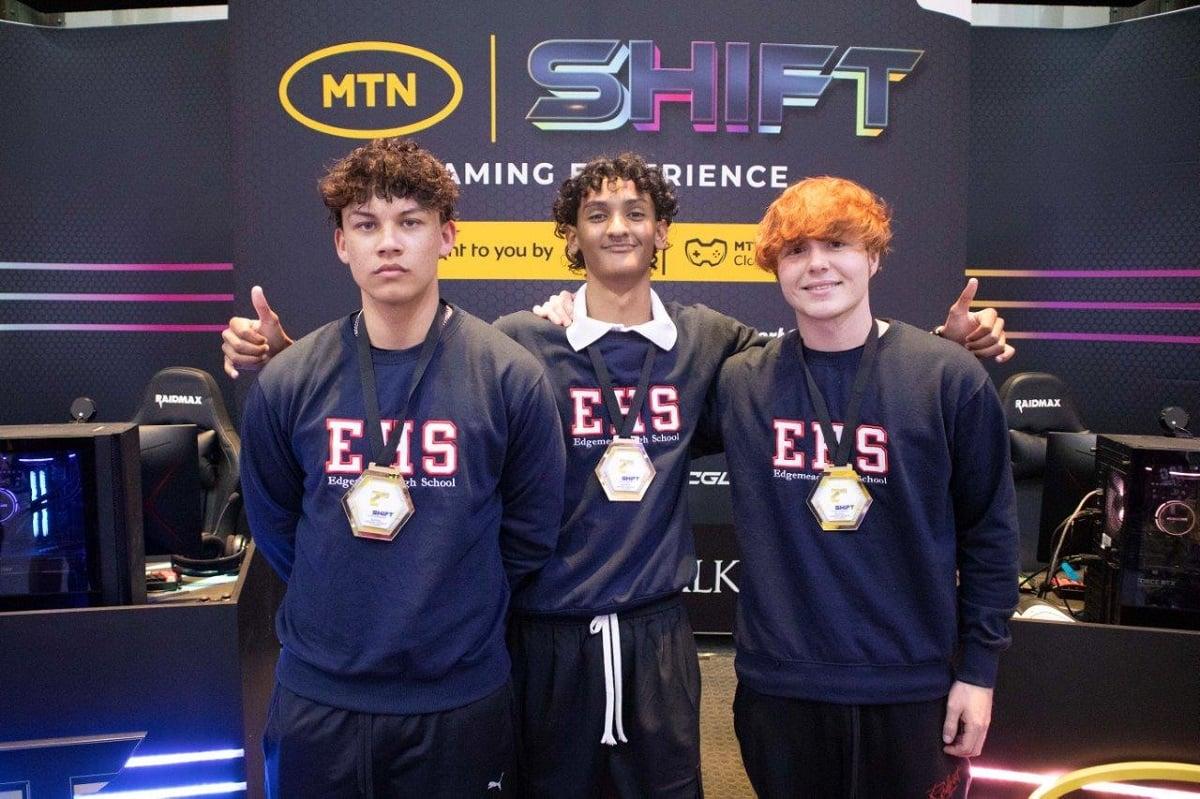
“South African esports is gaining momentum through school competitions, structured tournaments and growing opportunities for young players to pursue competitive gaming, with Curro Durbanville’s Rocket League team emerging as a notable example after winning consecutive championships in 2025 and 2026. Meanwhile, a FIFAe World Cup fixture listing for 21 October features Germany and South Africa, highlighting the country’s continuing involvement in international esports competition.”
South Africa’s Esports Generation Gains Momentum as Young Gamers Target International Competition
South Africa’s competitive gaming industry is creating new opportunities for young people, with school teams, organised tournaments and international competitions helping to establish esports as an increasingly visible part of the country’s sporting landscape. Recent reporting by Eyewitness News on 19 October 2026 highlighted the achievements of young players and the work being done by schools and industry participants to develop emerging talent.
The development reflects a wider change in how competitive video gaming is understood. Once dismissed by some as a recreational pastime, esports increasingly requires structured preparation, tactical awareness, communication, teamwork and the ability to perform under pressure. For South African players, these skills can provide a foundation for competing in organised leagues and pursuing opportunities beyond the school environment.
Young South African gamers demonstrate competitive potential
One of the examples highlighted in the recent reporting is Seth Solomons, a learner at Curro Durbanville High School in Cape Town. Solomons represents CDV Wolves Prime, a three-player team competing in Rocket League, a game that combines football-inspired objectives with fast-moving vehicles and precision-based gameplay.
According to Eyewitness News, the team won consecutive high school championships in 2025 and 2026. Its achievements demonstrate how organised school esports can provide young players with opportunities to develop their skills, compete against other teams and experience the responsibilities associated with representing an institution.
Solomons told the broadcaster that he had been gaming for six years and described putting approximately 1,000 hours into preparation for competitions over a year. His experience challenges the assumption that successful esports participation depends entirely on natural ability or casual gaming.
Like athletes in conventional sports, competitive gamers must develop consistency through practice. They need to understand their chosen game’s mechanics, anticipate opponents’ movements, make decisions quickly and learn from mistakes. In team-based titles such as Rocket League, individual skill must also complement the performance of teammates.
These demands help explain why organised esports can be considered a competitive discipline rather than simply an informal leisure activity.
School programmes strengthen the esports talent pipeline
Schools can play an important role in helping young gamers develop within a more structured environment. They provide opportunities for learners to practise together, receive guidance from coaches or managers, participate in competitions and balance gaming with their educational responsibilities.
Tanya Neethling, esports manager at Curro Durbanville High School, has supported the CDV Wolves’ competitive journey. She told Eyewitness News that the team successfully defended its Rocket League championship after qualifying again in 2026.
The school’s experience illustrates the value of continuity. Rather than relying on isolated gaming sessions, a team can build knowledge over time, establish shared strategies and develop an understanding of each player’s strengths.
Consistent coaching and organised competition may also help learners build transferable skills. Communication, problem-solving, discipline and cooperation are useful in education and future employment, even for those who do not ultimately become professional esports players.
However, participation requires appropriate safeguards. Schools and families need to ensure that gaming commitments remain compatible with schoolwork, physical activity, rest and healthy social development. A successful programme should support the learner as a whole rather than prioritise tournament results at any cost.
Changing perceptions of esports as a sport
Despite the progress of competitive gaming, recognition remains a challenge. Neethling told Eyewitness News that some people still do not regard esports as a legitimate sport, despite the preparation and skill required to compete successfully.
Changing these perceptions may require more public exposure, stronger school programmes and greater understanding of what organised competition involves.
Traditional sports generally have familiar structures, including clubs, coaches, leagues, fixtures and championships. Esports can use comparable structures, although its rules, equipment and physical demands differ depending on the game.
Competitive gaming requires rapid information processing, precise control, tactical decision-making and concentration. Team titles also demand coordinated play, communication and the ability to adjust strategies during a match.
At the same time, esports should not be presented as identical to every traditional sport. Its distinctive demands and risks deserve recognition. Extended screen time, online harassment, equipment costs and access to reliable internet connections can all affect participation.
A balanced approach would recognise competitive achievement while establishing clear standards for fair play, wellbeing and responsible participation.
International competition raises the stakes
South African esports also operates within an international competitive environment. A match listing published by Sheep Esports identifies a FIFAe World Cup 2026 fixture between Team Germany and Team South Africa for 21 October. The listing displays a three-versus-three format and records two previous meetings, both won by Germany 2–0.
This fixture provides a relevant international dimension to the domestic story. While school competitions help introduce players to organised esports, international events expose national teams to different playing styles, stronger opposition and the pressure associated with representing their country.
The available fixture page should be treated carefully: it confirms the listed matchup and historical head-to-head information, but it does not independently establish every detail of the event’s outcome or South Africa’s overall tournament standing.
International opportunities can nevertheless serve as an important benchmark for development. They allow teams and support staff to identify strengths, evaluate weaknesses and understand where further preparation may be required.
For young South African players who aspire to compete professionally, watching and studying international competition can also provide insight into tactical trends, team coordination and the standards expected at higher levels.
Industry support can help develop future talent
The development of esports depends on more than individual players. Schools, tournament organisers, technology providers, sponsors and governing bodies all have potential roles in creating a sustainable competitive environment.
Eyewitness News quoted Johann von Backstrom, Telkom’s senior manager for content and gaming, discussing the importance of grassroots development in strengthening the talent pipeline for larger teams.
The principle is straightforward: when young players have access to regular competition and appropriate guidance, promising participants can gain experience before progressing to more demanding levels.
Sponsors can support this process through tournament funding, equipment, venues, broadcasting and community initiatives. Organisers can provide consistent competition schedules and transparent rules, while schools can help learners participate safely and responsibly.
However, commercial support needs to be matched by meaningful development. A tournament may attract considerable attention, but lasting progress depends on whether players can continue training, access fair competition and find realistic pathways to further participation.
Affordable entry options are particularly important. High-performance computers, gaming peripherals and stable internet connections can be expensive, potentially excluding talented players from lower-income households.
Mobile gaming may provide a more accessible starting point in some communities, although access to suitable devices, data and reliable connectivity remains uneven. Expanding participation will therefore require solutions that reflect the different circumstances of South African learners.
Inclusion offers opportunities for broader participation
Another potential strength of esports is its ability to connect participants across geographical distances. Online competition can allow players from different communities to compete without travelling to the same physical venue for every match.
Neethling highlighted the potential for competitive gaming to offer opportunities for women, children and people with disabilities. Von Backstrom also discussed the diversity of participants in gaming competitions.
These possibilities matter in a country where travel expenses and access to sporting facilities can influence participation in conventional sports.
Nevertheless, online access does not automatically guarantee inclusion. Organisers need to address abusive behaviour, discrimination, accessibility requirements and unequal access to equipment. Tournament rules should provide clear reporting procedures and consistent consequences for misconduct.
For younger participants, safeguarding is especially important. Schools and tournament operators should establish appropriate supervision, privacy protections and communication standards.
If these responsibilities are taken seriously, esports can become a more welcoming environment in which participants are judged on their performance, teamwork and conduct.
Building a sustainable esports future
South Africa’s esports prospects will depend on whether its growing interest can be converted into lasting opportunities.
First, schools and community organisations need sustainable programmes rather than occasional events. Regular competitions give players measurable goals and allow coaches to assess progress.
Second, the industry needs transparent development pathways. Players should understand how school competitions, local leagues and national selection opportunities relate to one another, while recognising that pathways vary by game and organiser.
Third, tournament organisers should continue improving the quality of competition through clear rules, reliable scheduling, responsible administration and accessible information for participants.
Finally, parents, educators and sponsors need a realistic understanding of esports careers. Professional competition can be demanding and highly selective. Related opportunities may also exist in coaching, event management, broadcasting, content production, game development and tournament operations, but these careers require their own skills and experience.
Conclusion
South African esports is developing through the combined efforts of young competitors, schools, organisers and industry supporters. The achievements of Curro Durbanville’s Rocket League team demonstrate the potential of structured school competition, while the Germany–South Africa FIFAe World Cup fixture illustrates the international setting in which national players compete.
The next stage will require consistent investment, broader access, responsible participation and credible development pathways. If those foundations strengthen, esports can offer South African young people more than competition alone: it can provide opportunities to develop skills, build communities and explore careers in a growing digital industry.



