




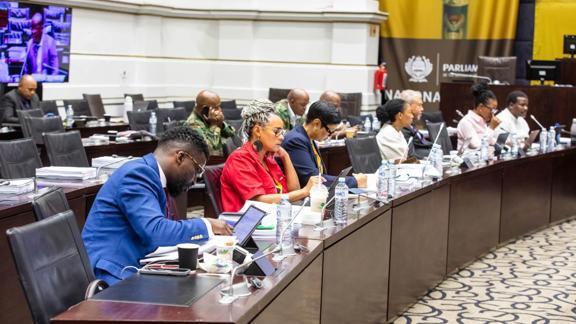
“South Africa’s Executive Members’ Ethics Amendment Bill 2026 reaches its public-comment deadline on 2 October, with civil society organization Outa calling for investigations into ministers and MECs to continue even when they leave office, are dismissed or are reshuffled. The proposed legislation seeks to strengthen executive ethics, clarify investigative procedures, improve financial-interest disclosures and define consequences for breaches of the executive ethics framework.”
South Africa’s debate over executive accountability has moved into a new stage as the public-comment period for the Executive Members’ Ethics Amendment Bill 2026 reaches its closing date on 2 October. The Organization Undoing Tax Abuse (Outa) has urged lawmakers to make clear that an ethics investigation should not end merely because a minister, deputy minister or MEC resigns, is dismissed, reshuffled or moves to another public office.
The bill proposes amendments to the Executive Members’ Ethics Act of 1998. According to the government, the legislation is intended to strengthen ethical standards and accountability, clarify the Public Protector’s role and improve the management of conflicts of interest and improper use of public office. The current draft also deals with procedures for reporting and investigating ethics breaches, sanctions, and financial-interest disclosures.
The immediate significance of the legislation is that it is moving through the public-participation stage. The Department of Justice and Constitutional Development published the draft amendment bill for public comment on 31 August 2026, with submissions due on 2 October. That means comments received by the deadline can form part of the process through which government and Parliament consider whether changes are needed before the legislation advances further.
Outa’s submission focuses on continuity of investigations. The organization argues that a change in an official’s employment status should not erase questions about conduct allegedly committed while that person was in office. It has called for an explicit provision allowing an investigation to continue after an executive member leaves office or is appointed to another public position.
This issue concerns a practical gap in accountability. Ministers and MECs can change portfolios, leave government or be replaced, while investigations can take time to complete. If the legal framework is unclear about what happens when an official’s status changes, questions can arise over who remains responsible for completing the investigation, reporting the findings and determining whether consequences should follow.
The proposed amendment is therefore not simply about individual office bearers. It concerns the institutional process for handling allegations against members of the national and provincial executive. Under the existing Executive Members’ Ethics Act, the Executive Ethics Code provides standards for conduct, including requirements relating to integrity, conflicts of interest and financial disclosures. The Presidency has previously described the law as providing a legislative basis for ethical conduct by members of the Executive.
The draft amendment bill seeks to make enforcement arrangements more explicit. The legislation provides for procedures under which ethics breaches can be reported to the Public Protector, sets out how investigations and reports should be handled, and establishes arrangements for investigative findings to be tabled before Parliament or provincial legislatures. It also provides for sanctions and legal consequences where an executive official is found to have breached the code.
Financial disclosure is another important part of the proposed changes. The framework is intended to strengthen the management and verification of financial interests declared by ministers, deputy ministers and MECs. The underlying purpose is to reduce conflicts between public responsibilities and private interests and to prevent public office from being used for improper personal benefit.
The legislation comes after years of public debate about standards for senior political office holders. Parliament itself has been reviewing ethical rules and disclosure arrangements. In June 2026, Parliament’s Joint Committee on Ethics and Members’ Interests said it had completed public participation on the review of Parliament’s Code of Ethical Conduct and Disclosure of Members’ Interests and the Executive Ethics Code. The committee said submissions would inform its consideration of possible revisions.
Outa has connected its concerns to cases in which public officials have resigned, been dismissed or been moved while facing allegations or investigations. However, those examples should not automatically be interpreted as proof that any particular official left office to avoid scrutiny. The question raised by the organisation is instead whether the law should guarantee that an investigation continues regardless of subsequent changes in office.
The case of suspended Police Minister Senzo Mchunu has also been cited by Outa as an example of the broader accountability debate. Mchunu has denied allegations of political interference in policing and links to criminal networks. Outa says the controversy demonstrates the importance of timely and transparent processes when serious allegations involve executive members. At the same time, allegations remain allegations unless established through the appropriate investigative, parliamentary or judicial processes.
The draft bill’s treatment of the Public Protector is significant because that office already plays a constitutional role in investigating improper conduct in state affairs. The proposed legislation seeks to clarify how ethics complaints involving executive members are reported, investigated and communicated. Clear procedures could reduce uncertainty about institutional responsibilities and timelines.
There is also a distinction between an ethics investigation and a criminal investigation. An ethics process can examine whether an office bearer complied with prescribed standards of conduct, conflicts-of-interest rules and disclosure requirements. Criminal matters, by contrast, are dealt with under criminal law and through the relevant law-enforcement and prosecutorial institutions. A finding in one process does not automatically establish guilt in another.
For the public, the central issue is therefore procedural fairness as well as accountability. Any strengthened system needs to ensure that allegations are investigated consistently, that officials have an opportunity to respond, and that findings are communicated through lawful channels. At the same time, the public interest in knowing whether serious complaints were properly addressed remains an important consideration in democratic oversight.
The timing of the public-comment deadline makes this an important stage in the bill’s development. Publication for comment does not mean the proposals are already law. Public submissions can identify drafting problems, unintended consequences, constitutional concerns or practical difficulties. Government and Parliament can consider those views before deciding how the legislative process should proceed.
South Africa’s constitutional system requires public participation in lawmaking. Parliament’s own public-participation statements have emphasised that consultation is intended to improve legislation and strengthen confidence in democratic institutions. The ethics bill is consequently part of a wider process in which government, Parliament, civil society and members of the public can examine the proposed rules before final decisions are made.
The bill also raises questions about sanctions. Rules are more meaningful when there are clear consequences for established breaches, but sanctions must be applied through defined procedures and consistent standards. The proposed framework seeks to codify permissible consequences where an executive member is found to have breached the ethics code. How those provisions are ultimately drafted will determine how effectively the system balances deterrence, due process and institutional accountability.
As the 2 October deadline closes, the next steps will depend on the handling of public submissions and the subsequent legislative process. The draft can be revised, debated and subjected to further constitutional and parliamentary scrutiny before it can become law. Parliament’s official process notes that a bill must pass through the relevant parliamentary stages, including consideration by the Houses, before being sent to the President for assent.
The Executive Members’ Ethics Amendment Bill therefore remains a proposal rather than an enacted law. Its current public-comment stage allows stakeholders to examine the details and propose changes. The main legislative question is whether the final framework can provide clear, enforceable and constitutionally sound rules that preserve both accountability and procedural fairness.
For South Africans, the debate is about how institutions respond when questions are raised about the conduct of people entrusted with executive power. A system that records complaints, completes investigations, tables findings where required, and applies established consequences can provide greater certainty for officials and the public. The bill’s progress will show how lawmakers respond as the country refines its framework for accountable democratic government in South Africa.



