




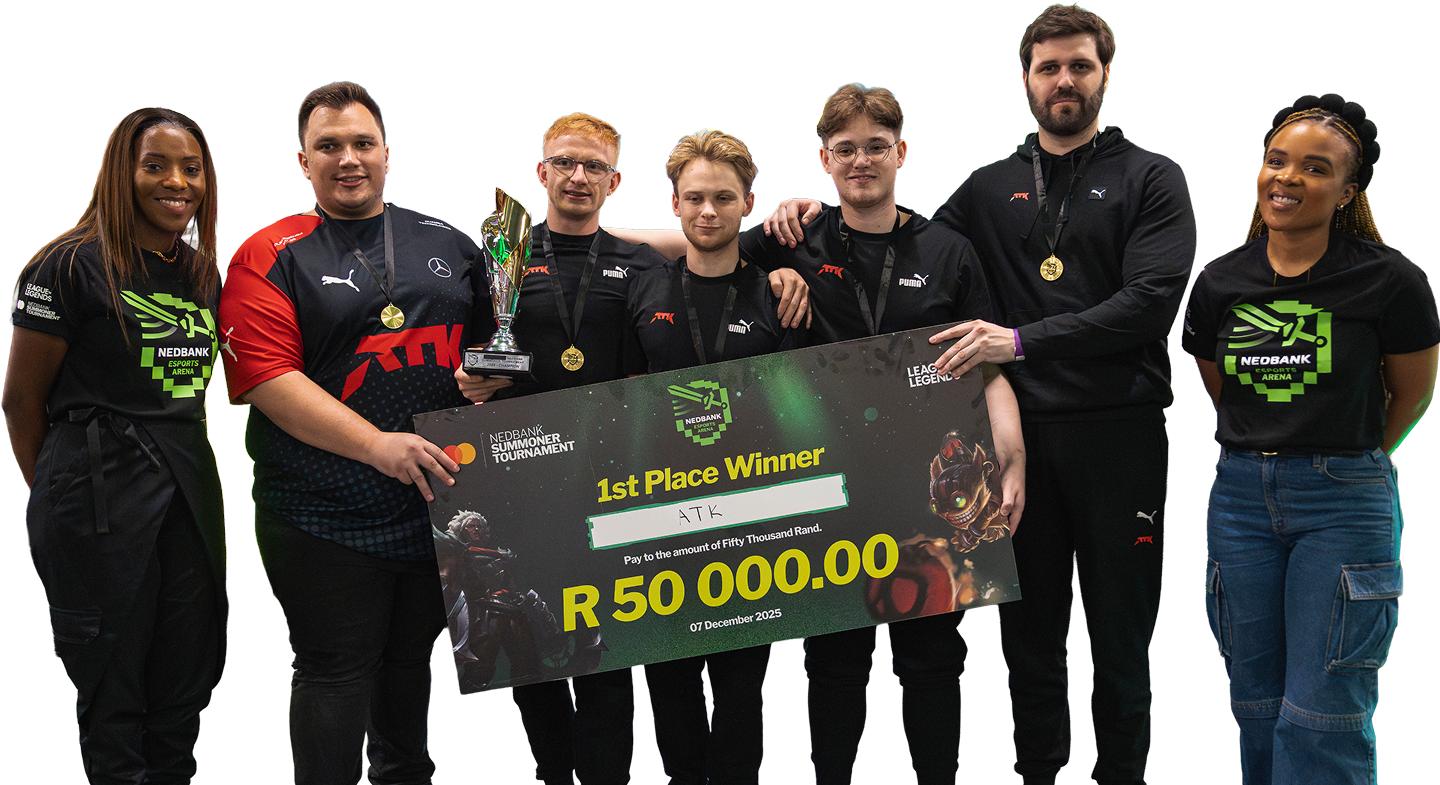
“South Africa’s competitive gaming scene is preparing for the Nedbank Mastercard Summoner Tournament 2026, a national League of Legends competition offering R100,000 in prize money and culminating in live finals at rAge Nation in Johannesburg. The tournament provides amateur teams with an opportunity to compete for substantial rewards, gain exposure and participate in one of the country’s major gaming festivals.”
South Africa’s R100,000 League of Legends Tournament Builds Momentum Ahead of rAge Nation 2026 Finals
South Africa’s esports industry is entering another exciting period as competitive gaming continues to attract players, sponsors and audiences across the country. Among the most important developments is the Nedbank Mastercard Summoner Tournament 2026, a national League of Legends competition offering R100,000 in prize money and providing amateur teams with an opportunity to compete on a major live-event stage.
The tournament, organised through the Mettlestate competitive gaming ecosystem and supported by Nedbank and Mastercard, is building on the success of its previous edition. Its return highlights growing investment in South African esports and the increasing importance of structured competitions that allow talented players to develop their skills and compete for meaningful rewards.
With qualifying competitions taking place during November and the final tournament scheduled for rAge Nation 2026, the event represents an important moment for local competitive gaming.
A major opportunity for South African League of Legends teams
The Nedbank Mastercard Summoner Tournament is designed to give local League of Legends players a competitive pathway from online participation to live tournament competition.
League of Legends is one of the world’s most established multiplayer online battle arena games. Its competitive format requires teams to combine strategic planning, communication, mechanical skill and coordinated decision-making.
South African players participating in the tournament must therefore demonstrate much more than individual gaming ability. Success depends on developing effective team strategies, understanding opponents and maintaining discipline throughout matches.
The tournament’s R100,000 prize pool is particularly significant for amateur esports competitors. It provides financial recognition for teams that invest time in training, preparation and competitive development.
According to tournament information published by Nedbank Esports Arena, the prize distribution rewards the four highest-placing teams.
The winning team receives R50,000, equivalent to R10,000 per player across a five-member roster. The runners-up receive R25,000, while third and fourth positions earn R15,000 and R10,000 respectively.
Nedbank Esports Arena+1
This distribution ensures that several teams receive meaningful financial rewards rather than concentrating the entire prize pool on one champion.
Online qualifiers create a pathway to the national finals
The tournament’s qualifying structure provides opportunities for teams to compete online before advancing to the live finals.
The competition includes two qualifying weekends, allowing participating squads to fight for places in the final four.
The first qualifier took place on 7–8 November, while the second is scheduled for 14–15 November 2026. The top two teams from each qualifying competition advance to the finals at rAge Nation.
This structure creates an accessible competitive environment for teams that may not have the resources to travel immediately to major gaming events.
Online competition also allows organisers to reach players across different parts of South Africa. Teams can participate from their own gaming environments while competing against opponents from other regions.
For amateur players, the opportunity to qualify for a live tournament is particularly valuable because it provides exposure to a different competitive atmosphere.
The final four teams will compete in a double-elimination format, giving participants more than one opportunity to remain in contention after an initial defeat.
The finals are scheduled for 27–29 November at rAge Nation, hosted at Fourways Mall in Johannesburg.
rAge Nation provides a major esports stage
The tournament’s association with rAge Nation adds considerable importance to the competition.
rAge has established itself as a major South African gathering for gaming, technology, digital entertainment and geek culture. Its evolution into rAge Nation continues to bring competitive gaming and broader entertainment experiences together.
The 2026 event is scheduled for three days, from 27 to 29 November, at Fourways Mall in Johannesburg.
For participating esports teams, the venue offers an opportunity to compete in front of spectators rather than exclusively online audiences.
Live competition introduces additional pressures. Players must manage nerves, communicate effectively and maintain concentration while spectators observe their decisions.
These experiences can contribute to player development and provide valuable preparation for future tournaments.
The wider festival also creates opportunities for visitors who are interested in esports but do not necessarily participate competitively.
Audiences can experience live gaming, interact with gaming communities, explore technology demonstrations and observe competitions featuring different titles.
The tournament therefore contributes to a broader esports culture that includes players, spectators, organisers and industry partners.
Sponsorship continues to support competitive gaming
The participation of Nedbank and Mastercard illustrates the role that commercial partnerships increasingly play in esports development.
Sponsors can provide financial resources, promotional opportunities and infrastructure that help competitions reach larger audiences.
For tournament organisers, sponsorship can support prize pools, production, online broadcasts and live-event activities.
For players, these partnerships can improve the quality and visibility of competitive opportunities.
Nedbank’s involvement also connects esports with a broader audience interested in entertainment, technology and digital culture.
The bank’s gaming initiative, the Nedbank Esports Arena, provides a platform for tournaments, gaming rewards and community engagement.
The arena promotes competitive participation and aims to connect South African gamers with organised activities and gaming-related services.
Its tournament programme demonstrates how commercial platforms can support amateur competition while creating opportunities for players to engage with gaming communities.
According to Nedbank’s published tournament information, the 2026 Summoner Tournament continues the initiative established during the previous year.
Competitive gaming requires teamwork and strategic preparation
League of Legends competitions demand detailed preparation.
Teams must develop strategies for different game situations, understand the strengths and weaknesses of available champions and coordinate their actions throughout matches.
The tournament’s Fearless Draft format adds another strategic dimension.
Under this format, champions already selected during a series cannot be selected again by either team for subsequent games in that series.
This encourages players to develop broader champion pools and prevents teams from relying exclusively on a small number of preferred characters.
It also places greater emphasis on flexibility, preparation and strategic creativity.
Teams must anticipate how their choices will influence later matches and adjust their plans accordingly.
Competitive preparation may include reviewing previous games, analysing opponents, practising communication and refining team coordination.
These activities demonstrate that esports requires structured training and collective discipline.
South African esports continues to develop
The Nedbank Mastercard Summoner Tournament forms part of a wider competitive gaming environment in South Africa.
Organisers such as Mettlestate, community platforms and tournament partners continue to create opportunities for players across several titles.
The country’s esports ecosystem includes competitions in League of Legends, Counter-Strike, Valorant, EA SPORTS FC, Rocket League, fighting games and mobile esports.
These different communities contribute to the diversity of South African competitive gaming.
The ZA Esports Hub also provides infrastructure for tracking tournaments, teams, players and competitive histories across multiple games.
Its platform aims to connect communities and provide greater visibility for tournament participation and results.
Such initiatives are important because esports development depends on more than individual competitions.
Players need regular opportunities to compete, organisers require sustainable structures and audiences need accessible information about tournaments.
A connected competitive environment can help improve participation and create stronger relationships between different gaming communities.
EA SPORTS FC also demonstrates South African talent
Another notable esports development during November was the Red Bull Wings Cup South African National Final.
Goliath Gaming’s Zaid April won the competition at Loftus Versfeld in Pretoria on 1 November 2026.
He defeated Ubaid Mahomed 9–1 on aggregate in the final, securing the national championship and qualification for the international World Final in Miami in early 2027.
The tournament featured 16 players who advanced through qualifying competitions and wildcard opportunities.
April’s achievement demonstrates the competitive depth developing within South African football esports.
His success also highlights how local players can progress from domestic competitions to international opportunities.
The Red Bull Wings Cup and Nedbank Mastercard Summoner Tournament represent different competitive formats, but both illustrate the growing availability of organised esports opportunities in South Africa.
rAge Nation will bring different gaming communities together
Beyond the League of Legends finals, rAge Nation 2026 is expected to feature competitions and activities across several gaming communities.
Published festival coverage identifies planned Call of Duty activities, Mettlestate’s Kasi Flare and Varsity Esports finals, and school-level competitions.
These activities are particularly important because esports participation extends beyond established professional players.
Schools, universities, township gaming communities and amateur teams all contribute to the growth of competitive gaming.
The presence of different competition levels can encourage younger players to develop their interests and discover pathways into organised esports.
It also allows experienced players to engage with new audiences and demonstrate the possibilities of competitive gaming.
The festival’s broader programme includes technology experiences, cosplay, creator activities and gaming entertainment.
As a result, esports becomes part of a wider cultural event rather than an activity limited to dedicated competitive players.
Opportunities and challenges facing South African esports
Despite continued growth, esports in South Africa faces several important challenges.
Access to reliable internet connectivity, gaming equipment and suitable training environments remains uneven.
Players who lack access to high-performance computers or stable connections may find it difficult to compete consistently.
Travel costs can also create barriers when online qualifiers lead to live finals in major cities.
For developing players, balancing education, employment and competitive gaming requires careful planning.
These challenges highlight the importance of accessible tournaments, community gaming facilities and partnerships that support participation.
Organisers can contribute by offering online qualifiers, transparent competition rules and opportunities for players from different backgrounds.
Sponsors can also help expand access by supporting grassroots competitions and development initiatives.
The road ahead for competitive gaming
The upcoming Nedbank Mastercard Summoner Tournament finals will provide an important opportunity to assess the strength of South African amateur League of Legends competition.
The four qualifying teams will compete for the national title and a share of R100,000 in prize money.
Their performances will also help showcase the strategic depth and competitive quality of local players.
Beyond the immediate tournament, the event contributes to a larger conversation about the future of esports in South Africa.
Competitive gaming continues to attract participants who see esports as a serious hobby, a competitive pursuit or a potential professional pathway.
With tournaments, sponsorships, community platforms and live gaming festivals developing together, the local ecosystem has opportunities to become more structured and accessible.
The success of these initiatives will depend on continued investment, effective organisation and meaningful participation from players and audiences.
Conclusion
South Africa’s esports industry continues to demonstrate growing competitive ambition through tournaments such as the Nedbank Mastercard Summoner Tournament 2026.
The R100,000 League of Legends competition provides amateur teams with financial incentives, competitive experience and an opportunity to perform on a major live-event stage.
Its connection to rAge Nation strengthens the relationship between esports competition and South Africa’s wider gaming culture.
Together with developments in EA SPORTS FC and other competitive titles, the tournament highlights the country’s expanding esports opportunities.
As the November finals approach, attention will turn to the teams competing for the championship and the future opportunities created by their performances.
South African esports is increasingly becoming a structured competitive environment in which players, organisers, sponsors and gaming communities can contribute to a growing national scene.



