




“South Africa’s young athletics team delivered a historic performance at the Dakar 2026 Youth Olympic Games, securing six medals and helping Team South Africa achieve its highest-ever Youth Olympic medal tally of 11. Megan Nieman and Matao le Roux led the athletics campaign with gold medals, while Milan Blignaut, John-Pierre Theron, Enrique Bosch and Darius Botha also secured podium finishes, highlighting the growing strength of the country’s emerging athletics talent.”
South Africa’s Young Athletics Stars Make History With Six Medals at Dakar 2026 Youth Olympic Games
South Africa’s athletics programme has celebrated one of its most significant achievements in youth international competition after the national team secured six medals at the Dakar 2026 Youth Olympic Games in Senegal. The outstanding performances contributed substantially to Team South Africa’s historic overall medal tally of 11, establishing a new national record at the Youth Olympic Games.
The three-day athletics programme concluded on Tuesday, 10 November, with South African athletes delivering impressive performances across track and field disciplines. According to Athletics South Africa (ASA), all 10 South African athletics competitors finished among the top five in their respective events, demonstrating the depth of the country’s emerging talent.
The achievements represent an encouraging development for South African athletics, particularly as the country continues investing in young athletes, competitive opportunities and pathways towards senior international representation.
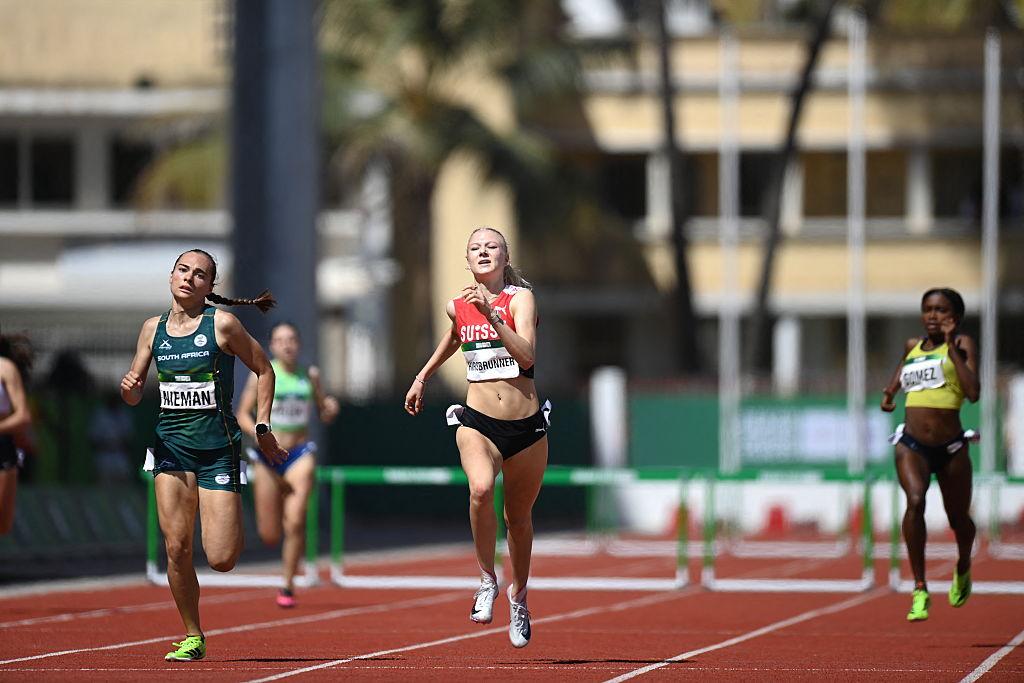
Megan Nieman Delivers Dramatic Gold Medal Victory
One of the defining moments of South Africa’s campaign came through Megan Nieman, who won the girls’ 400-metre hurdles final in a dramatic finish.
The 17-year-old Pretoria athlete crossed the line in 57.75 seconds, narrowly defeating Switzerland’s Mina Hirsbrunner, who finished in 57.84 seconds. Colombia’s Michell Gómez claimed third place in 58.90 seconds.
Nieman’s victory was particularly remarkable because she encountered difficulties approaching the final hurdle. Despite almost losing her balance, the South African athlete recovered quickly and launched a determined challenge during the closing metres.
With approximately 50 metres remaining, Nieman was trailing her Swiss opponent. However, she demonstrated exceptional determination and speed to close the gap before producing a decisive finish.
The victory earned Nieman the gold medal and made her Team South Africa’s first female gold medallist at the Dakar Youth Olympic Games.
Her performance also helped South Africa surpass its previous Youth Olympic medal record, which had stood at nine medals since the 2010 Games in Singapore.
Nieman expressed enormous pride following her victory, acknowledging the difficult final hurdle and the determination required to secure the gold medal. She also thanked her family, coaches, teammates and medical personnel for supporting her athletic journey.
The achievement represents an important milestone in her developing career.
Having previously competed at the African Youth Games and World Junior Championships, Nieman has steadily established herself as one of South Africa’s promising young hurdle athletes.
Her success in Dakar provides valuable international experience while strengthening her prospects of future participation in senior competitions.
Matao le Roux Secures High Jump Gold
South Africa’s second athletics gold medal came through Matao le Roux, who produced an outstanding performance in the boys’ high jump.
The Western Cape athlete cleared 2.16 metres to secure the championship title, overcoming strong international opposition.
Le Roux’s performance was especially significant because South Africa had not previously enjoyed substantial success in the high jump at the Youth Olympic Games.
His gold medal demonstrated the country’s growing competitiveness in field events, complementing its established reputation for producing talented middle-distance runners, sprinters and long-distance athletes.
The achievement also highlighted the importance of technical coaching and athlete development programmes capable of identifying talent beyond traditional athletics disciplines.
High jump requires a combination of speed, coordination, explosive power and technical precision. Consequently, Le Roux’s success reflects the effectiveness of his preparation and competitive development.
His victory represents another encouraging example of South Africa’s emerging generation making its presence felt on the international athletics stage.
Milan Blignaut Adds Silver in Women’s High Jump
Milan Blignaut contributed another memorable moment to the South African campaign after securing silver in the girls’ high jump.
The 17-year-old athlete cleared 1.74 metres, finishing behind Kuwait’s Yasmeen Roy, who achieved 1.76 metres.
Blignaut’s medal completed an impressive high jump campaign for South Africa, following le Roux’s gold medal earlier in the competition.
The result demonstrated the country’s growing strength in a discipline requiring considerable technical development and physical preparation.
Blignaut expressed surprise and happiness at securing an international medal, describing the achievement as one of the most memorable moments of her sporting journey.
Her success could provide additional motivation for young athletes considering participation in field events, particularly high jump.
Furthermore, the performances by Blignaut and le Roux demonstrate the importance of supporting athletes across different disciplines rather than concentrating exclusively on track competitions.
John-Pierre Theron Wins Silver in Hammer Throw
South Africa also celebrated success in the boys’ hammer throw through John-Pierre Theron.
Theron secured silver with a throw of 71.79 metres, adding another field-event medal to the country’s impressive campaign.
Hammer throw requires considerable strength, balance, rotational coordination and technical precision. Athletes must maintain control while accelerating the hammer through multiple rotations before releasing it at the correct angle.
Theron’s performance therefore represents an important achievement for South African throwing disciplines.
His silver medal also demonstrates that the national athletics development system continues producing competitive athletes across a broader range of events.
For young throwers in South Africa, the result offers an encouraging example of how dedication, structured coaching and international competition can produce significant rewards.
Enrique Bosch and Darius Botha Complete the Medal Collection
South Africa’s remaining two athletics medals came through Enrique Bosch and Darius Botha.
Bosch secured bronze in the boys’ 110-metre hurdles after clocking 13.45 seconds.
His performance demonstrated the country’s continuing strength in sprint hurdles, a discipline requiring explosive acceleration, precise rhythm and technical efficiency between barriers.
Botha also earned bronze after producing a throw of 19.23 metres in the boys’ shot put final.
The medal provided further evidence of South Africa’s competitiveness in throwing events.
Together, Bosch and Botha completed the country’s six-medal athletics collection, ensuring that the team achieved podium finishes across several different disciplines.
Their achievements also contributed to a successful competition for the national squad, with all 10 athletics participants finishing within the top five.
South Africa Establishes a New Youth Olympic Record
The six athletics medals played a central role in Team South Africa’s historic performance in Dakar.
Across all sports, South Africa finished the Youth Olympic Games with 11 medals, surpassing its previous record of nine medals achieved at Singapore 2010.
The final national tally included three gold medals, five silver medals and three bronze medals.
Athletics contributed three gold and three silver or bronze medals, making it one of the most successful sports within the national delegation.
The wider Team South Africa campaign also included achievements in swimming, rugby sevens and rowing.
The record-breaking performance provides an encouraging indication of the country’s sporting development and the potential of its younger athletes.
However, medal totals alone do not fully capture the importance of the campaign.
The international exposure, competitive experience and opportunities to perform against athletes from different countries provide important benefits for young competitors preparing for future championships.
Strong Performances Beyond the Podium
South Africa’s athletics success extended beyond its six medal winners.
Several other athletes produced competitive performances and narrowly missed podium finishes.
Lara Stander finished fourth in the girls’ 1500 metres in 4:31.50, while Jacobus van der Merwe placed fourth in the boys’ javelin with a throw of 64.29 metres.
Shiloh Snijders also finished fourth in the girls’ discus after recording 41.58 metres.
Janelle Kirkpatrick completed the campaign with fifth place in the girls’ 100-metre hurdles in 13.78 seconds.
Although these athletes did not secure medals, their performances demonstrate the competitive quality of the South African squad.
Finishing among the top five at an international competition represents valuable experience and establishes a foundation for further development.
The results also highlight the importance of maintaining support for athletes who narrowly miss podium positions.
With appropriate coaching, training opportunities and competition exposure, these competitors could potentially progress towards future international success.
Importance for South African Athletics Development
The Dakar results provide an important opportunity for South African athletics administrators, coaches and development programmes to evaluate the country’s progress.
Youth competitions serve as critical stages in the transition between school athletics and senior international competition.
Athletes require consistent training environments, experienced coaches, access to facilities, medical support and opportunities to participate in high-level competitions.
Consequently, the achievements in Senegal should encourage continued investment in development programmes throughout South Africa.
Schools, athletics clubs, provincial associations and national governing structures all have important roles in identifying and supporting emerging talent.
Additionally, broader participation opportunities could help strengthen the national talent pool.
Developing athletics programmes in rural communities, townships and historically underserved areas would enable more young people to participate in organised sport.
The success of South African athletes in Dakar also demonstrates the potential benefits of providing competitive opportunities for young women.
Nieman and Blignaut’s performances offer particularly important examples of female athletes achieving international recognition.
Their achievements could encourage greater participation among girls while supporting efforts to improve representation in elite athletics.
Dakar 2026 Provides a Foundation for Future Success
The Dakar Youth Olympic Games represented a significant sporting milestone because they were held in Africa for the first time.
For South African athletes, competing on the continent provided an opportunity to represent their country in an international sporting environment while gaining valuable experience.
The competition also offered exposure to different racing strategies, technical approaches and levels of athletic performance.
Such experiences can contribute to long-term development when supported by appropriate training and preparation.
Nevertheless, maintaining progress will require more than celebrating medals.
South Africa’s athletics structures must continue supporting athletes after major competitions, ensuring that young competitors receive guidance throughout their transition towards senior athletics.
The challenge will be to convert promising youth performances into sustainable success at African Championships, World Athletics competitions, Commonwealth Games and Olympic events.
Conclusion
South Africa’s six-medal athletics performance at the Dakar 2026 Youth Olympic Games represents a significant achievement for the country’s emerging sporting generation.
Megan Nieman’s dramatic 400-metre hurdles victory, Matao le Roux’s high jump gold and the additional medals secured by Milan Blignaut, John-Pierre Theron, Enrique Bosch and Darius Botha demonstrated the depth and potential of South African athletics.
With all 10 athletes finishing among the top five, the campaign provided evidence of competitive strength across track and field disciplines.
More importantly, the achievements offer encouragement for the continued development of young athletes throughout the country.
South Africa’s record-breaking 11-medal overall tally will be remembered as an important milestone. However, the lasting significance of Dakar 2026 will depend on how effectively the country supports its emerging athletes in the years ahead.
For South African athletics, the message from Dakar is clear: the next generation is emerging, and its international achievements provide a promising foundation for future success.



