




“A parliamentary response has put the estimated cost of renovating South Africa’s embassy buildings and other foreign properties at R830 million, with major amounts associated with properties in the United Kingdom and the Netherlands. The disclosure has renewed debate over the management of South Africa’s diplomatic property portfolio, the allocation of the Department of International Relations and Cooperation (DIRCO) budget, and the role of foreign policy in supporting the country’s economic and strategic interests.”
South Africa’s diplomatic property costs come under political scrutiny
South Africa’s management of its diplomatic properties abroad has become the subject of renewed political and policy scrutiny after a parliamentary question revealed that the estimated cost of renovations to embassy buildings and other foreign assets has reached approximately R830 million.
The figure was disclosed in a response to a parliamentary question directed to International Relations and Cooperation Minister Ronald Lamola. The Democratic Alliance (DA), which published the information on 27 September 2026, said the response was based on condition reports covering three years. According to the party, the estimated renovation requirement includes approximately R170 million for South African foreign assets in the United Kingdom and R110 million for properties in the Netherlands.
The disclosure is significant because diplomatic buildings are not simply ordinary government properties. Embassies, high commissions and consulates are physical representations of the South African state abroad. They provide diplomatic services, consular assistance, trade and investment support, political engagement and, in some cases, services to thousands of South African citizens living or travelling overseas.
The scale of the reported renovation requirement therefore raises a broader policy question: how should South Africa balance the cost of maintaining its international diplomatic infrastructure with other competing foreign-policy and domestic priorities?
A problem that has been raised before
The latest disclosure does not appear in isolation. Parliamentary oversight documents have previously recorded concerns about the condition of South Africa’s foreign properties and the resources available for maintaining them.
A parliamentary document from May 2026 recorded concerns that embassies were in poor condition and that budget pressures affecting DIRCO could undermine South Africa’s international representation. The document also records questions about how the department measures the economic results of diplomatic activity, including whether diplomatic engagements generate export contracts, investment opportunities, jobs and market access.
Those concerns provide important context for the latest R830 million figure.
The issue is therefore not simply whether government should renovate buildings. It also involves how government plans and maintains public assets over the long term.
When maintenance is postponed, the eventual repair bill can become considerably larger. A government may save money in the short term by delaying repairs, but deteriorating buildings can eventually require major refurbishment, temporary relocation of staff or emergency interventions.
The policy challenge is to determine whether South Africa’s diplomatic property strategy has sufficiently prioritised preventative maintenance, asset management and long-term planning.
The London and Netherlands properties
The United Kingdom and Netherlands figures highlighted in the parliamentary response are particularly significant because both countries are important diplomatic and economic partners for South Africa.
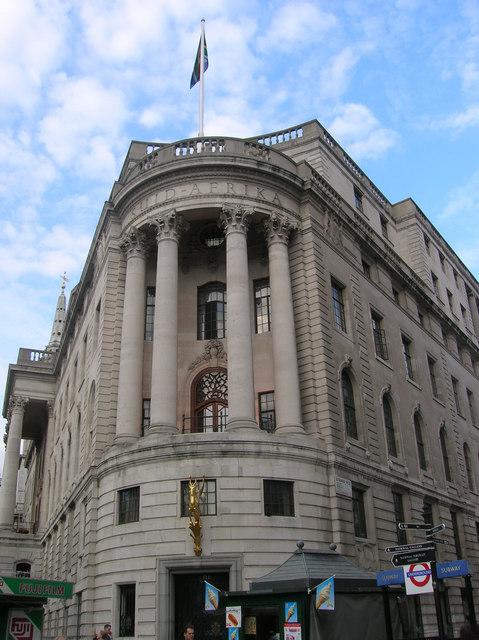
South Africa House in London is a prominent diplomatic property located at Trafalgar Square and serves as the headquarters of the South African High Commission in the United Kingdom. The DA’s latest statement places the estimated renovation requirement for South African foreign assets in the UK at about R170 million.
The Netherlands figure is estimated at approximately R110 million.
These costs illustrate the financial consequences associated with maintaining large and historically significant diplomatic properties. At the same time, they raise questions about whether government should continue owning particular properties, renovate them, sell surplus assets or consider alternative accommodation arrangements.
South Africa has previously discussed the management of its foreign property portfolio. In a 2022 budget speech, DIRCO said the department had 127 state-owned properties abroad and had planned accelerated renovation, repair and maintenance work based on condition assessments. The department also identified properties for possible disposal and discussed constructing properties in selected locations to reduce rental costs.
That history suggests that the current debate is part of a longer-running property-management challenge.
Foreign policy and economic diplomacy
The condition of diplomatic properties is also connected to a wider question about what South Africa expects its foreign policy to achieve.
In his 2026 budget vote speech, Minister Lamola said South Africa’s foreign policy should contribute to inclusive economic growth, poverty reduction, sustainable development, peace and security. He specifically described economic diplomacy as a mechanism through which foreign policy can support domestic economic objectives.
That approach makes the effective operation of embassies potentially important beyond traditional diplomatic functions.
South African missions abroad can help companies identify foreign markets, facilitate government-to-government engagement, promote tourism, support investment discussions and assist exporters. They can also provide consular services to South African citizens and support bilateral relations.
Parliamentary oversight has therefore raised the question of whether diplomatic missions should have stronger performance measures related to economic outcomes.
The May 2026 parliamentary document records proposals that embassies could operate more strongly as economic platforms, with diplomatic performance connected to investment, trade and job creation.
This creates a policy dilemma. Embassies require adequate funding to operate effectively, but government also needs evidence that expenditure produces public value.
Political disagreement over spending priorities
The R830 million figure has already become part of a wider political disagreement.
The DA argues that deteriorating foreign properties demonstrate inadequate prioritisation within DIRCO. The party has called for greater emphasis on maintaining diplomatic infrastructure and strengthening the economic role of South Africa’s foreign service. These are political claims made by the opposition party and should be distinguished from the factual disclosure contained in the parliamentary response.
The government’s position requires consideration separately from the DA’s interpretation.
DIRCO’s official policy position has emphasised economic diplomacy and the use of foreign relations to support South Africa’s domestic development objectives. In its 2026 budget vote, the department said foreign policy should support economic growth, poverty eradication and sustainable development.
The central policy question is therefore not necessarily whether South Africa should maintain diplomatic properties, but how it should manage them efficiently and transparently.
What the R830 million figure means for taxpayers
A renovation requirement of R830 million represents a substantial potential public expenditure. However, an estimated renovation cost should not automatically be interpreted as an amount that will be spent immediately or in full.
The final expenditure could depend on detailed engineering assessments, procurement processes, project prioritisation, available appropriations and decisions about whether individual properties should be renovated, sold, replaced or leased.
That distinction is important when assessing the figures.
Government asset-management policy normally requires decisions to be based on condition, strategic value, cost and long-term financial considerations. A property that is expensive to renovate might nevertheless be strategically important because of its location or diplomatic function. Conversely, a property with limited operational value could potentially be considered for disposal.
The parliamentary process therefore has an important role in examining the underlying data.
Accountability and future policy
The latest disclosure could increase pressure for Parliament to scrutinise DIRCO’s foreign-property management plans.
Key questions include how many properties require urgent repairs, how the R830 million estimate was calculated, which projects have already been budgeted for, what preventative maintenance has been undertaken and whether government has considered disposing of surplus or economically inefficient properties.
Another question concerns accountability for historical maintenance decisions.
If properties have deteriorated over many years, the issue cannot be solved simply by approving a large renovation programme. Government would also need a sustainable maintenance system to prevent another accumulation of repair liabilities.
This could include regular condition assessments, multi-year maintenance budgets, transparent asset registers and measurable performance targets.
It could also involve greater coordination between DIRCO, National Treasury and Parliament.
The broader foreign-policy context
The property debate comes at a time when South Africa’s foreign policy is receiving considerable attention.
South Africa is seeking to use diplomacy to advance trade, investment and international partnerships while managing complex relationships with major powers. DIRCO has stated that economic diplomacy is intended to contribute to domestic growth and employment.
Against that background, diplomatic infrastructure becomes part of a larger policy discussion about the country’s international presence.
The practical question is whether South Africa has the resources and institutional systems necessary to maintain an effective global diplomatic network.
The reported R830 million requirement does not by itself answer that question. It does, however, provide a measurable indication of the financial pressure associated with the country’s overseas property portfolio.
For taxpayers and Parliament, the next stage is likely to involve examining the detailed condition reports, project priorities and proposed funding arrangements.
Conclusion
The disclosure that South Africa’s foreign-property renovation requirements are estimated at R830 million has brought diplomatic asset management back into the political and policy debate. The figures cited in the parliamentary response include approximately R170 million for UK properties and R110 million for properties in the Netherlands, highlighting the scale of the challenge.
The issue extends beyond buildings. It concerns how South Africa manages public assets, funds its diplomatic network, supports economic diplomacy and ensures accountability for taxpayer money.
Government’s stated foreign-policy framework places economic growth, development and national interests among its priorities. Parliament’s oversight process, meanwhile, has already raised questions about embassy conditions, maintenance and the economic outcomes generated by diplomatic activity.
The policy debate will therefore centre on what happens next: whether government can develop a transparent, financially sustainable programme for repairing essential properties while deciding which assets remain strategically valuable and how diplomatic missions can deliver measurable value for South Africans.



