




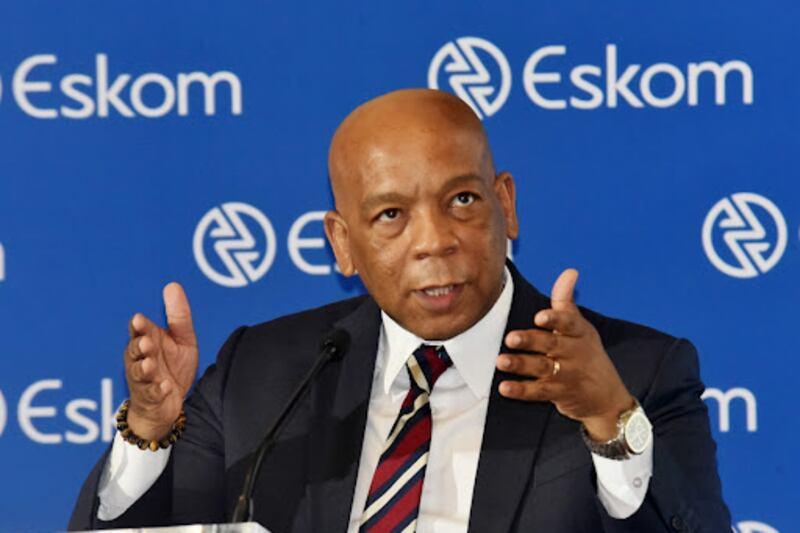
”South Africa’s plan to change how free basic electricity reaches poor households has put municipal financial management, accountability and service delivery at the centre of a major governance debate. Electricity and Energy Minister Kgosientsho Ramokgopa says an annual R21 billion allocation intended for indigent households is not consistently reaching the people it is meant to support, prompting government to consider a system in which Eskom could deliver the benefit more directly.”
South Africa’s plan to change how free basic electricity reaches poor households has put municipal financial management, accountability and service delivery at the centre of a major governance debate. Electricity and Energy Minister Kgosientsho Ramokgopa says an annual R21 billion allocation intended for indigent households is not consistently reaching the people it is meant to support, prompting government to consider a system in which Eskom could deliver the benefit more directly.
The proposal, reported on 27 September 2026, follows remarks made by Ramokgopa during a 25 September briefing on Eskom’s future. The minister said municipalities face competing spending pressures and that funds intended for free basic electricity can be redirected to salaries and service providers. Government is therefore examining whether technology, smart meters and existing state databases could provide a more direct route to qualifying households.
At the centre of the proposal is Free Basic Electricity, a support mechanism for qualifying indigent households. Ramokgopa said government currently allocates about R21 billion annually for this purpose. Under the existing arrangement, the money is channelled through municipalities, which identify eligible households and are responsible for ensuring that the benefit reaches them.
The minister’s criticism is that the mechanism does not always work as intended. According to his account, municipalities under financial pressure may use funds to address other immediate obligations. That can leave households without the electricity support for which the allocation was intended. Daily Investor reported that Ramokgopa said municipalities sometimes use the money for employee salaries and service providers because of their broader spending pressures.
This creates a governance problem because public money is not only about how much is allocated; it is also about whether funds reach their designated beneficiaries and whether effective controls exist when they do not. Municipalities have constitutional responsibilities for local government functions, but they also operate within a wider system of intergovernmental transfers and national oversight.
Ramokgopa’s proposed response is to change the delivery mechanism rather than simply increase the existing allocation. He said Eskom should develop a platform that could identify qualifying households and provide support directly, potentially using smart meters and information from databases held by institutions such as SASSA and SARS.
The government’s stated objective is to ensure that households entitled to support actually receive it. Ramokgopa has also discussed increasing the amount of free electricity available to qualifying households from the current 50 kilowatt-hours per month to between 200 and 300 kilowatt-hours. However, he has said this should happen without increasing the existing R21 billion funding envelope or placing additional pressure on Eskom’s financial sustainability.
The debate also intersects with the long-running financial relationship between Eskom and municipalities. Municipalities buy electricity from Eskom and recover costs from residents and businesses. Where municipal customers do not pay, or where municipalities struggle to collect revenue and settle their Eskom accounts, financial pressure can move through the system.
Recent reporting has highlighted the scale of municipal electricity debt. The Witness reported on 25 September that Ramokgopa described municipal debt to Eskom as approaching R450 billion and identified it as a major challenge for the electricity market and the government’s reform programme. Eskom has also been using measures such as Distribution Agency Agreements, while National Treasury can use equitable-share mechanisms to encourage municipalities to address outstanding obligations.
This matters for governance because local financial weakness can affect both service delivery and the finances of national state-owned enterprises. If municipalities cannot collect revenue effectively, maintain infrastructure or pay suppliers, the consequences can extend beyond council balance sheets. They can affect electricity reliability, tariffs, public services and the financial position of Eskom.
The proposed direct-distribution model therefore reflects a wider question about the future of local government. Municipalities are designed to be close to communities and understand local needs. At the same time, when a municipality cannot reliably administer a targeted national benefit, central government may face pressure to introduce stronger controls or alternative delivery channels.
However, implementation would require safeguards. Government would need clear rules for determining eligibility, protecting personal information, correcting inaccurate records and dealing with households whose circumstances change. It would also need mechanisms for people to appeal decisions if they are incorrectly excluded from the programme.
The question of oversight is especially important because the proposed change would involve several institutions. National government would set policy and funding rules, Eskom would potentially deliver the benefit, municipalities would still interact with indigent residents, and data-holding agencies could help identify beneficiaries. Clear audit trails would be needed so that officials, Parliament and affected communities can establish how much money was allocated, how many households qualified, how much support was delivered and where gaps occurred. Without such information, changing the delivery channel would make it difficult to determine whether the reform improved accountability or simply shifted responsibility between institutions. That transparency would also help residents understand their entitlements and provide evidence when promised assistance does not arrive on time or is incomplete.
The proposal could also affect municipalities financially. If national government or Eskom takes over part of a function currently administered locally, municipalities may lose an important component of their role in indigent support. That would require clarity about responsibilities, funding and accountability. Local government associations and municipal officials would need to understand how the proposed system would interact with existing constitutional and statutory responsibilities.
Another issue is whether bypassing municipalities addresses the underlying financial problems or simply moves one function elsewhere. Municipalities continue to face challenges involving revenue collection, infrastructure maintenance, electricity theft, unpaid bills and competing expenditure demands. A new delivery platform could protect the free-electricity allocation, but it would not by itself resolve those broader weaknesses.
For households, the immediate concern is practical: whether the promised support is available, reliable and easy to access. Free electricity is intended to reduce the burden of energy costs on poor households. If support is unavailable, eligible residents may reduce consumption, fall into arrears or seek unsafe and illegal connections. Ramokgopa and Eskom officials have linked the failure to provide intended support with incentives for illegal connections and pressure on electricity infrastructure.
South Africa’s challenge is to balance local autonomy with national accountability. Municipalities have an important role in democratic local government, yet public funds transferred for specific purposes require monitoring and effective financial controls. If government changes the distribution model, it will need to demonstrate that the new arrangement is transparent, legally sound, financially sustainable and capable of being audited.
For now, the proposal remains a plan rather than a completed policy change. The details of eligibility, technology, funding flows, data sharing and municipal responsibilities will determine how the system works if government proceeds. Independent scrutiny, parliamentary oversight and public consultation will therefore be important as the proposal develops.
The R21 billion question is ultimately a governance question: how should public money intended for vulnerable citizens move through the state so that the promised service reaches the person it was designed to help? Ramokgopa’s proposal places that question directly before South Africa’s national and local institutions. Its outcome will depend not only on technology, but on clear responsibilities, financial controls, accurate beneficiary information and sustained accountability across every level of government.



