




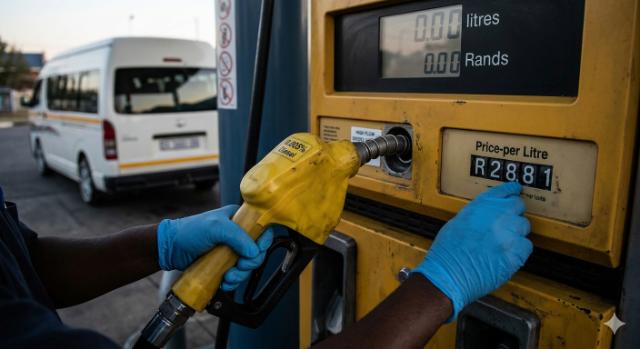
“South African motorists are facing a record fuel-price increase from 7 October 2026, with inland 95-grade petrol rising by R3.33 a litre to R30.25, while diesel prices increase by up to R3.24 a litre. The shock is a major microeconomic development because higher fuel costs are changing household purchasing decisions, increasing transport and logistics costs and putting pressure on the prices of goods and services across the economy.”
South Africa’s Record Fuel-Price Shock Raises the Cost of Transport, Goods and Household Consumption
South African consumers woke up on Wednesday, 7 October, to one of the country’s most significant fuel-price shocks in recent years. The latest adjustment has pushed inland 95-grade petrol above the psychologically important R30-a-litre threshold, while diesel has also increased sharply. The Department of Mineral and Petroleum Resources confirmed that petrol 93 rises by R3.12 a litre, petrol 95 by R3.33, diesel by between R2.84 and R3.24, and illuminating paraffin by R3.58.
Although fuel prices are often discussed as a macroeconomic issue, their most immediate consequences are microeconomic. Microeconomics examines how households, consumers and individual businesses respond to changes in prices, income, incentives and resource constraints. The October fuel increase therefore provides an important picture of how South Africans may alter their daily behaviour when one of the essential inputs into transportation becomes substantially more expensive.
The direct effect is being felt by motorists. A driver who fills a 50-litre tank with inland 95-grade petrol will pay roughly R166.50 more than under the previous price, assuming the entire increase is passed through to the consumer. For households that fill their vehicles regularly, this represents a meaningful reduction in disposable income. Money that might previously have been available for groceries, clothing, entertainment, education or savings may instead have to be redirected towards transportation.
This is particularly important because households do not all respond to price increases in the same way. Higher-income consumers may be able to absorb an increase by reducing discretionary spending or changing vehicle usage. Lower-income households, however, often have fewer alternatives. Workers who need private vehicles to reach workplaces, parents who depend on cars for school transportation and households living far from essential services can face a much more difficult adjustment.
The economic concept of price elasticity of demand helps explain this difference. Fuel is an essential product for many consumers, meaning that demand does not immediately fall in proportion to an increase in price. Someone who needs to drive to work cannot simply stop purchasing petrol because its price has increased. Instead, the consumer may initially absorb the higher cost and reduce spending elsewhere.
Over time, however, consumers can change their behaviour. Some may combine trips, use public transportation, work remotely where possible, purchase more fuel-efficient vehicles or reduce unnecessary journeys. The longer the price remains elevated, the greater the opportunity for consumers to adapt their consumption patterns.
Evidence that South African consumers are already changing their preferences can be seen in the vehicle market. A recent Cars.co.za survey found that fuel efficiency had become the second-most important consideration for South African vehicle buyers after purchase price, with 52.5% of respondents identifying fuel efficiency as a major factor. The survey also pointed to growing interest in hybrids, smaller-engine vehicles and other alternatives as fuel prices rise.
The impact does not stop with motorists. Diesel is particularly important because it powers a large portion of South Africa’s freight and logistics system. A BusinessLive analysis noted that fuel can account for approximately 35% to 55% of operating costs for logistics companies, depending on the operation. South Africa also transports more than 80% of its land-based freight by road, meaning changes in diesel prices can affect businesses far beyond the fuel station.
This creates what economists call a cost-push effect. When the cost of an important input rises, businesses face higher production or distribution expenses. Companies then have to decide whether to absorb those costs, reduce profit margins, find efficiencies or pass some of the increase on to customers.
For a supermarket, for example, the price of diesel can affect the cost of moving food from farms and processing plants to distribution centres and then to individual stores. A manufacturer can face higher costs when raw materials have to be transported. A small business that depends on delivery vehicles can experience higher operating expenses almost immediately.
Consequently, the consumer may encounter the fuel increase indirectly even when they do not own a vehicle.
A loaf of bread, a parcel delivered to a home, building materials transported to a construction site and agricultural products moved to a market can all contain transportation costs. This does not mean that every product will automatically rise by the full percentage increase in fuel. The eventual effect depends on how much transportation represents of the product’s total cost, the competitiveness of the market and whether businesses can find alternative suppliers or transport arrangements.
Competition between businesses is therefore important. In highly competitive markets, a company may find it difficult to increase prices because customers can switch to competitors. In less competitive markets, businesses may have greater ability to pass higher costs to consumers.
The fuel shock is occurring at an especially sensitive time because South African households are already dealing with pressure on their budgets. Statistics South Africa reported that headline consumer inflation reached 4.4% in August, while food and non-alcoholic beverage inflation increased to 1.1%. At the same time, retail trade sales had shown signs of improved consumer activity, with seasonally adjusted retail sales rising 2.5% month-on-month in July.
The new fuel increase could therefore influence the composition of household spending even if consumers continue purchasing goods overall. A household may maintain its essential grocery purchases while cutting back on restaurant meals, clothing, entertainment or other discretionary products. This is known as a change in the composition of consumption.
The pressure is also relevant to households with existing debt. Recent reporting citing South African Reserve Bank data put household debt at 62.2% of disposable income in the first quarter, while the cost of servicing household debt was 8.4%. This means that many consumers have limited room to accommodate another major recurring expense.
The Reserve Bank is particularly concerned about the possibility that temporary energy-price increases could become embedded in broader inflation expectations. Its October Monetary Policy Review said South African headline inflation had risen from 3.2% in the first quarter to 4.5% in the second quarter and projected inflation to remain elevated above 5% until the second quarter of 2027 before moving back towards target. The MPC had raised the policy rate by a cumulative 50 basis points over the April-to-October review period, taking it to 7.25%.
From a microeconomic perspective, higher interest rates can make the fuel shock more painful. Households with loans may have less disposable income available for fuel and other necessities. Businesses facing both higher financing costs and higher transportation expenses may postpone investment, reduce inventories or attempt to increase prices.
The October increase also demonstrates the importance of international markets to South African consumers. The country’s fuel-price system is affected by international petroleum prices and the rand-dollar exchange rate. Reuters reported that the latest adjustment reflected the impact of the Middle East conflict on global energy markets, while South Africa’s reliance on imported fuel exposes domestic consumers to international supply disruptions.
This creates a difficult policy problem. Government can provide relief through mechanisms such as fuel-levy reductions, but such measures have fiscal costs. Calls for renewed fuel-levy relief have already intensified as petrol moved beyond R30 a litre.
There is also an important distinction between helping consumers temporarily and addressing the structural causes of fuel-price vulnerability. Short-term tax relief can reduce the immediate burden, but it does not eliminate South Africa’s exposure to international oil prices, exchange-rate movements or disruptions to global petroleum supply.
For businesses, the response is likely to include greater attention to fuel efficiency and logistics optimisation. Companies may consolidate deliveries, redesign routes, invest in more efficient vehicles or negotiate new transportation contracts. These adjustments represent another important microeconomic response: firms substitute away from increasingly expensive inputs where alternatives are available.
Consumers will similarly search for substitutes. Public transport, ride-sharing, smaller vehicles, hybrid vehicles and remote working can become relatively more attractive as petrol becomes more expensive. The strength of this substitution will depend on whether affordable alternatives are available.
Ultimately, the record October fuel increase is not simply a story about what motorists pay at filling stations. It is a story about scarce household income, changing consumer choices, business costs and incentives. The immediate price shock reduces the purchasing power of motorists, while the indirect effects travel through logistics, retail markets and household consumption.
South Africa’s microeconomic challenge is therefore to manage the adjustment without allowing vulnerable households and small businesses to carry a disproportionate share of the burden. As consumers reconsider how they travel and what they purchase, businesses reassess their operating models and policymakers confront the inflationary consequences, the fuel-price increase is likely to remain an important influence on everyday economic decisions well beyond the petrol station.
The central question for households and businesses is no longer simply how much fuel costs. It is what they will have to give up, change or substitute as the price of transportation rises. That is precisely where the microeconomic impact of South Africa’s latest fuel shock will become most visible.



