




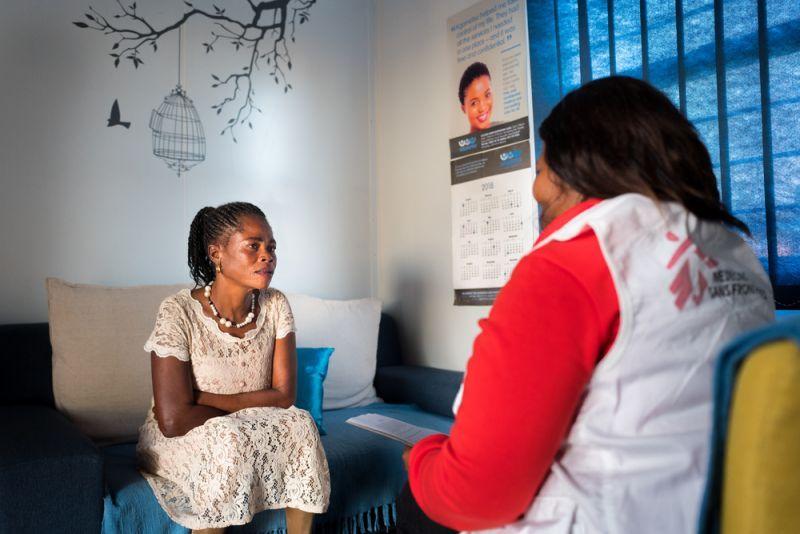
“The discovery of 12 women’s bodies in Ekurhuleni since July has intensified concern about the psychological consequences of gender-based violence, with Gauteng authorities providing psychosocial support to affected families, including children. As South Africa observes Mental Health Awareness Month in October, the crisis highlights the importance of trauma counselling, community support and accessible mental-health services for people dealing with violent loss”
The discovery of 12 women’s bodies in Ekurhuleni since July has intensified concern about the psychological consequences of gender-based violence, with Gauteng authorities providing psychosocial support to affected families, including children. As South Africa observes Mental Health Awareness Month in October, the crisis highlights the importance of trauma counselling, community support and accessible mental-health services for people dealing with violent loss.
Ekurhuleni killings expose a deeper mental-health crisis
The continuing gender-based violence and femicide crisis in Ekurhuleni is increasingly becoming not only a criminal justice and public-safety emergency, but also a serious mental-health concern.
On Sunday, 4 October 2026, one of the women whose body was discovered in Ekurhuleni, Gauteng, is expected to be buried in Lusikisiki in the Eastern Cape. Forty-two-year-old Nomfesane Mjobo’s body was found in Kempton Park last month. Her death is among a series of killings that have shocked communities across the East Rand, where 12 women’s bodies have been discovered since July.
For families, the consequences of such violence do not end when an investigation begins or when a victim is buried. Violent and unexpected deaths can leave relatives struggling with grief, fear, anger, confusion and trauma. Children who lose a mother can face particularly difficult emotional circumstances because they must process bereavement while also confronting the circumstances surrounding the death.
Gauteng Social Development MEC Bukiwe Fanta said psychosocial support had been offered to Mjobo’s family. She explained that authorities were assessing the household and providing psychosocial assistance to children so they could begin dealing with the loss.
The development is particularly significant because October is recognised by South Africa’s Department of Health as Mental Health Awareness Month, while World Mental Health Day falls on 10 October. The timing places renewed attention on how violence, bereavement and insecurity affect mental wellbeing.
Trauma reaches beyond the immediate victim
Gender-based violence has consequences that extend beyond the individual person who is attacked or killed. Families, friends, children, neighbours and entire communities can experience psychological distress after violent incidents.
When a person dies violently, relatives may experience a form of grief complicated by shock and unanswered questions. Instead of having time to prepare emotionally for a death, families can suddenly find themselves dealing with police investigations, media attention, funeral arrangements and uncertainty.
Children can be particularly vulnerable.
The death of a mother can change a child’s sense of safety, family stability and future security. If children witnessed violence or subsequently learned disturbing details about a parent’s death, they may experience fear, anxiety, nightmares, withdrawal, anger or difficulties at school.
This is why the psychosocial support mentioned by the Gauteng government is an important part of the response.
Mental-health support does not replace criminal investigations or justice. Rather, it addresses another consequence of violence: the emotional and psychological injuries that can remain long after the physical event has ended.
The Department of Health has previously identified anxiety, depression, post-traumatic stress and substance-use disorders among common mental-health challenges in South Africa. It has also stressed the importance of addressing stigma and ensuring that people experiencing psychological distress can obtain appropriate support.
Communities are also experiencing fear
The Ekurhuleni killings have affected more than individual families.
Communities have expressed concern about safety following the discovery of multiple bodies across the East Rand. On Saturday, protesters marched against gender-based violence and femicide and called for authorities and police to be held accountable.
The psychological consequences of living in an environment where people feel unsafe can be significant.
Residents may become increasingly fearful about travelling, walking alone, using public transport or allowing children to move around their communities. Women may change their daily routines because of safety concerns, while families may become more protective of children and relatives.
Over time, persistent fear can contribute to stress and emotional exhaustion.
That makes community-level mental-health interventions important. Psychological assistance should not be limited only to families who have lost relatives. Communities affected by repeated violence may also need safe spaces, counselling, social support and information about where professional assistance can be obtained.
The importance of psychosocial support
Psychosocial support is broader than traditional clinical treatment.
It can include counselling, emotional support, family assistance, community-based interventions and practical help that enables people to cope with traumatic circumstances.
For families affected by GBVF, this support can help survivors and relatives understand their emotional responses and identify when additional professional intervention may be necessary.
It can also help families support children.
The intervention is especially important where households have limited financial resources. Travelling to specialised mental-health facilities, paying private psychologists or taking time away from work can be difficult for families already facing economic pressure.
South Africa’s public-health system therefore has an important role in bringing mental-health services closer to communities.
The National Department of Health currently lists a Mental Health Information Line at 0800 567 567, alongside other national health support contacts.
Mental health cannot be separated from public safety
The Ekurhuleni situation also illustrates an important principle: mental health and public safety are closely connected.
Preventing violence is itself a mental-health intervention because reducing exposure to traumatic events can reduce the psychological harm experienced by individuals and communities.
Similarly, responding to violence after it occurs requires more than arrests and prosecutions. Victims and families need medical care, legal assistance, social services and psychological support.
The South African government has recently intensified its response to the broader GBVF crisis. President Cyril Ramaphosa announced a four-point plan to address high levels of gender-based violence and directed senior government officials to undertake a national case-recovery operation focused on unresolved murders, attempted murders, rape and serious sexual offences involving women and children.
Such measures address the accountability side of the crisis. However, the mental-health dimension requires sustained investment as well.
October brings renewed attention to mental health
The Ekurhuleni crisis comes at a significant point in South Africa’s health calendar.
The Department of Health’s 2026 Health Awareness Calendar identifies October as Mental Health Awareness Month and 10 October as World Mental Health Day.
The timing provides an opportunity to broaden the national discussion about mental health.
Mental health should not only be discussed when someone develops a diagnosed disorder. Trauma, bereavement, fear and prolonged exposure to violence can all affect psychological wellbeing.
The challenge is particularly important in communities where violence is persistent.
People may become accustomed to frightening events and avoid discussing their emotional responses because they believe distress is simply part of everyday life. Others may fear stigma or believe seeking psychological assistance is a sign of weakness.
These attitudes can delay help.
A strong mental-health response therefore requires public education alongside professional services. Families should be encouraged to talk about grief. Children should be allowed to express fear and sadness. Schools, churches, community organisations and social workers can help identify people who are struggling and connect them with appropriate services.
Children must remain a priority
One of the most important aspects of the Ekurhuleni response is the focus on children.
When a mother is killed, children may lose not only a parent but also a source of emotional and financial security. Their needs can continue long after the funeral.
Some children may show obvious distress, while others may become unusually quiet. Changes in behaviour, sleeping patterns, school performance or relationships can sometimes indicate that a child is struggling.
Children should therefore have access to age-appropriate psychological support rather than being expected to simply “move on”.
Family members and caregivers also require assistance because they may themselves be grieving while simultaneously trying to provide stability for children.
Building a long-term mental-health response
The Ekurhuleni crisis demonstrates why mental-health services must form part of South Africa’s wider response to GBVF.
Emergency psychosocial support is essential immediately after a traumatic death, but long-term assistance may also be necessary.
Some people recover gradually with family and community support. Others may develop more persistent psychological difficulties and require professional treatment.
The health system must therefore be able to provide different levels of care, ranging from community-based support to specialised psychological and psychiatric services.
South Africa’s Department of Health has previously emphasised decentralising mental-health services and integrating mental healthcare into broader health services.
This approach becomes especially important in communities affected by violence, where specialised services may be difficult to access.
A national conversation about healing
The deaths in Ekurhuleni have generated grief, anger and demands for action. They have also highlighted a less visible consequence of violence: psychological trauma.
As one family prepares to bury another victim, the need for support is immediate. Children and relatives must begin rebuilding their lives while communities continue to demand greater protection and accountability.
The lesson for South Africa’s mental-health agenda is clear. Preventing violence, protecting communities and supporting survivors and bereaved families should be treated as connected priorities.
Mental-health awareness cannot be limited to annual campaigns. It must include sustained services for people affected by violence, accessible counselling, child-focused interventions, community support and efforts to reduce the stigma surrounding psychological care.
The Ekurhuleni crisis therefore represents more than a series of criminal cases. It is also a reminder that every violent death can create a wider circle of psychological suffering.
As South Africa enters Mental Health Awareness Month, supporting those affected by GBVF should be central to the national conversation about mental wellbeing.



