




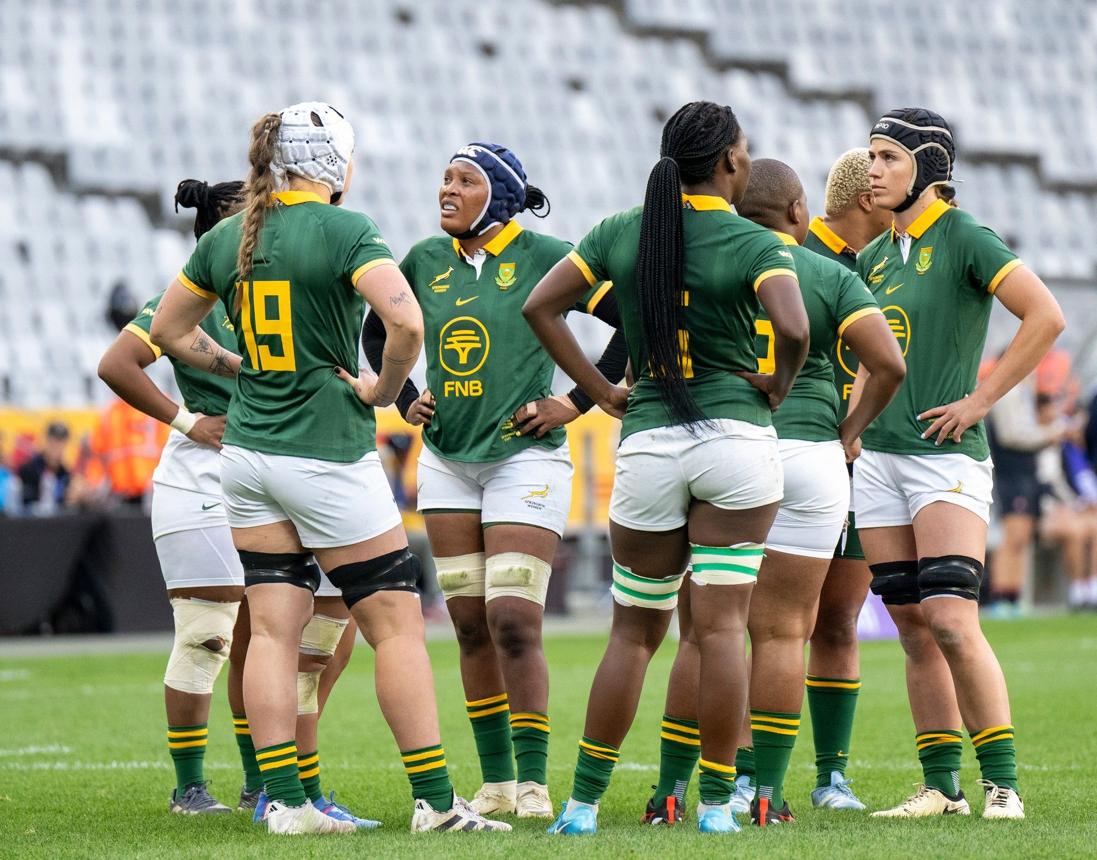
”The Springbok Women are determined to overturn their 40–27 defeat against Ireland when the teams meet again at Athlone Stadium on 31 October. A victory would represent a major achievement for South African women’s rugby, potentially lift the team to eighth in the world rankings and provide a positive finish to their 2026 Test campaign.”
Springbok Women seek redemption, ranking breakthrough and historic win against Ireland
South African women’s rugby enters an important moment on Saturday, 31 October 2026, as the Springbok Women prepare to face Ireland in the final Test of their 2026 international season. The encounter at Athlone Stadium in Cape Town offers South Africa an opportunity to respond to last weekend’s disappointing 40–27 defeat and demonstrate the progress made by the national team throughout the year.
The match carries significance beyond the final score. South Africa are pursuing their first victory against Ireland, while also attempting to improve their international standing and strengthen the country’s growing reputation in women’s rugby. With the home crowd expected to provide important encouragement, the Springbok Women have an opportunity to turn disappointment into a defining sporting achievement.
The rematch follows an entertaining first encounter in which Ireland scored 40 points against South Africa’s 27. Although the Springbok Women managed five tries, Ireland’s greater efficiency and ability to capitalise on opportunities ultimately made the difference. South Africa therefore enter the second meeting knowing that improved discipline, decision-making and execution will be essential.
South Africa determined to correct previous mistakes
Springbok Women captain Sizophila Solontsi has made it clear that the team understands what went wrong during the opening encounter. According to the captain, the players were frustrated because they believed they had not performed to their full potential.
However, the defeat also provided an opportunity to examine their performance carefully. Rather than concentrating exclusively on the final score, the coaching staff and players reviewed the individual and collective mistakes that prevented South Africa from producing a stronger performance.
One of the most important areas identified was discipline. South Africa conceded 13 penalties compared with Ireland’s eight. This difference gave the visitors additional opportunities to maintain pressure, gain territory and dictate important passages of the match.
Penalty management is particularly important in international rugby because unnecessary infringements can undermine otherwise positive performances. Even when a team demonstrates strong attacking ability, repeated penalties can create opportunities for opponents to establish territorial control and build scoreboard pressure.
For the Springbok Women, reducing these mistakes will be a priority. The team must remain physically competitive without allowing aggression to develop into avoidable infringements. Better communication, improved positioning and greater awareness around breakdown situations could help South Africa maintain control.
Solontsi indicated that the squad had used the preparation period to review every aspect of its performance, including areas where it had already performed well. This approach suggests that the team is seeking a complete improvement rather than relying on one tactical adjustment.
Ireland remain a difficult international opponent
Ireland arrive in Cape Town with confidence following their 40–27 victory in the opening match. Their performance demonstrated an ability to apply pressure, exploit defensive opportunities and maintain attacking momentum against a competitive South African side.
The Irish team also enters the rematch with considerable continuity. While South Africa have made several adjustments to their starting line-up, Ireland have reportedly made only one change. That stability could provide an advantage because established combinations often improve communication, coordination and understanding between players.
Nevertheless, the Springbok Women will be familiar with Ireland’s approach after facing them the previous weekend. This knowledge could help South Africa prepare more effectively for the opposition’s attacking patterns, forward play and defensive organisation.
The challenge will be to translate preparation into performance. Ireland have already demonstrated that they can score heavily against South Africa, meaning the hosts cannot afford periods of defensive uncertainty.
South Africa will need to maintain concentration throughout the full 80 minutes. International matches are frequently decided by small details, including defensive spacing, breakdown decisions, handling accuracy and the ability to finish attacking opportunities.
Ireland’s previous victory also means the visitors have a psychological advantage entering the match. However, playing in Cape Town provides South Africa with an opportunity to use home conditions and local support to create a different atmosphere.
Team changes bring fresh opportunities
The Springbok Women coaching team, led by Laurian Johannes-Haupt and Franzel September, has made several adjustments to the starting line-up ahead of the final Test.
These changes are intended to refresh the team while maintaining the collective structure developed throughout the campaign. They also provide additional players with an opportunity to contribute during an important international fixture.
However, South Africa have suffered a significant setback following the knee injury sustained by prop Sanelisiwe Charlie during training. Her absence removes an experienced option from the forward group and requires the coaching staff to adapt their selection.
The changes also place greater responsibility on the remaining forwards to maintain their physical intensity, scrum organisation and support play.
Lindelwa Gwala is another important figure in the squad. She is set to extend her record as South Africa’s most-capped hooker, reaching 45 Test appearances. Her experience could be particularly valuable in the lineouts, scrums and other situations where communication between forwards is essential.
Prop Yonela Nxgingolo is also expected to reach another milestone, extending her position as the most-capped Springbok Women prop with her 51st Test appearance.
These milestones demonstrate the importance of experienced players in building a competitive national team. Their contributions extend beyond individual performances because experienced rugby players can help younger teammates understand the demands of international competition.
The coaching adjustments therefore represent an opportunity to combine experience with fresh energy as South Africa pursue a stronger performance.
World rankings increase the importance of the encounter
Another major motivation for South Africa is the possibility of achieving a new high in the World Rugby women’s rankings.
According to the published match preview, victory over Ireland could move the Springbok Women into eighth position, taking them above Italy. However, another defeat could see the team fall to tenth place, losing the ranking position gained during the previous weekend.
This creates additional importance around the match because the outcome could influence how South Africa is positioned internationally.
World rankings matter because they provide an indication of a team’s performance against international opposition. They can also influence perceptions of national development, competitive progress and the strength of a country’s rugby programme.
For South Africa, reaching eighth position would represent an encouraging achievement. It would demonstrate that the team is capable of competing more consistently against established international opponents.
Nevertheless, the players must avoid allowing the rankings to become a distraction. Their immediate responsibility is to execute their match plan, make effective decisions and compete for every possession.
A disciplined performance would provide a stronger foundation for a positive result than concentrating exclusively on the potential ranking improvement.
The encounter also highlights the importance of maintaining consistency throughout an international season. A single victory can be valuable, but sustained progress requires teams to demonstrate their quality across multiple competitions and against different opponents.
Jakkie Cilliers provides an important attacking contribution
Jakkie Cilliers has been one of South Africa’s notable attacking contributors during the 2026 season.
The Springbok Women points scorer has accumulated 77 points this year, making her an important figure in the team’s ability to convert opportunities into scoreboard rewards.
In international rugby, reliable points-scoring can make a considerable difference, particularly when teams are competing against opponents with similar physical and technical capabilities.
South Africa will need to make effective use of their attacking opportunities. Entering the opposition’s half is important, but converting territorial advantages into points is what ultimately determines whether a team can build a winning position.
Cilliers’ contribution could therefore be important, especially if the Springbok Women earn penalties in favourable positions or create opportunities to attack near the try line.
However, successful attacking rugby requires contributions from the entire team. The forwards must create effective platforms, the halfbacks must distribute possession accurately and the outside backs must identify opportunities in the defensive line.
South Africa will also need to reduce handling errors. Unforced mistakes can interrupt attacking momentum and allow Ireland to regain possession.
A more controlled attacking performance could help the Springbok Women improve on their previous result.
Athlone Stadium and the importance of home support
The decision to host the second Test at Athlone Stadium provides South Africa with an important home advantage.
The venue has already hosted the first meeting between the teams, giving the Springbok Women familiarity with the surroundings and match conditions.
Solontsi has also acknowledged the importance of supporters who attended the previous match. Despite competing sporting events elsewhere in Cape Town, the Springbok Women received encouraging support from spectators.
The captain expressed appreciation for the people who attended the match and celebrated women’s rugby.
This support is significant because women’s rugby continues to benefit from increased visibility, stronger community engagement and opportunities to attract new supporters.
International fixtures in South Africa provide opportunities to introduce more people to the national team and demonstrate the quality of women’s rugby.
A strong crowd can create an energetic atmosphere, encourage players during difficult periods and help establish a stronger connection between the team and its supporters.
For the Springbok Women, Saturday’s encounter is therefore not simply about securing a victory. It is also an opportunity to reward supporters who continue to invest their time and enthusiasm in the development of the sport.
A significant opportunity for South African women’s rugby
The growth of women’s rugby in South Africa depends on continued investment in player development, competitive opportunities and national-team performance.
International matches against established opponents such as Ireland provide valuable experience because they expose players to different styles of play and high-pressure situations.
The Springbok Women can use this experience to identify areas requiring further development while strengthening the qualities that already make the team competitive.
The presence of experienced players, emerging talent and a coaching group willing to adjust combinations provides an important foundation for future progress.
South African rugby supporters have traditionally celebrated the achievements of the Springboks, but the women’s national team also deserves recognition for its contribution to the country’s sporting identity.
Improving international results can help attract additional attention, sponsorship and participation opportunities.
The potential move to eighth in the rankings would therefore carry significance beyond the immediate competition. It could strengthen confidence in the programme and provide encouragement for players working towards future international tournaments.
Final preparations and match expectations
The final preparations have placed particular emphasis on correcting the mistakes made during the first encounter.
South Africa will need to demonstrate improved discipline, stronger defensive organisation and more effective attacking execution. The team must also ensure that its forwards compete consistently while creating opportunities for the backline.
Ireland, meanwhile, will attempt to repeat the effectiveness that produced their 40–27 victory.
The visitors have the advantage of winning the previous meeting, but the second encounter presents a new challenge. South Africa will be motivated by the opportunity to respond in front of their home supporters.
The match will be officiated by Australian referee Jess Ling, assisted by Precious Pazani of Zimbabwe and South Africa’s Giana Viljoen. Matteo Liperini of Italy will serve as television match official, while Quinton Immelman will undertake the bunker role.
The match is scheduled for 15:00 at Athlone Stadium and will be available through SuperSport and the official SA Rugby YouTube channel.
Conclusion: A defining afternoon for the Springbok Women
The Springbok Women face an important test of character, preparation and international competitiveness against Ireland on 31 October 2026.
Their previous defeat exposed weaknesses that must be corrected, particularly around discipline and the ability to manage pressure. However, the team has also demonstrated attacking potential and possesses experienced players capable of influencing the outcome.
A victory would deliver South Africa’s first win against Ireland, potentially lift the team to eighth in the world rankings and provide a memorable conclusion to the 2026 Test season.
More importantly, it would reinforce the progress of women’s rugby in South Africa and reward supporters who continue to follow the national team.
The challenge is clear: South Africa must turn lessons from the previous defeat into improved performance on the field.
For the Springbok Women, Athlone Stadium represents an opportunity to make a statement, restore confidence and demonstrate that South African women’s rugby is continuing to move forward.



