




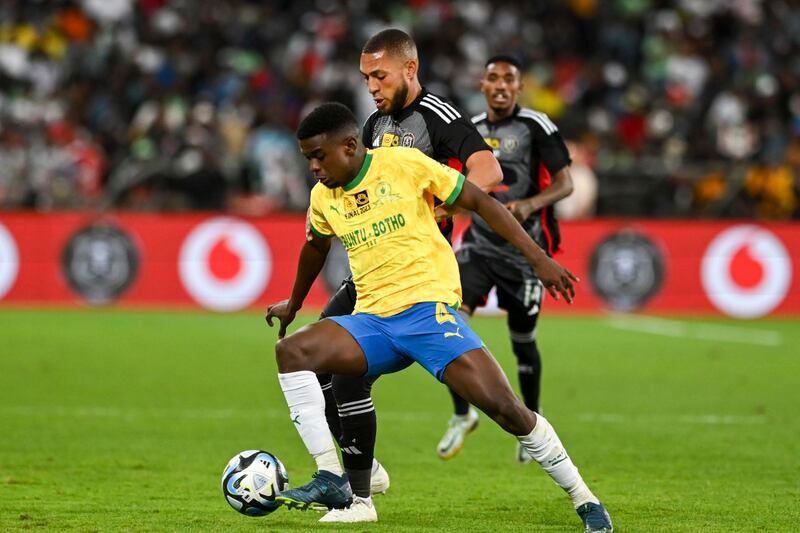
“Mamelodi Sundowns midfielder Teboho Mokoena played through an injury concern to help his team defeat Orlando Pirates 2–0 in the 2026 MTN8 final, prompting renewed attention to injury management, recovery and the physical demands placed on elite footballers. He also spoke publicly about personal family tragedies, highlighting how professional athletes may face emotional distress while continuing to meet the expectations of their clubs and supporters.”
Teboho Mokoena’s Injury and Personal Struggles Highlight the Growing Importance of Player Health in South African Football
When football success comes at a personal cost
South African football regularly celebrates players who demonstrate determination, courage and commitment during important matches. However, behind every dramatic goal or trophy-winning performance lies a less visible story about physical preparation, medical decisions, recovery and mental wellbeing. These issues came into focus during Mamelodi Sundowns’ victory over Orlando Pirates in the 2026 MTN8 final.
Sundowns won the final 2–0 at Moses Mabhida Stadium in Durban on 10 October, with midfielder Teboho Mokoena scoring the opening goal and Iqraam Rayners adding a late penalty. Yet the result carried an important health dimension: Mokoena entered the match with an injury concern and was not completely free of pain, according to coach Miguel Cardoso.
The incident provides a valuable opportunity to examine how football clubs balance competitive ambitions with player welfare. It also demonstrates why physical health and psychological wellbeing should be treated as connected parts of professional sports performance.
Although this report is based on developments reported earlier in October, rather than a newly verified story published on 27 October, its central questions remain relevant to South African football.
Mokoena’s injury concern before the MTN8 final
Mokoena’s participation in the final was uncertain after he sustained an injury while representing Bafana Bafana during the international period. Reports identified a collateral ligament injury around his knee, although the precise clinical details and his subsequent medical progress should be confirmed through official club updates.
Such injuries can present challenges for footballers because the sport repeatedly places stress on the knee. Players accelerate, decelerate, change direction, jump, land and engage in physical contests. These movements require coordination between muscles, tendons, ligaments and the surrounding joints.
A player may feel capable of participating while still experiencing discomfort or lacking the strength and movement control required for unrestricted competition. Consequently, availability for a match should not automatically be interpreted as complete recovery.
In Mokoena’s case, Cardoso explained that treatment began with the national team’s medical staff before continuing at club level. The coach also acknowledged the communication between the two medical departments and praised the player’s commitment to treatment.
This illustrates the importance of cooperation between national-team and club medical professionals. International football can compress travel, training, treatment and competitive commitments into a demanding schedule. Clear communication helps ensure that medical assessments, rehabilitation progress and workload considerations are understood when players return to their clubs.
The physical demands of playing through pain
Mokoena made a decisive contribution to the final, opening the scoring early as Sundowns eventually secured the trophy. Nevertheless, Cardoso stated that the midfielder was not pain-free and had not trained recently. He also observed that Mokoena initially struggled to match the pace of the match before contributing more effectively.
These details underline a distinction between determination and medical readiness. Determination can help athletes remain focused during difficult circumstances, but it cannot replace the biological processes needed for tissue healing.
Playing through pain may be appropriate in some carefully assessed circumstances, but it can also make it harder to recognise worsening symptoms. Depending on the injury, continuing to compete may alter movement patterns, increase fatigue or expose the player to additional stress.
That does not establish that Mokoena suffered further damage during the final. The available reports do not confirm such an outcome. Instead, the case demonstrates why decisions about returning to competition must be based on individual clinical assessments rather than the importance of a fixture alone.
Medical teams commonly consider pain, swelling, joint stability, strength, balance, movement quality and sport-specific performance when assessing recovery. The exact criteria depend on the injury and the player’s circumstances.
A responsible return-to-play decision also considers whether the athlete can tolerate the expected intensity of competition, not simply whether the athlete can complete basic exercises or participate in a training session.
Why recovery must extend beyond match day
Professional football schedules can place substantial demands on players, particularly when domestic competitions, continental tournaments and international fixtures overlap. Recovery therefore requires planning across an entire season.
After an injury, a player’s rehabilitation may include supervised strength exercises, mobility work, balance training and gradual exposure to football-specific movements. Medical professionals may also adjust training intensity and monitor symptoms as the athlete progresses.
Importantly, recovery is not identical for every player. Two footballers with apparently similar injuries may progress at different rates because of differences in injury severity, previous medical history, conditioning and individual response to treatment.
Clubs must also consider the consequences of rushing a player back into action. A premature return can interrupt rehabilitation or create additional problems if the athlete cannot yet tolerate the demands of competition.
For coaches, this can create difficult decisions. A key midfielder’s absence may affect tactical balance, team selection and the likelihood of winning an important match. Nevertheless, a club’s longer-term interests may be better served by allowing sufficient recovery rather than prioritising one fixture at the expense of the remainder of the season.
Cardoso’s comments about the work of the medical teams illustrate the role that treatment and communication can play in these decisions. They do not, however, provide enough information to independently judge every aspect of the player’s return-to-play process.
Mental health deserves equal attention
Physical injury was only one part of Mokoena’s experience surrounding the final. In separate post-match comments, he disclosed that he had lost his grandfather and that his brother had been seriously injured in a stabbing incident. He acknowledged that he was happy with the team’s victory while still struggling emotionally with the events affecting his family.
His comments offer a reminder that professional athletes do not leave their personal lives outside the stadium. Bereavement, family emergencies, financial concerns and other difficult experiences can affect concentration, sleep, motivation and emotional wellbeing.
Footballers are frequently expected to remain composed in public, particularly when competing for major trophies. However, appearing focused during a match does not necessarily mean that a person is coping well emotionally.
Mental health support should therefore be part of a club’s wider player-care programme. Depending on individual needs, this may include access to qualified psychologists, confidential counselling, support from trusted staff and appropriate time away from competitive duties.
Coaches can help by creating an environment in which players can discuss difficulties without automatically fearing that honesty will be interpreted as weakness or a lack of commitment.
It is important not to diagnose Mokoena or speculate about his private mental health. His own public comments are sufficient to demonstrate the broader point: sporting achievement and personal distress can exist at the same time.
The pressure to perform for clubs and supporters
South African football has a passionate supporter culture. Major clubs such as Mamelodi Sundowns and Orlando Pirates attract intense attention, and decisive matches can carry significant sporting and commercial consequences.
That atmosphere can inspire players to deliver exceptional performances. At the same time, it can make the decision to report pain or request additional recovery time more difficult.
Players may worry about losing their starting position, disappointing teammates or missing an opportunity to win a trophy. Those concerns can be especially complicated for athletes whose contracts, future selections or international prospects depend on consistent performances.
However, player welfare should not depend entirely on an individual’s willingness to tolerate discomfort. Clubs need clear medical protocols that allow decisions to be made transparently and professionally.
Medical staff should be able to communicate their assessments without inappropriate pressure, while coaches should understand that a player’s long-term availability matters alongside immediate competitive objectives.
Supporters and sports commentators also have a role. Praising courage is reasonable, but presenting playing through injury as the only acceptable demonstration of commitment risks sending the wrong message to younger athletes.
The strongest sporting culture is one that celebrates performance while respecting the work required to keep players healthy.
Injury prevention across South African football
The discussion extends beyond elite clubs. Many community and amateur teams face practical challenges involving access to qualified medical staff, suitable playing surfaces, rehabilitation facilities and structured training programmes.
Even so, several basic measures can help improve football safety.
First, teams should use appropriate warm-ups that prepare players for sprinting, jumping, landing and changing direction. Structured neuromuscular exercises can help develop strength, coordination and control, although no programme eliminates every injury risk.
Second, training loads should be increased progressively. Sudden changes in intensity or volume can leave players struggling to adapt, particularly after periods of reduced activity.
Third, athletes should receive adequate rest, hydration and nutrition. These factors support recovery and help players maintain performance across demanding training periods.
Fourth, suspected injuries should be assessed appropriately. Coaches should not attempt to diagnose complex injuries themselves, and athletes should seek qualified medical advice when pain, swelling or restricted movement persists.
Finally, clubs should maintain clear procedures for reporting symptoms and returning to training after an injury. These procedures should include reassessment when symptoms worsen or recovery does not progress as expected.
South African football authorities, clubs and community organisations can strengthen player welfare by improving access to education, qualified healthcare and evidence-informed prevention programmes.
The role of national teams and clubs
Mokoena’s experience also highlights the importance of coordination between national-team and club environments. International players may move rapidly between different medical teams, training systems and competitive demands.
When a player is injured on international duty, timely information sharing can help the club understand the initial assessment, treatment already provided and any restrictions that remain necessary.
This process should protect the player’s privacy while ensuring that relevant professionals can make informed decisions. It should also avoid creating unnecessary conflict between coaches who have competing sporting responsibilities.
Neither a national team nor a club benefits from preventable setbacks that could have been addressed through better communication. A fit player can contribute across competitions, while a poorly managed injury may affect both organisations.
For that reason, cooperation should continue throughout rehabilitation, including when a player begins modified training and gradually returns to full competition.
What the incident means for South African football
Mokoena’s performance in the MTN8 final demonstrated his importance to Sundowns, but the surrounding circumstances also reveal why player health deserves sustained attention.
The central issue is not whether athletes should show determination. Professional sport naturally demands discipline, resilience and sacrifice. Rather, the question is how football can encourage those qualities without treating pain, exhaustion or emotional suffering as requirements for success.
A modern player-welfare approach combines high performance with prevention, careful assessment, appropriate rehabilitation and psychological support.
Clubs can reinforce that approach by monitoring workloads, providing access to medical professionals, respecting recovery recommendations and ensuring that players can report concerns without fear of punishment.
The same principles are relevant to youth academies and community teams, where early education can help young footballers develop healthier attitudes towards injury and recovery.
Conclusion: Protecting players is part of winning
The 2026 MTN8 final will be remembered for Mamelodi Sundowns’ 2–0 victory over Orlando Pirates and Teboho Mokoena’s opening goal. Yet the injury concerns and personal challenges reported around that performance provide a broader lesson for South African football.
Athletic courage is valuable, but it should operate alongside medical judgment, adequate recovery and compassionate support. Players are not simply performers expected to deliver results; they are people whose physical and emotional health matters beyond a single match.
As South African clubs continue competing domestically and internationally, a sustained commitment to player welfare can help protect careers, strengthen teams and promote a healthier sporting culture.
Ultimately, football’s success should be measured not only by trophies won, but also by whether the people who make the game possible can perform, recover and live well over the long term.



